
Baseball is not my favorite sport. At best, I endure it. And if Major League baseball is boring, Little League offers up a level of ennui unparalleled by any other activity this side of watching paint dry.
It seems every game is plagued with huge lapses of time during which the most exciting play involves watching someone else’s son kick up a cloud of red dust, as he rolls around behind home plate searching for the ball that lays just millimeters from his left shoe. I specify “someone else’s son”, because from the first time we breached the diamond, I made one thing clear; Shane will not play catcher.
He has a catcher’s build. He is somewhat vertically challenged, at present, and, his lack of height compacts his generous frame in such a way as to produce drool in coaches looking for a big target behind home plate. So, every year I am asked the question, and every year, I give the same answer, “No, I like his head. I’d like to keep it around. But, thank you for asking.”
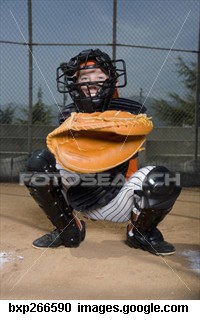
I realize this is an unreasonable fear. As a child, burdened with a build similar to my child’s, I played catcher for a time, until it became apparent that my skills were more suited to another position; left field, perhaps. In all the time that I played, and/or watched the game, I have never witnessed a decapitation. And yet, the fear persists.
My rigidity hasn’t hurt Shane’s baseball experience. He has played nearly every position on the field, making a name for himself particularly at third base; think Terry Pendleton or Bob Horner.
This year, Shane is sharing time between third base and the pitcher’s mound. He has pitched before, and has a mean change-up. The anxiety I used to feel as he mounted the mound has given over to relief, as I know for at least this inning; the other team’s at-bat won’t resemble an extended version of musical chairs.
He is batting, this year, with a new bat. Adding a couple of ounces to its weight has improved his hitting, as he tends to swing a little late. As he approaches the plate, I slide forward on metal bleachers, resting my chin in my hand. As his coach requested, Shane lets the first pitch go. He wails at the next one, failing to make contact.
“That’s ok, Shane! You can do it!”
Another pitch sails over the plate and misses his bat. Shane steps away from the plate, shaking his head. The bat dangles, loosely, from his right hand.

“That’s it, Shane! Good cut!”
The next pitch sends him backwards, as Shane employs dramatics to ensure the call.
“Ball One!”
The “ping” signals that he has made contact. The ball stays on the ground, careening, wildly, through two gray-clad pairs of infield legs. An outfielder snags the ball well after Shane has rounded first base.
Carson ambles towards the plate, and an unexpressed moan hangs in the air.
We met Carson last year, when he came out for basketball, and the surprise I felt upon first seeing his face, quickly changed to respect when looking into the faces of his parents. Carson was born with a defect that prevented his skull from fully forming, leaving his brain exposed. In the eleven years since birth, he has suffered seven surgeries leaving him with a Picasso-like visage. The unnatural set of his eyes presents vision challenges that might have dissuaded his parents from enrolling him in sports. But, they would not be deterred. Both parents insist that Carson make the most of what he has, and that he experience life in the same way as anyone else.
It took Carson most of one season to get the hang of basketball, but by tournament time, he was a contributor. This year Carson came out for baseball.
The coaches allow for extra time to train him. Many practices find Carson part of a trio that includes a coach and another, more seasoned, player. They work on throwing, and catching, and batting. After several weeks, Carson knows how to stand. His knees are bent, slightly splaying his legs to either side. The bat is up, in ready position, and his eyes are on the pitcher.

The ball sails over the plate, and Carson’s bat languidly forms a “C” before coming to rest, tip down, in the dirt. He hefts it again. Another ball, in much the same position, comes at him. Again, the bat lazily arcs to the ground.
This is hard to watch. Again, I slide to the end of my metal perch, bringing my hands to my face as I squint. Given the velocity of his swing, the ball wouldn’t travel very far, even if he did manage to hit it. Would he know what to do? Would the force of the hit jolt his slender frame backwards? Silently, I urge him to resist. A walk would put him on base.
Out of the corner of my eye, I sense another mother on the edge of her seat. Turning, I see Carson’s Mom resting her chin in her hands. And, I feel her.
© Copyright 2007-2009 Stacye Carroll All Rights Reserved


 Are We There Yet?


