
I was asked, recently, to list fifteen books that had “stuck with me”. The only directive given was that I not to take too long to answer, but instead, record the first fifteen that occurred to me. It wasn’t an easy task. I never read a book more than once, because I can’t stand the feeling I get, somewhere around the twentieth page, that I know exactly what is going to happen when the protagonist rounds the corner. I like to think this is the reason I struggle to recall book titles, and worse yet, author’s names. What I do remember is plot, storyline, and bits and pieces of the tale that spoke to me as I read.
Compiling a list proved a challenge, but I resolved to follow the rules, and when a title or author escaped me, I searched online with what little information I had retained. The end result proved eclectic, and even as I listed the books, I silently bemoaned the omission of many of my favorite authors. But on that particular day, their books did not stand out, and there was a rule…
Upon reading it over, there were a couple of books I resisted the urge to remove. There is a romance novel on the list. I read romance novels, as most girls did, while in high school. There is a book that enjoyed Oprah Winfrey’s favor before the author was found to have fabricated a story his publisher chose to market as a memoir. As always before posting anything publicly, I considered the reactions of those I care about, and those whose opinions I care about. The two groups do not necessarily overlap. Finally, I reminded myself of the author’s urging not to belabor the list, and posted it as it stood.
On reading it over, I am struck by the number of unique experiences and feelings I associate with each book. Some of them were particularly striking…

One truly would have had to live under a rock to avoid the media surrounding Elizabeth Gilbert’s book “Eat, Pray, Love”. At some point I came to feel that, as a woman, this book was required reading. I was hooked before the end of the first chapter. Elizabeth was a woman like me. Actually, she had a lot more money than I have. Other than that though, she paints herself as an “ordinary Jane”, who overcame the kind of desperation most women have felt at one time or another. I am completely cognizant of the fact that had she not enjoyed her apparent wealth, her experiences might not have been possible. Still, I am grateful to her for sharing them, for absorbing the cool of bathroom tile into her cheek right alongside me, and for helping me to believe that complete metamorphosis is possible.
To the best of my recollection, “The Scarlet Letter”, by Nathaniel Hawthorne, was required reading in the seventh grade. It is the first time I can remember being truly affected by a book. I felt such pity for Hester Prynne, who had given herself over to her emotions, and in so doing, sacrificed her life and that of her “bastard” child. The lessons of this book were particularly poignant to a thirteen-year-old girl who seemingly went out of her way to be different, while praying no one would notice.
A friend loaned me her CD version of Anne Lamott’s “Plan B: Further Thoughts on Faith”. Being an avid reader, I had never thought to “listen” to a book, but I do have a long commute and my friend was adamant that I would enjoy it. I listened to it four times through before I returned it, and immediately bought a copy for myself and a friend who I knew would experience it just as I had. Four days after I dropped her copy into the mailbox, my telephone rang, very early, on a Saturday morning. My friend was driving in a rain that obscured her eyesight even more than the tears I heard in her voice. “Thank you!”, she sobbed. “I had to pull over. I’m on my way to pick up my son, and the dog just died, and thank you. Thank you so much for sharing this with me.” I knew the dog she spoke of. I too had shed tears, more than once, upon hearing Anne describe the scene in her bedroom, as she brought her son in to see their beloved pet one last time.
“The Reader”, by Bernhard Schlink was literally forced upon me by my friend Joy. In her mid-eighties, Joy still consumes a book a week. As she described the plot, I heard only the word “holocaust”, and immediately decided this book was not for me. Joy insisted, pressing the small volume into my undesiring hands. I was immediately struck by the darkness of the setting, the hopelessness of his characters, and the need.
 “Loving Frank”, by Nancy Horan, details the turbulently forbidden love affair between Mamah Borthwick Cheney and Frank Lloyd Wright. Cheney seemingly had it all; beauty, intelligence, a career, a loving husband, and adoring children. At one point, she worked as a translator for a Swedish feminist, in hopes that her benefactor’s doctrine would take hold in the United States. A chance meeting with Frank Lloyd Wright’s wife served as the catalyst that would change all their lives, leading to a violent end for Mamah and one of her children. There are so many aspects to Mamah’s character to which I can relate. And I know, from personal experience, that there is a Frank Lloyd Wright for all of us…
I know the disease of alcoholism, first-hand. My grandmother and mother “drank too much”. My father, though now sober, is an alcoholic, as is his brother. My grandfather was an alcoholic. I married two of them, and now my second son struggles with his legacy. Though living under this cloud all my life, I never truly understood addiction until I read the book “A Million Little Pieces”, by James Frey. Strangely enough, the passages that meant most to me had nothing to do with drugs or alcohol. Instead, the main character, who resides, yet again, in a rehabilitation facility, finds himself unable to control his appetite for food. His description gave me real clarity as to the meaning of addiction, the way it works, and how it feels. I shared the book with my son, and replaced it when he lost it in one of his many moves. I hope, one day, it will speak to him as it did to me.
I own a couple of different volumes of the “Tao te Ching”, but Stephen Mitchell’s is the first that came to mind. Basically described, the book outlines the basic principles of Daoism, an ancient religion of Chinese origin that first piqued my interest during a college history class. I am most impressed by the simplicity of the doctrine and abundance of love inherent in it. I garner inspiration from its verses and keep a copy near me at all times.
“We put thirty spokes together and call it a wheel;
But it is on the space where there is nothing that the usefulness of the wheel depends.
We turn clay to make a vessel;
But it is on the space where there is nothing that the usefulness of the vessel depends.
We pierce doors and windows to make a house;
And it is on these spaces where there is nothing that the usefulness of the house depends.
Therefore just as we take advantage of what is, we should recognize the usefulness of what is not.” (chap. 11, tr. Waley)
 “The Metamorphosis”, by Franz Kafka, made a tremendous impact on me as a college student who didn’t even realize dung beetles existed. I remember researching them online, after reading about Gregor’s transformation. Familiarizing myself with the ins and outs of their existence did nothing to quell my horror. Gregor’s existence as a pariah, whose family actually felt relief at his demise, spoke to me.
The last book on my list was “Shanna”, by Kathleen Woodiwiss, a sultry, romance novel featuring the standard red-headed, high-strung heroine, and her dark, tortured suitor. I thought, long and hard, before letting the title stand. I know I was in high school when I read this book because I was, at the time, working afternoons at Dunkin’ Donuts with a woman twice my age. I know this because it was actually this woman that left the impression.
She was slight, almost pixie-like, with a voice to match. Her name escapes me, but I will never forget her face. For reasons she never revealed, she shaved her eyebrows, and trimmed her eyelashes because they were “too long”. I had worked with her for several months, when on her afternoon off, she brought her daughter in for a mid-afternoon snack.
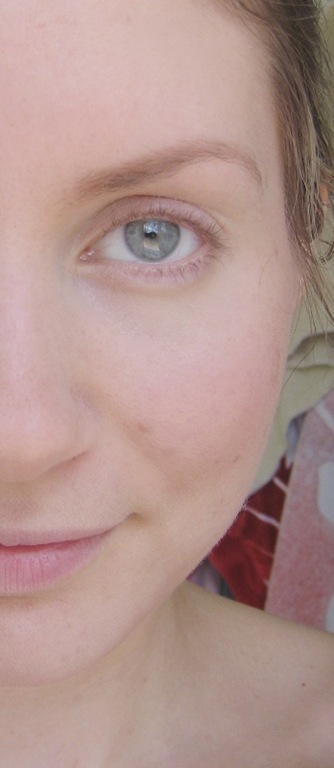 Shanna was about three, with long, wispy, platinum hair and trimmed eyelashes, just like her mother. I remember standing mute, as my co-worker explained the need for trimming. All I could think of was the proximity of a sharp object to the eyes of a child not yet in full command of her body. It was my first encounter with a “single mother”, a “bastard child”, and many other social circumstances my parents would rather I not have encountered. This beautiful child, through no fault of her own, carried an ugly label, suffered needless danger to her eyesight at the hands of a mother obsessed the lash length, and, worst of all, was named for the heroine in a romance novel.
Shanna would be over thirty years old now; her mother, near sixty. I wonder occasionally if Shanna still clips her lashes, and if, as I’ve always heard, they actually grow in longer for the trimming. Did she follow in her mother’s footsteps? Does she paint on her eyebrows every morning? Does she pour coffee while sharing a laugh with the same five men each morning? Did she ever query the origins of her name?
© Copyright 2007-2009 Stacye Carroll All Rights Reserved


 Are We There Yet?