To Destin, For Dad

My Dad is sick. 

That’s never happened.

Just ask him, he’ll tell you.

Well, except for that one time.  A seed got trapped in a crook in his colon.  I met them in the emergency room…Dad swallowing a hospital bed while Mom looked on…from a distance…clutching her purse, under an expression that begged the question, “What now?”.

As long as I can remember, Dad has prided himself in the fact that he’s never had a headache.  In some versions, a headache becomes the “common cold”.  No matter.  To hear him tell it, he’s had neither. 

He’s confrontational and cantankerous and a few other “c” words that, when taken together, translate into “just plain hard to get along with”, and now he’s sick. 

When he called, he blamed a hot dog…a foot-long Coney; admittedly, not the kind of thing an eighty-one-year-old man ought to eat.  It had to be food-poisoning, he reasoned. 

But he didn’t get better.  He stayed sick.  And common sense will tell you, a hot dog doesn’t have that kind of staying power.  Not even a foot-long Coney.  Food poisoning comes, tries to kill you and, if unsuccessful, leaves.  Three day nausea is something else…something serious…some kind of sickness. 

He tells me he’s better. 

“But you’re still coming down, aren’t you?  I’m still sick!  I’m weak!”  This, from the man who never had a headache…or the “common cold”…depending on the version.

And, I did come. 

And, I brought a sister.

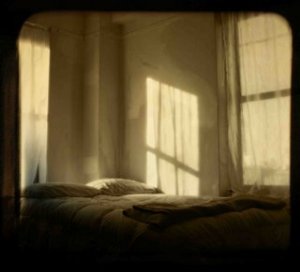
And, we did laundry, and dishes, and we made the bed.

And when Dad said, “You know what sounds good?”, I got my keys. 

I visited fast food restaurants I never knew existed and ordered with specificity, because “they never put enough sausage” on the sausage and gravy biscuit.

On Saturday, it occurred to me I’d been “at the beach” for almost an entire day and never seen it…not really.  I mean, I’d caught a glimpse between hurricane-proofed monoliths upon our return from the Potato Chips/Malted Milk Balls/Vanilla Ice Cream run, but that was it.  I hadn’t really heard it.  I hadn’t watched it, and I definitely hadn’t smelled it.

But, I fixed that.

After dinner, I got my chair…the one that still spills a little bit of Myrtle Beach every time I take it out…and I headed for the sand. 

On the stairs, a couple stopped me.

“Excuse me!  Are you going to have a hurricane here?”

I thought several things at once.
I thought , “They think I’m a local.”(This was kinda cool.)

I thought, “They’re just a young couple on their first night of vacation.” 

I thought, “Bless their hearts.”

I shared wise weather anecdotes I’d collected during the preceding 24 hours, before moving to place my chair in a spot that would allow me the best use of Instagram.  I know…that sounds silly…but I haven’t quite got the hang of it.  I’d love to be able to edit more…

After taking several severely out-of-focus photos, I screwed my chair into place and sunk into it.

To my left, a meaty woman seemed unaware that most of her bottom had escaped her suit.

To my right, two boys flew kites.

The worried couple waded.

White caps rolled in bringing memories…of my mother in a two-piece…red with tiny flowers.  And she… so brown…so confident.

And, my sisters, dripping castles.

And, my children, with my grandson. 

Jennifer and Elijah, dripping castles just like we did.

And my father…and floats…plastic floats in pastel colors that rolled with the waves…rolled and rolled until…if you closed your eyes, sleep could come…

© Copyright 2007-2012 Stacye Carroll All Rights Reserved

>Not Fit To Be Around

>

I’m surly when I’m sick.  I don’t whine.  I’m not demanding.  I’m surly.


I don’t know if there is such a thing as a Southern Dictionary, but if there isn’t there ought to be.  For my purposes, let’s pretend. 


If you looked up “surly” in the Southern Dictionary, the word would be defined as “not fit to be around.”  And, while I don’t remember hearing my mother use the word “surly”, she threw the definition around quite a bit.  And, not just when we were sick…


Bad behavior would get a “not fit to be around”, as would poor hygiene.  And anyone who “pitched a fit”, was definitely “not fit to be around”.


Demonstrating our unfit status, she required us to spend sick days in our bedrooms; in the bed with the lights out, creating a strangely comforting atmosphere, almost like another layer of blanket. 


After successfully seeing my sisters off to school, mother eased my bedroom door open.  Light in the hall glinted off a chrome television stand as she attempted to navigate shag carpeting.  As long as I didn’t move, her progress continued quietly, albeit slowly.  If I so much as opened an eye though, she burst forth with a string of whispered epithets that seemingly propelled the stand over the bumpy surface.  She plugged it in.  She turned it on, and after several seconds, the tiny light in the middle of the screen burst open to reveal Bob Barker and “The Price Is Right”.  It was never anything different.  It was as though he waited for my mother to plug him in.  I dozed as buzzers buzzed, wheels spun, and curtains opened.  “But wait, Bob!  That’s not all!”


The next time I saw her, my mother held my lunch tray.  Lunch was always chicken noodle soup and saltines.  And, no matter what ailment waylaid us, we drank ginger ale.  The only other time I ever had ginger ale was in the Shirley Temples I was allowed to order with my birthday dinner.  Ginger ale became important.


The sound of my sisters’ excited voices accompanied blinding sunlight splitting the curtains. The room grew warmer.  I shucked blankets, wishing for a break in their footfalls, a hand on the doorknob.  Their voices faded as they dispersed. 


Smells of supper seeped under the crack between my bedroom door and the floor.  I could always tell what she was cooking.  I could also tell it was time for Dad to come home. 


He always stopped.  He opened the door with his shoulder, his head turned in the other direction.  He slipped inside, closing the door softly behind him.  His weight on the edge of my bed pulled me towards him.


“Well!”  To this day, he starts many sentences with a hearty “well”. 
“How’s my girl?”  Awkwardly, he stroked my hair from my forehead.
“Okay,”, I squirmed, delighted at the attention and unable to contain a smile that might be interpreted as a “Get Out Of Jail Free” card.  I wasn’t sure I wanted to be sprung.


He answered my word with a pat to my head and a “Good”, before turning to leave the way he had come.


I continue my mother’s tradition with my own kids.  A sick day means a day spent in the bedroom.  Wheeling in the television would be much easier over hardwood floors, but I don’t have to.  The television is always there, behind the doors of an imposing armoire, and the remote control is within easy reach.  What with all we’ve learned about food in the last forty years, I’ve altered the sickroom menu by substituting broth for soup and foregoing crackers altogether.  Perhaps some nice yogurt if you’re still hungry?


And, no matter how much time passes, nothing pacifies me as well as a darkened room and a softly playing television.


Don’t open the door unless you’ve got food.

© Copyright 2007-2010 Stacye Carroll All Rights Reserved

>Leftovers

>

I met Vera when she joined the staff of the midwifery clinic where I worked.  Patient demographics had changed drastically over the preceding year, forcing a kicking and screaming administration to advertise for a translator.  Vera was a fifty-something, bottle-born redhead with a personality to match.  She was also Puerto Rican, which would seem to make her a perfect fit, unless you know something about the importance of dialect to the Spanish language.  Most of our patients had immigrated from Mexico and Central America.  Watching her with them reminded me of a comment my son made, after his first football practice, when he described a coach who had just moved to Atlanta from New York as, “…that French guy.”


Vera persevered, undaunted.  She never lost patience with patients whose pronunciation differed from hers.  But neither did she change.  She taught, instead. 


As I would soon learn, Vera was well schooled in adversity.  One year before joining our staff she buried her husband of nearly thirty years.  He had suffered from ALS for the preceding ten.  During the two years we worked together, she constructed a story of undying love and amazing perseverance.  She talked about the kind of man he was before the illness, the adventures he’d lived for, and their passion.  He had been a successful businessman, making pots of money right up until the day his legs refused to support him.  His time in a wheelchair was short, as the disease progressed quickly.  Soon their world shrunk to fit inside their sumptuously decorated master bedroom.  Vera slept by her man every night until his last night, and on his last day wrapped her body around his as he breathed his last breath.


Her description of his losses struck me.  I pictured them as she spoke.  One day he couldn’t write with his left hand.  Six months later he couldn’t raise his arm to put on a t-shirt.  The other arm quickly followed suit.  He fell a lot before his legs stopped working.  The wheelchair meant she couldn’t leave him for long.  One side of his mouth went limp, so she had to remember to put the spoon in the other side or the food would fall out, making him angry.  
I could easily picture myself the caretaker.  I graduated from nursing school.  I worked as a staff nurse for two years before quitting to care for my own babies.  I volunteered at a hospice.


What I can not imagine is being the one with the misshapen mouth. 


Years later, I discussed this with a friend who sympathized, saying she and her husband had had “the discussion”.  She almost whispered the words, and I understood.  Saying them aloud makes them real. 


“I won’t have anyone taking care of me.  When the time comes when I can’t take care of myself, that’s it, I want to go.”


“You mean…?”, I ventured.
“Yep.”  The word felt incongruously nonchalant.  “And, he’s going to help!”  It was more an order than a suggestion.  I found myself feeling sorry for her husband.  Will he still be afraid of her?  Even when she’s dying?


I watched my mother live four years as a cancer “survivor”.  And, that’s what she was; she was surviving.  You certainly couldn’t call it living, because it in no way resembled her life before cancer.  Life after cancer was dependent on a steel oxygen tank and lots of plastic tubing.  Oh, and yogurt.  Radiation killed her natural flora, making digestion difficult.  Yogurt helped to replenish it, allowing her to eat very small amounts of other foods.  And, she developed a penchant for scarves…


She smiled a lot.  To hear my father tell it, she and he enjoyed those years very much.  But I have to wonder.  I wish I’d asked. 


“If you had it to do all over again, would you?”


I heard an interview today with Tony Judt.  You may not recognize the name.  He was a British-born historian who wrote what he called “boring old history books”.  One of them was nominated for a Pulitzer Prize.  He died last Friday from complications of ALS.


The interview was taped five months ago.  His voice was digitally amplified and yet hard to hear over the wheezing oxygen pump next to his chair. 


The interviewer focused her questions on death and dying, asking how things had changed for Mr. Judt, and how he felt about them.  The topic turned to religion.  Mr. Judt was a Jewish man who attended temple to please his wife.    


He began by talking about life in a wheelchair, moving on to the time when his life shrunk to fit inside his bedroom. He painted a picture of life lived in an empty space that people used to visit.  He felt sorry for himself until he realized it was his responsibility to be present, to be joyful, to create memories, because memories are after-life, and soon after-life was all the life he would have.  In Mr. Judt’s opinion, we live on in the minds of our loved ones.  How we live is up to us. 


Boiled down, it’s selfish versus selfless.  Selfish won’t allow for less than.  Selfless accepts less than and builds upon it in order to leave something behind.


I never met Mr. Judt while he was alive.  Now, six days after his death he’s left me with something to think about.


Perhaps he was right…

© Copyright 2007-2010 Stacye Carroll All Rights Reserved