Gathering Scraps


She’d always meant to plant a cherry tree. The blooms, a true harbinger of spring, danced in her favorite shade of softest pink, from spindly branches in her neighbor’s yard. Emily sat in her office chair admiring the way the bluest sky separated the twisted branches, and highlighted the flowers.

“Thinking, again?” Troy’s hand slapped the door facing just before his feet came down with a thud against the hardwood floors.

Emily grimaced before spinning the chair in his direction.

“I’ve asked you not to do that.”, she said before turning again, this time in the direction of her desk.

Troy’s arms snaked around her neck as he clumsily placed a kiss on her cheek, displacing the earpiece of her glasses.

“I’m going to shoot hoops!”, he called, already halfway across the room before she successfully resettled her glasses.

“K…” The gaiety she forced into her voice left just a hint of bewilderment as she watched him lope away.

The backdoor slammed, as expected, and she raised her hands above the keyboard and considered the white screen in front of her. Images played inside her head where words should have been, as she replayed the scene in her office the day before.

She never realized desperation had a scent until the last applicant of the day entered timidly to stand before the interview committee she chaired.

“Welcome, Mr…” She had drawn out the title while scanning for the applicant’s name on the list her secretary had prepared. After several seconds, she realized she had expected the man to provide his name, and he hadn’t. Surreptitiously, she glanced at Tom, who sat next to her, for help.

“Wang. I believe this would be Mr. Wang.” Tom stood and offered his hand, sending his reflection streaming across the burnished wood of the table that separated them.

She didn’t know when the blush had begun to color his face, but the sweating had just begun. A single drop snaked down one side of Mr. Wang’s face just in front of his left ear.

She smiled her most welcoming smile.

“Have a seat, Mr. Wang, please.” And, as he slid into the chair opposite her, “We’re all here to learn a little more about you, so why don’t you start by telling us a little about yourself?”

As the man stumbled through words he had obviously attempted to memorize, she wondered when. Had he crammed mightily the night before to come up with an impressive speech, only to have his mouth betray him? Or had he simply interviewed so many times that the speech played like a badly prepared regurgitation? When he finished, she realized she’d heard very little of what he had said.

Tom glanced in her direction before pushing the paper in front of him forward and addressing Mr. Wang. He asked the usual questions ending by asking Mr. Wang to predict his future.

“Where do you see yourself in ten years, Mr. Wang?”

The man raised a hand to his chin to catch the drop of moisture that had finally traversed the planes of his tired face before answering.

“I thought I’d be at Bailey’s forever…”, he started. “I would hope I could be here for the rest of my life.” The last sentence was said through an uncomfortable wrenching of his face that never quite became the smile he had hoped for.

Emily felt his expression resonate somewhere deep inside, and a scream began to fill her head, “Noooo…”.

Now, as she sat at home, in front of her computer, the sound of rubber striking concrete punctuated the five words that played again and again inside her head over an image of hopeless desperation, “The Rest of My Life, The Rest of My Life, The Rest of My Life”.

Her fingers began to move along the keyboard, and she watched disinterestedly as words began to file onto the screen in front of her. It wasn’t what she’d meant to write, but that happened. Often, an idea occurred to her during the day, and she scribbled it on the nearest scrap of paper before she had a chance to forget. Sometimes, as she sat in front of the computer later that evening, the idea actually fleshed out and became something she was proud of. Other times, after several attempts, the story wouldn’t come, and she pulled the chain on the desk lamp with a sigh after giving up.

Her fingers flew, forming two paragraphs through their efforts. After placing the last period, she scrolled up and read before adding, “Sincerely, Emily Walker”.

The next time she approached the keyboard she wouldn’t be pursuing a hobby, she would be embarking on a new career, and the rest of her life.

© Copyright 2007-2009 Stacye Carroll All Rights Reserved

Are You Really Gonna Eat That?


“You’re actually going to eat that?”

Gingerly, careful not to touch it’s fiery lip, I slid the bowl of steaming cream-of-chicken soup out the microwave.

“Yeah!”, I answered. “It’s only got one-hundred-twenty calories.” I pushed the red and white can in her direction.

Slowly stirring to break up small clumps of chickeny goo, I looked up to see a look of utter distaste on Susan’s face.

“What?”

“I just never saw anyone eat it. I mean I use it in recipes and all, but I’ve never actually eaten it.”

I slowly walked the hot soup to my designated spot at the break table and joined another co-worker who was arranging chicken salad atop a concoction of apple chunks and red pepper strips.

“Apples and peppers?”, I asked, raising an eyebrow.

“Oh yes!”, she exclaimed. “I make my chicken salad the same way I make my potato salad. I dump in anything I can find in my refrigerator.”

I sat with that a while before turning the conversation back to the soup.

Sipping first, I offered, “I just remembered how I got started eating cream-of-chicken soup.”

Two interested faces turned my way.

“My mother used to give it to us when we were sick. She started with chicken noodle, and when that stayed down, we graduated to this.” I slurped another spoonful.

“And ginger ale!”, I said after swallowing.

“My mother gave us ginger ale.” Susan concurred, still casting a doubtful eye in the direction of my bowl.

“And not even good ginger ale, just regular ginger ale. It was one of my favorite things about being sick.” As I spoke, I flashed on the sickroom of my childhood.

Days spent home from school were spent in the bed, and Mom had a television, reserved for just this occasion. After my sisters had left for the bus stop, she pushed it in on the rolling cart it lived in. It was the only time we ever had the television all to ourselves. The door to the bedroom remained closed unless she opened it to bring in ginger ale, soup, aspirin, and/or Pepto-Bismol. I think about those days often, even thirty-plus years later. It was the only time I had Mom all to myself, and the time when she seemed the most caring.

“We had broth.”, I realized Susan was speaking.

What ensued was a discussion of forgotten culinary delights. The fish sticks that were a mainstay of many a baby-boomer’s Friday night, as Mom finished applying her lipstick, while Dad left to pick up the baby sitter. The SpaghettiOs, which Mom later insisted she had never served us at the picnic table while on vacation at the beach. But I can still remember how good they tasted paired with pan-fried luncheon loaf. And pimento cheese! Specifically toasted pimento cheese sandwiches and the pimento cheese toast Dad baked in the oven on Saturday mornings.

We came away with the realization that dietary habits have changed drastically over the past thirty years, and probably for the best. At the same time though, I wonder at the loss of simplicity and routine inherent in the foods of our childhood.

Our children may have a finer grade of food, but I wonder if it loses something in the translation. My children never experienced the camaraderie of Friday nights in front of the television, watching the same sit-coms for years on end, after finishing a plate of breaded, compressed fish parts. They won’t remember the anticipation of smelling the scent of rosewater that preceded Mrs. Jordan into the house, or the sense of awe when Mom finally emerged from the back of the house, having traded her uniform of polyester pull-ons for a skirt and heels.

A cherry armoire hides my son’s television from view, but it’s always there. When he stays home from school, he does so in the bed, watching the same television he always watches. And the door to his bedroom remains closed until I open it, bearing a glass of ginger ale, a cup of soup, or ibuprofen.

A couple of weeks ago, I took a day off to spend with my son. I called him in for lunch, and as he washed his hands, I filled his plate with greasy, brown fish sticks.

“Mom! We never eat this stuff!”, he exclaimed through a grin.

“Is it ok?”, I asked.

“Yeah!”, he exuded.

Yeah…

© Copyright 2007-2009 Stacye Carroll All Rights Reserved

These Dreams


Dusk had fallen. A large, vintage, light-colored car sat atop a hill on an ice-glazed driveway from my past.

The car began to roll and I turned to face an opaque sheet of ice-encrusted glass, through which only misshapen splotches of muted colors were visible.

As I fought to hold the steering wheel steady, I felt the rubber beneath me try, and fail, to find leverage on the slick slope.

The street I entered was lined, on either side, by an assortment of vehicles of similar age, but varying color. Someone was having a party.

I felt a moment of horror as I realized I had to travel, in reverse, between the icy rows. I wondered how I would do it, even as I did. As I maneuvered through my panic, an unobstructed yard, full of lush, green, perfectly manicured grass appeared through my back passenger-side window. All I had to do was get the car to that yard, and my journey would be over.

The rear wheels gained entry, jumping the concrete curb with a “thud-thud”. The car turned with the interruption, and came to a stop perpendicular to the house behind the grass, and finally, I exhaled.

While I am assured by those who should know, that I do indeed have them; I rarely remember my dreams. Even if I manage to retain some small portion of a night-time visit from my subconscious, it is usually gone by lunch. I have had two dreams in the last week which have, since slithering out of my darkest recesses, remained vivid, and firmly planted on my frontal lobe.

Though they usually evade my memory, dreams, as a whole, fascinate me. The fact that our brains continue to work, even as we drift into an altered state of consciousness during which we have little to no control, is a marvelous mystery. And, I do believe there is much to learn in what our simplest selves have to say.

I stand alone in my bedroom. Through the open door, I watch a woman moving about the den.

A confrontation ensues, just outside my bathroom, and it becomes obvious that the woman I’ve been observing is holding something I value. I attempt to take it from her, but she refuses to relinquish the prize. She mocks me with her patience. The only raised voice is mine, and, physically, she is much stronger than I.

As I wrestle with her, my image appears in the mirror over her shoulder. My face is twisted, angry, and ugly. And then I look at hers. But hers, too, is mine, calm, serene, and pitying.

The path I am traveling is treacherous, but with careful attention, will bring me to a better place. And, when I get there, I will have decided which “me” I want to be.

“Is it cloak n dagger
Could it be spring or fall
I walk without a cut
Through a stained glass wall
Weaker in my eyesight
The candle in my grip
And words that have no form
Are falling from my lips”

Martin Page & Bernie Taupin

© Copyright 2007-2009 Stacye Carroll All Rights Reserved

Sudsy Serenity

As a kid, I hated washing the dishes. As I recall, the chore was assigned a week at a time, except for the weeks when my sister developed an odd case of eczema on her forearms. The doctor advised she keep those arms clean and dry, and I saw the hand-writing on the wall…

Dishwashers weren’t what they are now. There was no pot-scrubber feature, or handy disposal to get rid of all the “baked-on residue”. And, my mother was a real stickler about rinsing. Did I say rinsing? She called it rinsing, I called it washing. It wasn’t a simple matter of holding the dish under running water. My mother’s idea of rinsing involved steel-wool and plenty of elbow grease before sliding the dish between the guides. Even as I child, I thought this ritual cumbersome, inefficient, and a serious waste of time better spent riding my bicycle/Dodge Rambler, or talking on the telephone.

In high-school, my American History teacher directed us to write a personalized version of the Declaration of Independence. Before handing mine back, she had drawn a large, red “A” just above the title “My Declaration of Independence from Dishwashing”. Later that night, I offered the paper over my father’s full belly, just as my mother’s voice called from the adjoining room, “Stacye! Dishes!”.

My first home away from home was a charming, though antiquated, farmhouse on the outskirts of town. There was no dishwasher, which given my experience, only simplified the process. I washed, and God dried.

I moved, later, into several different homes with working dishwashers that I never used. I proved to be a very capable dishwasher, and as my children grew, I assigned the chore, a week at a time. They washed, and God dried, while I carried a basket of laundry outside to hang in the sun.

It wasn’t until my children were old enough to visit their friend’s homes that they began to question our routine.

“Mom, we have a dishwasher. Why don’t we use it?”

Stretching both arms out in front of me, I answered with a smile.

“Because I have a dishwasher, and now I have three more!” I finished by running one hand through my child’s disheveled hair, only slightly muffling the answering groan.

Ten years ago, I met and married a man who came with a built-in daughter and roommate, in addition to the usual appliances. The merging of our two families created a dish-dirtying machine that overwhelmed my shiny, chrome double sink. The age of mechanization began, and might have continued had it not been for financial doom and gloom.

Recent pay cuts, worthless retirement accounts, and media driven panic encouraged me to look at ways to reduce my expenses. I cancelled my mail-order DVD account, informed my son that dinner out would henceforth be viewed as a “treat”, and decided to delay buying the pair of noise-cancelling headphones I’d been eyeing. I arranged to have a clothesline strung between two immense, sturdy, southern pines, and declared the dishwasher off limits.

Monday, for the first time in over ten years, I washed our dishes by hand. It didn’t take long to wash a couple of plates, a few glasses, two coffee mugs, and several pieces of cutlery. It took even less time for me to realize why I had clung to this routine for so long.

Drinking glasses danced amidst soap suds, colliding with an occasional gentle clink, and causing me to notice that there was no other sound to interrupt my thoughts. The simple act of running a sinkful of dishwater had cleared the room of those fearful of being called upon to dry, leaving me free to consider our dinner conversation, to mull over my day, and to plan for the next.

Humming tunelessly, I dragged the sudsy dishcloth over the face of a plate, appreciating the sense of accomplishment and purpose inherent in so simple a task. I placed the steaming dish into the dish rack I’d kept in case of emergency, and left the drying to God.

© Copyright 2007-2009 Stacye Carroll All Rights Reserved

Through the Eyes of a Child


At eight years old, Lisa dwarfed the desk she leaned upon. Her eyes moved quickly, and side to side, as she read intently from the textbook in front of her.

“She doesn’t even know I’m here.”, Helen thought as she passed the child.

“Child”, the word repeated in her brain as she reminded herself that the person at the desk was, indeed, just a child.

“Then why do I feel so self-conscious?”, she continued the conversation with herself.

This child wasn’t just any child. This child was the boss’s child. Imagined snippets of Lisa’s privileged life played in the form of colorful magazine images inside Helen’s head, as she fed paper into the fax machine.

“What must she think of me, a grunt in her father’s office?”

“Look at the way she studies so intently! She hasn’t moved in minutes! Is this the result of parenting? Is this the effect of having a stay-at-home Mom?”

Helen stood in front of a historically moody fax machine, listening for the sounds of successful transmission, as an image of her own back presented in her head, and she wondered what the child thought of her bulky, discount-store sweater.

A piercing squeal signaled her success and Helen stole a glance at Lisa as she left the room. The child’s head still hung over the book, allowing a curtain of perfectly coiffed, shiny blonde hair to shield her face.

The conversation continued as she made her way back to her cubicle.

“She probably doesn’t see me that way at all. She probably didn’t speak because she’s shy, and I am an adult, and maybe she just doesn’t talk to adults.”

Realizing she needed another copy, Helen turned on her heel upon seeing the crowded bulletin board over her desk.

“This job is embarrassing. It takes no skill.” As she navigated the cubicle maze, the conversation began again. “That child studies that way so that she will never have to work in a place like this!”

Arriving at the antiquated copier, she raised the lid and mitered the paper on the glass.

“But she doesn’t really know what you do! For all she knows, your job is very difficult, requiring lots of skill and education!”

Helen lowered the lid and pressed the button. An image of her boss’s den filled her head as he sat upon an oversized, expensively upholstered ottoman in front of his studious blonde daughter. “We buy this education for you so that you never have to work for someone like me.”

Lights flashed as the mechanism traveled back and forth underneath the glass.
“This isn’t about her, you know. This is about you. That child has no idea what you do or why. But, you do.”

A flood of images filled Helen’s head as she retrieved both copy and original, beginning with that goofy graduation picture, complete with rakishly tilted, white mortar board. She saw an image of her first, hopelessly addicted, husband, and a succession of mindless jobs she worked at to support her children. She saw the jalopies she drove and the unimaginative boxes she’d lived in, and the puzzle began to come together.

She barely noticed the co-worker she side-swiped while rounding a corner of the maze. His “ ‘Scuse me…” brought her head up and she dashed off a smile that stuck as she realized she’d bought it.

Years of negligence and name-calling had left their mark. She saw herself as others experienced her, strong and aloof, yet, caring. Her smile deepened as she realized the permeability of her guise. Her perceived strength was nothing more than a perfected defense mechanism.

Unmasked by and eight-year-old, she filed the copy, and then the original.

© Copyright 2007-2009 Stacye Carroll All Rights Reserved

Oh, My Darlin’…


“You wait!” A familiar sneer leant my mother’s words an equally familiar tone of acridity. “You wait! You’ll wish you had this time back! Time moves faster the older you get. Why, at my age, a year goes by in a blink of an eye.”

As a kid, who had probably just bemoaned a yawning three week wait until Christmas, her admonition had no more effect than her frequent wishes for my future.

“I hope you have children, and I hope they cause you just as much trouble as you’ve caused me.”

As it turned out, she was right, on both counts.

I have heard the month of January described as meaningless after the hustle and bustle of a holiday season that now seems to span several months. There is, of course, an introspective aspect to January, coming as it does, after weeks of economic, gastronomic, and even alcoholic depravity.

New Year’s Day dawns on millions of hung-over, antacid-swilling Americans, who greet the day holding a television remote control. Football-filled hours pass in a semi-upright position, interrupted only by the odors of foods said to be infused with magic powers on this day, and this day only. More often than not, it is while we are pushing collard greens around the perimeter of our plate, that someone floats the topic of New Year’s resolutions. As we anticipate finally being able to access a beer without encountering a well-maintained eyebrow raised by the “time police”, we attempt to discern a recognizable image in the smattering of cornbread crumbs stuck in gravy remnants before answering.

And, no matter the answer, we finally manage to pull from the refuse that is our dinner plate, one thing is sure; by January thirty-first we will have forgotten it. This is the stuff of January.

Recently, though, I’ve discovered other reasons to mark January.

January is the month of the Clementine. In case you are not familiar with this delectable nugget of sugary citrus, a Clementine is cousin to the tangerine. A friend tried, for years, to sell me on their merits, but to my discerning eye they appeared nothing more than a miniature tangerine at twice the price. I couldn’t imagine anything about them being worth double the money…until my son tasted them.

Usually imported from Spain and neighboring regions, these tiny, orange morsels are sold almost exclusively in crates. This feature originally, prohibited me from buying them. This year, after tasting one provided by my friend, I decided to chance unloading a crate of citrus on a family usually partial to meatier fruits such as apples, pears, and melons. Within days, my son was urging me to return to the store for another crate, and when I tasted one, I understood why.

That was three crates ago, and on Saturday, I carefully placed one of the last three available into my grocery cart. Clementine season is winding down. We’re treating this crate as though it will be our last, because it just might be.

This weekend, I discovered another reason to mark the passing of January. My Christmas cacti, inaccurately named as they begin blooming just after Thanksgiving, are waning. I have, over the years, collected a virtual grove of cacti by taking advantage of post-holiday plant sales. At present I nurture eight, in varying shades. This year, for the first time, all of them bloomed.

My grandmother raised Christmas cacti, and I loved one of them, especially. It was at least two feet in diameter, and bloomed in a lovely, deep, shade of pink. Visits to her house were warm, due in part to her attention to the thermostat, but also because of our shared interests. She knew I loved plants, and she loved to share. Every time I visited, she pinched off shoots of any plant I admired, urging me to root them. And, I did.

Today, my largest Christmas cactus, started as an offshoot of the one I so admired, measures over two feet in diameter. She is old. There are unattractive striations upon her leaves, and yet she blooms, gloriously, year after year. When others tease, putting out buds that never come to full fruition before the foliage shrivels; she blooms, and blooms, and blooms. I fertilize her, in warmer months. I water her, judiciously at first, until the buds begin to squeeze from her succulent fronds, whereupon I strengthen her by plying her with liquid. And she responds to my ministrations, year after year, after year.

Withered blooms fell into my watering can yesterday. The show is nearly over. As I looked around the sunroom, I enjoyed, possibly for the last time, each and every bloom; bright pink, salmon red, and white, with just a trace of pink lining each petal.

And I marked January, wondering where the time had gone.

© Copyright 2007-2009 Stacye Carroll All Rights Reserved

Saturday Morning

The warm sun and gracious breezes of yesterday are gone. The morning dawns on rain; a reminder to be careful what you wish for….

I’ve sat here for too long, as per usual. So many distractions, so much ether-noise. I’m contemplating creating a net-free day; just one day, every week, during which the rolling chair in my office is allowed to grow cold. I’m warming to the idea.

I prefer lazy Saturdays. Yawning days upon which I can paint whatever vista my mind creates. Today is not one of those days. After struggling to bring some semblance of order to my domicile, I will pull on my warmest athletic clothing and accompany my son to his basketball game. We’ve had fun this year. We are winning, due in large part to my son’s ability. Success breeds fluidity.

A more expansive frame of mind encouraged me to contact a friend and arrange a dinner date for later this evening. As happens so frequently, now that the time is upon me, I consider offering my regrets. But I won’t. I’ll go. We’ll meet in the parking lot, and exchange the usual feminine greetings, or perhaps commiserate about the weather. Once inside, we’ll sit on opposite sides of a highly burnished wooden table and scan the crowd with full knowledge that we are miles from familiar faces. The menu will provide a private moment in which to compose our made-up faces while we flip through a mental tickler file of conversation topics until a particularly savory offering captures our attention, bringing us back to the task at hand. I’ll consider ordering something fatty and delicious, but I’ll give a cursory look at the column featuring soups and salads. I’ll make a choice to keep in my back pocket until time to order, when I’ll encourage her to choose first. My choice will be incumbent upon hers. After all, if her attempts at conversation are punctuated by forkfuls of vinegar-spiked, leafy greens, a beefy morsel won’t rest easily upon my palate.

I was reminded, this week, of the psychological benefits of good works. Today, I am returning to the nursing home. The hospice is housing four patients there. I will visit those I can find. Ms. Lucie is still there. I am looking forward to seeing her. I wonder if she will remember me. Of course, she rarely knew me when she saw me every week, so the question seems a little ridiculous. One the other hand, it really doesn’t matter. It doesn’t seem important to her that she know who you are, it is only important that you are, and that you are there. I never left her without a smile. I’m looking forward to wearing one today.

© Copyright 2007-2009 Stacye Carroll All Rights Reserved

Biscuits


I never mastered the art of biscuits.

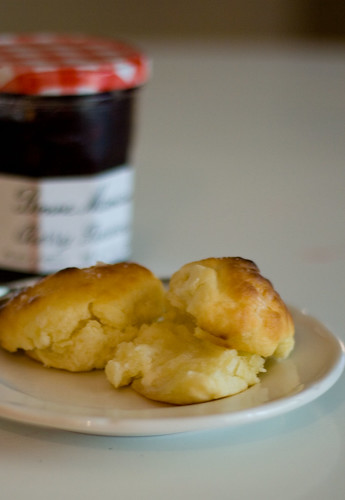
Though she didn’t do it very often, my mother made excellent biscuits. She called them Angel biscuits. Feeding a family of my own, I googled the recipe, and tried it. My children, whose exposure to sports was limited to the southern mainstays of football and baseball, exhibited an unexpected knowledge of hockey in describing an appropriate use for these biscuits.

My father enjoyed bread with dinner but, more often than not, his yen was satisfied by two slices of “Colonial” white bread riding one side of his generously filled plate. The rest of us ate breadless, and the blessing does not go unrecognized.

Holidays were marked by “dinner rolls”, usually purchased from Rich’s bake-shop. I remember them as small, delectable, little fluffs of bread. I probably could have eaten my weight in them, but the napkin lining the bread basket was carefully secured after the first offering, and my father’s hand was the only one allowed a second chance.

To my mind, the pièce de résistance of the roll kingdom measured a mere finger-width, and was only offered as an accessory to a bucket of Kentucky Fried Chicken. One of these, cradling a dollop of gravy, and I forgot all about the chicken. Long ago, these rolls went the way of Rich’s bake-shop, replaced, of course, by biscuits.

Occasionally, and usually at breakfast, my mother rapped open a can of biscuits. My father seemed satisfied no matter what form of fiber sat upon his plate. I, however, found canned biscuits an unsatisfactory fabrication of the real thing. No amount of grape jelly transformed this pig’s ear into a satin purse.

My former husband was raised in the tiny town of Jefferson, Georgia, by a mother who knew her way around a southern kitchen. And while he never complained about the dinners I fashioned from the tins and boxes of my youth, he moved canned green beans from one side of his mouth to the other, as he told stories of bigger, greener beans, slow-cooked on the back of a stove for hours, and biscuits, used to sop up the “pot liquor”.

He was there when I attempted to recreate my mother’s angelic recipe, graciously refusing to lend his voice to the discussion of ice-hockey, choosing instead to described biscuits the way he’d come to know them; large squares, cut from a single slab of dough. It became my mission to uncover this long-held culinary secret.

Viola Carroll was a formidable woman. Striated skin, hanging from space once occupied by her tricep, spoke of former girth. She was tall, a good six inches taller than I, and vocal. If she thought it, she said it; and, this knowledge, alone, was enough to put me on my best behavior. I dressed, before we left, in my most becoming casual outfit, in an effort to quell her tongue. Viola expected a woman to be “dressed”.

Our arrival was always met graciously, as Viola went for her purse. Viola always needed something from the grocery store. She gamely folded her generous frame into the bucket-seat of my aged Toyota wearing a look of anticipation heretofore only seen on a canine head hung from a car window.

As we bounced between traffic lights, Viola steadied herself upon a black, vinyl handbag boasting a faux-gold snap.

“I like yowah little cah, but this heah road sho is bumpy!”

Even now, the memory of those words brings a smile to my face.

Our foray of the local discount grocery store complete, Viola demonstrated, for me, the artistry of southern biscuits. They were, indeed, carved from a single slab of dough which she manipulated between country-sized hands, for several minutes, before slamming the mass onto an unsuspecting jelly-roll pan. A large, well-worn, butcher’s knife quickly separated the colorless blob into generous squares before her hands bounced the sides into shape. The result was toasted to a golden hue on top, leaving the middle ethereally transparent. As the fibrous mass melted upon my tongue, I knew nothing I could conjure would recreate that kind of bliss.

Fortunately, for me, there was “Bisquick”; a couple of cups of powder, poured from a gaily-colored box, mixed with water, and voilà, biscuits! Following, Viola’s example, I slammed tablespoon-sized blobs onto an unsuspecting jelly-roll pan.

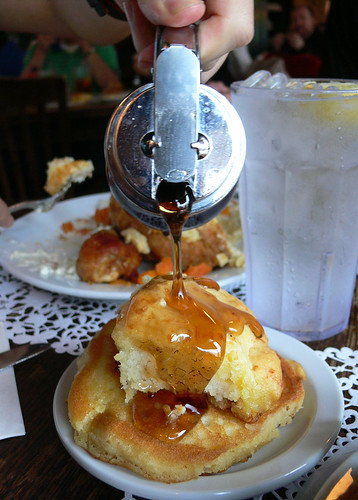
Today, on the rare occasion I venture to place biscuits on my southern dinner table, I must first remove them from a frozen, plastic bag. I understand the result is every bit as satisfying as my mother’s Angels, and Viola’s squares, especially when dunked in yellow syrup.

© Copyright 2007-2009 Stacye Carroll All Rights Reserved

Word of the Day: Mercurial


I like the word “mercurial”. It virtually dances on the tongue, fraught, as it is, with alphabetical curly-cues and trills. When I say it, out loud, I immediately flash on the word “ethereal”. On first thought, I supposed this to be an accident of pronunciation, but, in truth, there is an other-worldly essence to them both.

Mercury, dubbed Hermes by Greek mythologists, was the messenger god. He was also associated with trade, travel, and speed, as symbolized by winged feet. Early Celtic art endows him with three heads, and sometimes three penises, all of which he put to good use.

Borrowing from Norse mythology, followers of the occult assign Mercury dominion over all things magical via a circuitous route that ends, apparently, on Wednesday. The French word for Wednesday is “Mercredi”, and in Spanish “Miercoles”.

Mercury enjoyed great popularity in early Rome, inspiring many heroic stories, even though, interestingly enough, he may have lacked initiative; acting, almost always, at the behest of someone else. Apollo, Zeus, and Odysseus used him to do their dirty work, as he was well versed in the art of trickery.

He was born of an illicit union, and embraced his father’s tradition, on a grand scale, enjoying some of the most beautiful of mythological women; among them, Aphrodite, Penelope, and Chione. The fruit of these unions mirrored his duality of nature. His son, Pan, was lauded as the god of shepherds, music, and fertility. More recently, however, his image has been borrowed for use as the depiction of Satan. Another son, the beautiful Hermaphrodites, suffered gender reassignment after spurning the advances of a scornful nymph, and later, exacted his own revenge by praying that an entire body of water be spoiled, such that anyone who swam there lost his virility.

Mercurial: “2) having qualities of eloquence, ingenuity, or thievishness attributed to the god Mercury or to the influence of the planet Mercury, 3) characterized by rapid and unpredictable changeableness of mood”

I like to say the word. I like to hear it. But, recently, I have realized I don’t enjoy people who are it.

© Copyright 2007-2009 Stacye Carroll All Rights Reserved