
I see him in you sometimes.
He lives in yours eyes,
behind your brow,
and in the bridge of your nose where it crinkles when you grin.
He comes with joy.
I see him in you sometimes.
He lives in yours eyes,
behind your brow,
and in the bridge of your nose where it crinkles when you grin.
He comes with joy.
My mother never asked why I always wanted to ride when she went to pick up Mrs. Jordan. She never asked, so I never told her.
It was because of the way she smelled.
Mrs. Jordan was our baby sitter, most of the time. Occasionally, we were subjected to Mrs. Holiday…she of the over-sized, plastic-rimmed eyeglasses, and mess of frosted hair which only added to the air of “Unfinished” she brought to a room.
Mrs. Jordan, on the other hand, had a place for every hair and every hair in its place. Short in stature, she was a study in cotton…cotton dress, cotton sweater, thick cotton stockings draped about the tops of her black orthopedic shoes. She favored pastels and Jergens’ hand lotion.
Thus the smell.
I don’t remember when I figured it out. I can’t cite the specific moment when I realized that the waft I lived for, as I perched expectantly on the backseat of my mother’s wood-paneled station wagon, emanated from a bottle of hand lotion. But I can say that, ever since I’ve known, I can’t pass a bottle without at least giving it a sniff. Usually I buy it. Today I brought a bottle to the office. It has a pump dispenser, making it easy to use while on the telephone…which I am…most of the time.
For some reason, I’ve always equated the scent of Jergens’ with femininity. I imagine a perfectly proportioned young woman wearing a slip, an old-fashioned slip, the kind with plastic adjustors on the straps. She sits on the side of a bed, languidly rubbing Jergens’ into her hands and forearms.
It wasn’t until this afternoon that I realized the error in my imagery.
Jergens’ isn’t used by perfectly proportioned young women. Young women don’t generally slather themselves with lotion and they don’t wear slips either.
As a young woman, the only time I applied lotion was after a bath…to smell good…especially if someone else was going to smell me.
I still do that, but it doesn’t stop at that. I have a lotion for my feet, a special lotion with special feet stuff in it. I have a lotion for my face. I have a lotion for my neck that I also use on my face when I run out of the other lotion I have for my face. I have a lotion for my eyes and one for my hands. I even have a lotion for my cuticles.
Having looked at it, there is no denying it. There’s a direct correlation between the number of years a woman has lived and the amount of lotion she uses.
I sat with that for a minute…and I’m okay with it.
Whatever else she was, Mrs. Jordan was a woman who smelled good and who, by her very presence, imbued that scent with a sense of femininity…orthopedic shoes and all…
There’s hope for the rest of us…
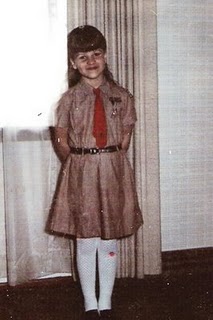
Despite the fact I only read it last year, on Tuesday I couldn’t remember the name of one of my very favorite books.
But, on Saturday, burying a hand trowel into earth made forgiving by Spring rains, I remembered being eight and being dubbed “Messy Bessie” by my brownie leader.
I forgot to buy an onion at the supermarket.
But every time I see a hat, or a lady wearing a hat, or even a hat-rack, I remember being twelve and standing in the millinery department at Macy’s. My sister and I were accompanied by my grandmother in what was an annual After-Christmas walking tour of Perimeter Mall. I call it a walking tour because, while occasionally an item was returned, nothing was ever actually purchased.
My sister and I donned hats. Both of us posed in front of mirrors.
“Laura!”, my grandmother called. “Laura, you don’t have a face for hats. You need a plain face to wear a hat.”
There was a slight pause as we looked at one another for an answer to the question neither of us would ask before she provided it.
“Stacye…”, it was a statement. “Now, Stacye has a face for hats.”
At work on Monday, I panicked at the idea of creating a whole new set of contracts, only to discover I’d already done it, weeks before.
Wednesday night, as I reclined against the cold ceramic part of the bathtub not filled with warm water, I remembered John O’Conner turning in his desk to ask in his most sardonic voice “Was that really necessary?”, before I even had a chance to lower the hand I’d raised, in vain, to prevent the burp from escaping my fourteen-year-old lips.
I sometimes struggle to remember which son was born on what date. Although in two different months, their birthdates are just two weeks apart. Which one was born in April and which in May?
And, just the other day, as I pinched dead blooms from pansies’ heads, the image of long, yellow hair swirling around my sister’s snarl flashed across my brain. Anger reddened her cheeks.
“I wouldn’t trade places with you for anything in the world!”, she growled.
The toddler at my feet pressed her back against my legs as instinct tightened my hold on the baby in my lap. We all shrank.
They come in quiet moments, reflections of mis-steps, things I’d rather forget. They’re etched there, burned onto the surface, easy to retrieve. They come unbidden.
They are not who I am but they are, in part, what makes me, me.

“You’re actually going to eat that?”
Gingerly, careful not to touch it’s fiery lip, I slid the bowl of steaming cream-of-chicken soup out the microwave.
“Yeah!”, I answered. “It’s only got one-hundred-twenty calories.” I pushed the red and white can in her direction.
Slowly stirring to break up small clumps of chickeny goo, I looked up to see a look of utter distaste on Susan’s face.
“What?”
“I just never saw anyone eat it. I mean I use it in recipes and all, but I’ve never actually eaten it.”
I slowly walked the hot soup to my designated spot at the break table and joined another co-worker who was arranging chicken salad atop a concoction of apple chunks and red pepper strips.

“Apples and peppers?”, I asked, raising an eyebrow.
“Oh yes!”, she exclaimed. “I make my chicken salad the same way I make my potato salad. I dump in anything I can find in my refrigerator.”
I sat with that a while before turning the conversation back to the soup.
Sipping first, I offered, “I just remembered how I got started eating cream-of-chicken soup.”
Two interested faces turned my way.
“My mother used to give it to us when we were sick. She started with chicken noodle, and when that stayed down, we graduated to this.” I slurped another spoonful.
“And ginger ale!”, I said after swallowing.
“My mother gave us ginger ale.” Susan concurred, still casting a doubtful eye in the direction of my bowl.
“And not even good ginger ale, just regular ginger ale. It was one of my favorite things about being sick.” As I spoke, I flashed on the sickroom of my childhood.

Days spent home from school were spent in the bed, and Mom had a television, reserved for just this occasion. After my sisters had left for the bus stop, she pushed it in on the rolling cart it lived in. It was the only time we ever had the television all to ourselves. The door to the bedroom remained closed unless she opened it to bring in ginger ale, soup, aspirin, and/or Pepto-Bismol. I think about those days often, even thirty-plus years later. It was the only time I had Mom all to myself, and the time when she seemed the most caring.
“We had broth.”, I realized Susan was speaking.
What ensued was a discussion of forgotten culinary delights. The fish sticks that were a mainstay of many a baby-boomer’s Friday night, as Mom finished applying her lipstick, while Dad left to pick up the baby sitter. The SpaghettiOs, which Mom later insisted she had never served us at the picnic table while on vacation at the beach. But I can still remember how good they tasted paired with pan-fried luncheon loaf. And pimento cheese! Specifically toasted pimento cheese sandwiches and the pimento cheese toast Dad baked in the oven on Saturday mornings.
We came away with the realization that dietary habits have changed drastically over the past thirty years, and probably for the best. At the same time though, I wonder at the loss of simplicity and routine inherent in the foods of our childhood.
Our children may have a finer grade of food, but I wonder if it loses something in the translation. My children never experienced the camaraderie of Friday nights in front of the television, watching the same sit-coms for years on end, after finishing a plate of breaded, compressed fish parts. They won’t remember the anticipation of smelling the scent of rosewater that preceded Mrs. Jordan into the house, or the sense of awe when Mom finally emerged from the back of the house, having traded her uniform of polyester pull-ons for a skirt and heels.
A cherry armoire hides my son’s television from view, but it’s always there. When he stays home from school, he does so in the bed, watching the same television he always watches. And the door to his bedroom remains closed until I open it, bearing a glass of ginger ale, a cup of soup, or ibuprofen.

A couple of weeks ago, I took a day off to spend with my son. I called him in for lunch, and as he washed his hands, I filled his plate with greasy, brown fish sticks.
“Mom! We never eat this stuff!”, he exclaimed through a grin.
“Is it ok?”, I asked.
“Yeah!”, he exuded.
Yeah…

As a kid, I hated washing the dishes. As I recall, the chore was assigned a week at a time, except for the weeks when my sister developed an odd case of eczema on her forearms. The doctor advised she keep those arms clean and dry, and I saw the hand-writing on the wall…
Dishwashers weren’t what they are now. There was no pot-scrubber feature, or handy disposal to get rid of all the “baked-on residue”. And, my mother was a real stickler about rinsing. Did I say rinsing? She called it rinsing, I called it washing. It wasn’t a simple matter of holding the dish under running water. My mother’s idea of rinsing involved steel-wool and plenty of elbow grease before sliding the dish between the guides. Even as I child, I thought this ritual cumbersome, inefficient, and a serious waste of time better spent riding my bicycle/Dodge Rambler, or talking on the telephone.
In high-school, my American History teacher directed us to write a personalized version of the Declaration of Independence. Before handing mine back, she had drawn a large, red “A” just above the title “My Declaration of Independence from Dishwashing”. Later that night, I offered the paper over my father’s full belly, just as my mother’s voice called from the adjoining room, “Stacye! Dishes!”.
My first home away from home was a charming, though antiquated, farmhouse on the outskirts of town. There was no dishwasher, which given my experience, only simplified the process. I washed, and God dried.
I moved, later, into several different homes with working dishwashers that I never used. I proved to be a very capable dishwasher, and as my children grew, I assigned the chore, a week at a time. They washed, and God dried, while I carried a basket of laundry outside to hang in the sun.
It wasn’t until my children were old enough to visit their friend’s homes that they began to question our routine.
“Mom, we have a dishwasher. Why don’t we use it?”
Stretching both arms out in front of me, I answered with a smile.
“Because I have a dishwasher, and now I have three more!” I finished by running one hand through my child’s disheveled hair, only slightly muffling the answering groan.
Ten years ago, I met and married a man who came with a built-in daughter and roommate, in addition to the usual appliances. The merging of our two families created a dish-dirtying machine that overwhelmed my shiny, chrome double sink. The age of mechanization began, and might have continued had it not been for financial doom and gloom.
Recent pay cuts, worthless retirement accounts, and media driven panic encouraged me to look at ways to reduce my expenses. I cancelled my mail-order DVD account, informed my son that dinner out would henceforth be viewed as a “treat”, and decided to delay buying the pair of noise-cancelling headphones I’d been eyeing. I arranged to have a clothesline strung between two immense, sturdy, southern pines, and declared the dishwasher off limits.

Monday, for the first time in over ten years, I washed our dishes by hand. It didn’t take long to wash a couple of plates, a few glasses, two coffee mugs, and several pieces of cutlery. It took even less time for me to realize why I had clung to this routine for so long.
Drinking glasses danced amidst soap suds, colliding with an occasional gentle clink, and causing me to notice that there was no other sound to interrupt my thoughts. The simple act of running a sinkful of dishwater had cleared the room of those fearful of being called upon to dry, leaving me free to consider our dinner conversation, to mull over my day, and to plan for the next.
Humming tunelessly, I dragged the sudsy dishcloth over the face of a plate, appreciating the sense of accomplishment and purpose inherent in so simple a task. I placed the steaming dish into the dish rack I’d kept in case of emergency, and left the drying to God.

When I was a child, every teacher, worth her salt, met the autumnal equinox with a tube of waxed paper in one hand, and an iron in the other. Our job, as students, was to provide the leaves. And not just any old leaves. Her directions soon turned the project into a competition of size, color, and shape.
Soon, stomping through the woods became a yearly ritual with me; one that I continued after my children were born when teachers, and students alike, had long since traded their irons in for much less interactive forms of artistic endeavor.

My children looked forward to our forays into the forest, and the competition grew quickly between them in the search for the perfect autumn leaf. Of course, we returned home with buckets of them. After giving the directive to choose just one, I went in search of waxed paper.
I watched the care they took in placing the chosen leaf in the center of the paper I provided; the gnawed lips, and the quiet eyes. I remembered the way that felt, and the ensuing anticipation of the finished product. And, as I approached their careful handiwork with the steaming iron, their grimaces, which gradually melted into eyes of shining wonder. Of course, months later when cold winds had removed the remaining leaves from every tree, I would find the once-treasured remnant of autumn under a cabinet or protruding from a slightly askew dresser drawer, and I collected them, placing them with mine, now decades old, in a box they will open when deciding what to keep, and what to throw away.

As I drove around this weekend, I was struck by the magnificent colors in the trees near my home. The reds seem deeper, the oranges fiery. And it occurred to me that this seasonal display offers more than beauty, it offers comfort, as well. Because, year after year, no matter what other changes may come in our lives, this one thing remains constant; as autumn winds bring in cooler, brighter air, the leaves on the trees of our landscape react, on cue, to put on a show we look forward to, no matter how many times we’ve seen it. And, each year, in a stand of human resilience and hope, we firmly state this season’s show was the best, yet!

The smell of bacon frying takes me back to my mother’s formica-topped breakfast table just as the scent of a sage-encrusted turkey roasting, ignites an undertone of pine, only I can smell.
The music of my youth digs deep, unearthing the angst and abandon of cloistered nights behind my bedroom door. Green shag carpeting under pre-pubescent bare feet is all that keeps the needle from skipping across black vinyl, as I dance and sing before an adoring audience that exists only in my vividly feminine imagination.
Unless it has a disco beat…
Throbbing bass beats in time to my eighteen-year-old heart, as I stand beside a strobe-lit dance floor, in flustered anticipation of mimicking moves I have only seen on film. Night fever….
A passage from a well-paged book often gently places me back under my flannel blanket, and trains the glow of my reading light on a single, sweet moment in time.
And the sight of a carefully manicured, moonlit shrub can put a leash in my hand, as I walk in a softly southern late-night rain, and remember the joy of feeling.
© Copyright 2007-2008 Stacye Carroll

© Copyright 2007-2008 Stacye Carroll
I realized today, as I traveled across Atlanta to share lunch with my sisters, that my past has become a dark cave. I am fascinated and sad at once. Fascinated, continually, by the swiftness of the process, and sad, because what I always feared must be true.
Growing up as one of 4 female children proved challenging for me, given that I have always preferred my own company to that of others, and I enjoy the company of other females least of all. Being the oldest of 4, only served to sharpen the challenge.
I never understood until recently why my childhood memories are so patchy. On the rare occasions I have sought to replay the images, I have found them so blurred and lacking in detail as to be almost indescribable. I listen, as my sisters recount the funny/sad struggles we faced as we experienced childhood “together”. While I appreciate the humor and empathize with the pain, the stories are new. All my life, the stories they share bear no resemblance to those that play in fits and starts in MY brain. I’ve often remarked that it is almost as though we were raised in separate households. I listen as they laugh at the absurdity of an event, and smile to cover my confusion.
Remarkably, my memories are mostly singular ones. I can remember sitting beneath an enormous oak tree whose roots had, in my mind, formed the shape of an equally enormous tortoise. Despite the fact, that by the age of 8 or 9 I already had 2 sisters, this tortoise was my best friend. I literally spent hours under that tree, talking to my friend. The importance of this tortoise, whose name escapes me, is obvious by the brilliant colors contained in this memory. It seems I wore a lot of pink. I can feel the hot Atlanta sun on my bare arms as I lean against the tree and absentmindedly draw in the sandy soil with a crooked pine twig while I pour my heart out to a root.
I also took great joy out of tormenting our really ugly little dog, Jo-Jo. My parents always proudly announced to anyone listening that Jo-Jo was a Manchester Terrier, and I’m sure he was but what he mostly was, was ugly. I have distorted visions of poking a gnarled stick towards his pointy little snout, and rejoicing at his growling. When tired of the stick game, the front tire of my bicycle produced the same results, to equal enjoyment. I don’t remember my mother ever discouraging my aberrant behavior, but I definitely remember her mentioning it years later at a family gathering, and I remember feeling myself shrink in my usual way under her tongue.
I can’t remember my mother smiling. None of the “Super 8″memories of my childhood include a smiling mother. That might be all I need to say about that.
My father, on the other hand, fills the screen of my mind, not with his physical presence but with his emotion and spirit. Strong words echo even today, “Remember who you are! You are a Howell, and nobody is better than you are.” countered by “Look at your calves! They’re as big as my thighs!”. Of course, they weren’t, and years would pass before I realized my father had chicken legs.
I spent those years, covering up my calves.
© Copyright 2007-2008 Stacye Carroll
Inspiration for Domestication
Noun doyenne: The senior or eldest female member of a group, especially one who is most or highly respected. A woman who is highly experienced and knowledgeable in a particular field, subject, or line of work; expert Synonym: grande dame
"Sex, Drugs and Rock and Roll from a 75 year old woman --- with some stories, life experiences and wisdom thrown in."
Life • Art • Technology
 Are We There Yet?


