Blame Game

Image

As the oldest of four girls, I heard the question, “Who did this?”, a lot.  “Where did that come from?” ran a close second, but never knocked “Who did this?” out of first place.

The question, of course, always led to pointing fingers and defensive whines.  The words “…but she…” were thrown around quite a bit.  I’m not saying those fingers were usually pointed at me…but my mother would.

Fast forward lots of years.  It’s the late 80’s.  MTV still played music videos and John Bradshaw was the darling of public television.  Mr. Bradshaw wrote a book called “Healing The Shame That Binds You”, among others.  He was featured prominently during pledge week.  At the time, I was hoarding quarters in hopes of collecting enough to buy a box of Hamburger Helper, but I often dreamed of pledging and, when I did, I determined to do the magnanimous thing.  I’d tell them to keep their silly old umbrella.

Bradshaw fascinated me for a number of reasons.  He was good looking for one.  And he had a great voice; a voice a father would have if you had that kind of father.  You know the kind; the kind whose lap was yours for the taking, the kind that listened, the kind that comforted.

No, I didn’t have that kind either.

The thing I remember most when thinking of John Bradshaw, besides his delicious shock of salt and pepper hair, is the mobile.  That’s what sucked me in, really; it was a simple thing.  It might even have been made from a clothes hanger.  Family members, represented by shapes cut from shiny paper, dangled from it.  Bradshaw used the mobile to demonstrate that instability in one family member threw everyone else off balance.  With a flick of his finger, he’d send one paper doll spinning.  The rest followed suit in a crazy chaotic dance that demonstrated it didn’t matter who jumped first; in the end they were all hopelessly tangled up in their own strings.

Everyone loves a good whodunit…Who was the last one here?  Who took the last paper towel?  Who left the seat up?  Who spilled the tea?  Who moved the remote control?  Who left the window down?  And the classic…who let the dogs out?

Our society’s obsession with blame is the main reason I no longer talk politics.  It’s impossible to make a comment, no matter how innocuous, without someone borrowing from my sisters and I; “But, he…”, “But, she….”, “But, they…”   And we all know what happens next.

Mom gets the switch.

She never seemed to notice, but I did.  Nothing good ever came from getting a switch.  Despite her admonitions to the contrary, there was always lots of crying and, afterwards, Mom was red-faced and sweaty.  We didn’t stop doing what she didn’t want us to do, we just did it better, more quietly, and with a heightened sense of accomplishment.

As the rare liberal living and working in a red sea of Bible-based Republicans, I’ve kept my head down since the partial government shut-down.  (Even typing those words feels ridiculous…but I digress.)  You can hear better with your head down, and what I hear is a lot of blaming.  The paper dolls are dancing, and everyone is so busy pointing out who jumped first that no one noticed Mom going for the switch.

Maybe Ken Fisher watched John Bradshaw too.  Fisher is the chairman of the Fisher House Foundation.  On Wednesday, Fisher House committed to providing death benefits and transportation to family members of soldiers killed in the line of duty.  Ken Fisher didn’t ask “who”.  He kept his fingers to himself and, instead of muddying the waters with feckless accusations; he provided a solution to a problem caused by lesser men with bigger titles and lots to lose.

You can learn more about Fisher House Foundation here:  http://www.fisherhouse.org/

Photo credit:   http://www.diabetesmine.com/wp-content/uploads/2012/09/pointing-finger.jpg
A Face For Hats

Despite the fact I only read it last year, on Tuesday I couldn’t remember the name of one of my very favorite books.

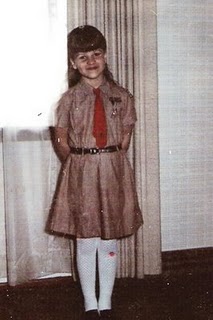
But, on Saturday, burying a hand trowel into earth made forgiving by Spring rains, I remembered being eight and being dubbed “Messy Bessie” by my brownie leader.

I forgot to buy an onion at the supermarket.

But every time I see a hat, or a lady wearing a hat, or even a hat-rack, I remember being twelve and standing in the millinery department at Macy’s. My sister and I were accompanied by my grandmother in what was an annual After-Christmas walking tour of Perimeter Mall. I call it a walking tour because, while occasionally an item was returned, nothing was ever actually purchased.

My sister and I donned hats. Both of us posed in front of mirrors.

“Laura!”, my grandmother called. “Laura, you don’t have a face for hats. You need a plain face to wear a hat.”

There was a slight pause as we looked at one another for an answer to the question neither of us would ask before she provided it.

“Stacye…”, it was a statement. “Now, Stacye has a face for hats.”

At work on Monday, I panicked at the idea of creating a whole new set of contracts, only to discover I’d already done it, weeks before.

Wednesday night, as I reclined against the cold ceramic part of the bathtub not filled with warm water, I remembered John O’Conner turning in his desk to ask in his most sardonic voice “Was that really necessary?”, before I even had a chance to lower the hand I’d raised, in vain, to prevent the burp from escaping my fourteen-year-old lips.

I sometimes struggle to remember which son was born on what date. Although in two different months, their birthdates are just two weeks apart. Which one was born in April and which in May?

And, just the other day, as I pinched dead blooms from pansies’ heads, the image of long, yellow hair swirling around my sister’s snarl flashed across my brain. Anger reddened her cheeks.

“I wouldn’t trade places with you for anything in the world!”, she growled.

The toddler at my feet pressed her back against my legs as instinct tightened my hold on the baby in my lap. We all shrank.

They come in quiet moments, reflections of mis-steps, things I’d rather forget. They’re etched there, burned onto the surface, easy to retrieve. They come unbidden.

They are not who I am but they are, in part, what makes me, me.

Hair Raising

It’s fitting, I suppose, that I have unruly hair.  I’m a pretty unruly woman.  But, sometimes, I think it’s my mother’s fault…

Some of my earliest memories are of my hips wedged between my mother’s ample thighs atop our ultra-chic, avocado green, vinyl couch.  For reasons known only to her, she insisted on using a comb on my hair.  And, not just any comb, but one of those barber’s combs with skinny, pointed teeth that were so close together a dime wouldn’t pass through them.  As she raked those teeth across my scalp, I gritted my own and prepared for the blood that was sure to start running into my eyes just any minute.  Occasionally, I howled, until I realized that only made her angry, causing her to plow even deeper.

The only respite from the raking came when she found what she referred to as a “knot”.  I don’t know how it happened or why.  I only know that every single time my mother raised a comb to my head she found the hair at the nape of my neck to be a tangled morass that inspired her to mutter mild epithets between groaning tugs.

There was lots of “I’ve never seen anything like this in my life!”, even though we both knew she’d seen it just last Saturday.  And she whined a lot.  Occasionally, the comb she extracted contained more than hair.  The mass more resembled a bird’s nest than a knot, with wisps of lint and the occasional tiny scrap of paper woven into the mix.

And then there were the permanents…

For years, my mother lined us up on linoleum that was scored to resemble stone, if you were willing to allow that stone could possibly be tinged the same avocado green as the couch.  By now, she’d invested in detangler which allowed her comb to slice through our tresses, unfettered.  It was pretty smooth sailing, really, until it came time to roll.  Because, rolling required wrapping, and wrapping involved small wisps of tissue paper, and, once again, she met her match at my nape.

At this point, she turned us over to my grandmother who owned a beauty shop on the ground floor of what would now be termed an assisted living high-rise.  The real money, however, was made styling hair for regular customers who no longer required a return appointment.  She spent Saturday mornings at the funeral home.  Mother dropped us off after lunch and picked us up several hours later.

“Remember now!”, my grandmother called from the porch where she stood with one waving hand raised.  “Don’t wash it for at least two days, so you don’t wash it out!”

I spent the ride home calculating how I could gain entry of the bathroom before my sister. 

I drove myself the last time my grandmother curled my hair.  By that time, I was compelled by more than style.  By that time, the trek across town, and the smelly chemicals, the pulling, the tugging, and hot minutes spent under the hood of a hair dryer were a trade-off.  Because, after she curled my hair, we could visit.  She took me outside to her sun porch.  She showed me her plants, some of which were decades old.  She talked to me about them, told me how to grow them, and pulled up tiny samples for me to root when I returned home.  It was worth the thirty minutes or so I would spend with my head in the sink later that evening.

The last time my mother tackled my hair involved one of those new-fangled curling irons; the kind encased in plastic bristles, the kind that not only curled your hair but brushed it, too.  She was dolling me up for some kind of event.  It may have been Easter.  Easter was big deal at our house.  It was one of two times, each year, that my parents would accompany us to church.  We dressed in new dresses and wore pantyhose from freshly cracked eggs.

My mother separated a swath of hair from the crown of my head, twirling it around the plastic-bristled, metal shaft.  Steam billowed from the contraption in her hand as she marked time.  Time came, and she rolled her hand in an attempt to un-wrap.  But, it wouldn’t.  The curling iron, with its rows of plastic bristles, had a death-grip on my hair.  Steam billowed from the crown of my head as my mother pulled and whined, pulled and whined.

“I’ve never seen anything like this in my life!”

Whines turned to whimpers as we both imagined what I would look like after she cut the hair at the scalp in order to remove it from the shaft.  My mother cursed.  My sisters watched in horror.  Finally, the hair loosened.  I never saw the curling iron again.

Two weeks later, my mother made an appointment for both of us at the hair salon she frequented.  Despite odiferous armpits at the end of her pendulous arms, Sandra could feather with the best of them.  Kristy McNichol had nothing on me…    

I was in the eleventh grade.  I don’t know why I remember that, but I do.  I drove quite a distance to the salon and was somewhat taken aback by the pumping, bass-driven beat of the music that greeted me as I entered.  “Toto?  We’re not in Kansas anymore…”   

 A tall man with sallow skin under his brush cut rushed, as fast as his leather pants allowed, to reach me.  I left with what amounted to a crew cut.  And, I loved it…but I never did it again.

Since then, I’ve been shorn by a tattooed biker chick, one Valley Girl, a middle-aged woman with an unfortunate spiral perm, and one really nice Vietnamese man.  He didn’t try to talk to me.  I like that in a stylist.

Several weeks ago, I got the urge.  You know the one; that feeling that you have to have your hair styled…NOW!  Several weeks ago, the Valley Girl had sent me home looking like something the cat had dragged in, and it wasn’t the first time.  As I left work, I made the decision to stop at the first salon I passed.

It took longer than I anticipated.  I was almost home.  The sign on the marquee read “Famous Hair”.  The fact that it occupied a space just two doors down from the market was a huge selling point. 

She was introduced as “Nancy”, but I’m willing to bet her green card reads “Tran” or “Nguyen”.

“What you want?”, she asked, whipping a black, nylon robe round my neck, matador-like.

I produced a copy I’d made of a style I’d found on the internet.  Nancy laced tiny fingers through my hair as she studied the picture, frowning.

“But it doesn’t matter…”, I laughed.  “I gave up a long time ago.  My hair does what it wants to do…and I let it.”

Washed Ashore


Born into a family of blondes, she stood, proud and straight against a hand-drawn measuring stick on the wall. Chestnut ringlets danced about a face punctuated by chocolate brown eyes mirroring the mischievousness in her smile.

I fell in love at first sight.

I was an adult before I realized how alike we were; how her path had intersected mine too many times, and how those shared experiences had built a bond of belonging.

She was rebellious.

She liked bad boys.

She led with her heart.

Life, age, children, and too many days spent on uncharted waters brought both us to shore, in different places.

And, I miss her.

© Copyright 2007-2008 Stacye Carroll

Drip Castles


I know she had others, but the one I loved best was made of red cotton decorated with tiny, multi-colored flowers; a “two-piece”, it featured boy-shirts that always evoked images of a much earlier time. The color only served to highlight her tan, and I never thought her more beautiful.

My mother loved to sunbathe, and spent most mornings on the beach, supine, on a generous towel, until overwhelming heat forced her into the surf, where she stayed for a few, precious, minutes. Now, as a mother, myself, I realize that having four children attached to her floating limbs probably precipitated her quick exit.

And, sometimes, she built castles.

It started with a hole. As is true about anything worth having, a good sand castle requires work, in the form of a very deep hole. My mother supervised as one of her daughters manned the shovel. Mounds of pristine white sand piled, as the hole was dug, until water began to seep in from the bottom, forming a permanent well.

And then, we dripped. Each of us, in turn, thrust our hands inside the hole, to remove a dripping mass of grayish colored sand. We dripped turrets, we dripped landscaping, we dripped roofing. Tiny, pea-sized mounds of sand, built, one upon the other, as we dripped, and the castle grew higher and higher, and more and more elaborate.

Construction could take hours, but we had no concept of time. For each of us, it was simply one-on-one time with Mom, and we sat there until she gave the sign it was time to stop, as she rose, and strode, purposefully, towards the surf. As she bent to lower her hands into the warm, jade-colored, water, we mimicked her action, until she left us to return to her towel. And, as she lay back against the sand, we broke for our rafts, and the water.

© Copyright 2007-2008 Stacye Carroll

Changing Faces


I have been feeling my Mom lately.

It started last week when I read a question posted by a member of an online community I frequent about things we “miss”. I could blame it on the time of year, what with Halloween around the corner, but, for whatever reason, a memory popped into my head, complete with holiday cobwebs, and it has brought me comfort all week.

Every year, just before Halloween, my mother piled all four of us into her Vista Cruiser “woody” station-wagon, complete with backwards-facing rear seat, to purchase our costumes. Having four children now, myself, I have only just recently begun to appreciate her bravery….

Halloween costumes, at the time, came in rectangular, yellow and black, cardboard boxes with cellophane windows, behind which lay a cartoonish plastic mask, the hallmark of any 60’s era disguise. We chose a new one every year, but I remember only one.

I must have been about 10 at the time. After perusing all available selections, I chose what I believed to be the most sophisticated Halloween costume I had ever seen. The mask, behind the shiny plastic, portrayed a gorgeous blonde, whose permanently flipped hair and matte crimson lips embodied everything I dreamed to be. Underneath the plastic face lay a swath of golden nylon fabric, featuring black markings suggesting a stylish trench-coat.

I had never missed an episode of “Get Smart”, and my fascination lay not in a shoe that doubled as a telephone. I was fascinated by “Agent 99”. She was smart. She was sexy. When she spoke, her tones were low, soft, and commanding. She was everything I could hope to be when I grew up, and now, my wait was over…

We hurried off the school bus on October 31st, running as though darkness snapped at our heels. Waiting for Mom to finish cooking dinner was sheer, restless agony. When it was served, excited legs swung wildly beneath the table as we picked, and poked, and moved our food from one spot to the other, until the admonishment; “You have to eat! If you eat all that candy on an empty stomach, you’ll be sick!” Girlish eyes stole surreptitious glances round the table to ensure everyone participated accordingly. I was probably the first to declare, “But, sheeee’s not eating!”.

As darkness fell, and time marched on, Mom relented with appropriate scorn as we scraped our dinner into the trash, before heading to our bedrooms and the precious yellow and black boxes.

As I lifted the lid of the box, I noticed a corner of cellophane had parted from the trace of glue drawn across the inside of the lid. Running one finger around the corner, I attempted a repair before removing my new face to uncover my golden garment.

October chill warranted covered legs, and costumes were drawn over school clothes. I observed my reflection in the full-length mirror behind the door, and bemoaned the lack of stockings and stilettos for a minute or two, before sighing in resignation and heading back towards the bed, and the mask.

Exchanging faces, I carefully pushed my own hair up under the flimsy rubber-band securing my disguise, before turning once again towards my reflection. I leaned in close to assess my handiwork, and secured a few more natural blonde fly-aways. Standing back, I posed.

I must have stood there for several minutes, considering my new persona. I was blonde. My lips were full, blooming red, and accented by a Monroe-esque beauty mark. My golden trench-coat featured large, round buttons, deep pockets, wide lapels, and swaying sash. I was beautiful. And, my Mom called.

Jerking open my bedroom door, my Keds barely touched the linoleum as I entered the family room, and awaited the ooohs and ahhhs I could already hear inside my 10 year-old head.

My sisters gawked. I can’t recall their masks, but I do remember their silence, which was broken only by loud, raucous laughter.

I turned in the direction of the sound, to see my mother, in full abandon, bent forward, clutching her knees; her mouth agape in deference to her mirth. She moved towards me as tears filled her jade-green eyes, and uncontrollable laughter shook her entire body. Falling to her knees, she put her arms around me, and rocked me in spasms of joy. Every few moments, she pulled back, and, as her eyes fell once again upon my unmovable façade, collapsed again.

Finally, regaining her composure, she rose, and with a smile that shone through her eyes, looked down at me and said in a barely composed voice, “You’ve got to take that thing off; at least for now. You can put it back on when you go to the door.”

It wasn’t the reaction I had hoped for, but it was a reaction. It was approval. And, it was enough. I walked towards the door, mask in hand, and happy.

And, today, as I observe my reflection over a blouse of green or blue, that same jade creeps into my own eyes, and I remember…

© Copyright 2007-2008 Stacye Carroll

Knitting, through crochet…


We closed the store at noon everyday, for lunch.

As the microwave whirred, Pat hefted a large, bulky, canvas tote onto the formica table, and, in flawless imitation of a magician pulling endless, multi-hued scarves from his sleeve, removed a voluminous afghan, or a bulky sweater, or an impossibly long scarf; each, a work in progress.

Lunchtime conversation was punctuated by the sound of a crochet needle clicking against the precious metal of her wedding band, as she regaled us with stories of her errant children, their benevolent, well-loved, father, or her demanding, octogenarian mother-in-law. Her voice was soft, slow, and deeply, deeply southern, and no matter which direction the conversation took, she never dropped a stitch.

I watched, in fascination, for months, before asking her to teach me her art. As it turned out, she knew only one stitch, but one was better than none, and soon there were two bulging tote bags atop the table.

My first project, an afghan for my daughter, was fashioned from the softest yarn, in a variety of soft pastels. As soon as I had draped all ten feet of it over her modest twin bed, I began again. This time, I worked in primary colors; creating bold stripes. The yarn was thick, and difficult to work with, making the afghan tighter in weave, and much shorter in length. As I tied off the final stitch, I searched frantically for another piece of furniture to drape.

Harking back to my past, when my mother displayed my great-grandmother’s handiwork on the back of our olive-green, vinyl couch, I chose, this time, to work in rusts, and browns, and creams. Final placement on the back of our well-worn, herculon sofa was tricky, given the oblong shape my creation had taken, but, if anyone noticed, they never said a word.

And still, I stitched. My youngest son was graced with my largest effort, to date, in earth-tones of heather, khaki, blue, and white.

Two years later, as we gathered around the large, brilliantly lit, Frasier-fir in my parent’s living room, I watched as each of my family members opened the bulbous, carefully wrapped gift I had provided. One by one, they extracted an identical cream-colored throw. The stitches were perfect, and the size, reasonable, as, time and patience, had provided an opportunity to learn. Each recipient cooed, sweetly, over my efforts, and I absorbed their appreciation with the surety that none of them knew the import of what they held.

Six months later, I stood outside my sister’s apartment in anticipation of meeting my new nephew. As my brother-in-law opened the door, I was assaulted by a chic sea of white, accented by large-paned windows admitting smog-stained light.

My sister sat, indian-style, on a rambling white sectional. My eyes searched her lap for a look at the baby inside her blanket covered legs. Dark circles under weary eyes did nothing to deter the radiance of her smile as she scooped her son up, in offering.

It was when she moved, that I saw it; the only thing of color in the room. As she rose, it fell in waves, replacing her body on the seat. The stitches were perfect, and the size, reasonable, and she did know…

© Copyright 2007-2008 Stacye Carroll

Super 8 Childhood memories

I realized today, as I traveled across Atlanta to share lunch with my sisters, that my past has become a dark cave. I am fascinated and sad at once. Fascinated, continually, by the swiftness of the process, and sad, because what I always feared must be true.
Growing up as one of 4 female children proved challenging for me, given that I have always preferred my own company to that of others, and I enjoy the company of other females least of all. Being the oldest of 4, only served to sharpen the challenge.
I never understood until recently why my childhood memories are so patchy. On the rare occasions I have sought to replay the images, I have found them so blurred and lacking in detail as to be almost indescribable. I listen, as my sisters recount the funny/sad struggles we faced as we experienced childhood “together”. While I appreciate the humor and empathize with the pain, the stories are new. All my life, the stories they share bear no resemblance to those that play in fits and starts in MY brain. I’ve often remarked that it is almost as though we were raised in separate households. I listen as they laugh at the absurdity of an event, and smile to cover my confusion.
Remarkably, my memories are mostly singular ones. I can remember sitting beneath an enormous oak tree whose roots had, in my mind, formed the shape of an equally enormous tortoise. Despite the fact, that by the age of 8 or 9 I already had 2 sisters, this tortoise was my best friend. I literally spent hours under that tree, talking to my friend. The importance of this tortoise, whose name escapes me, is obvious by the brilliant colors contained in this memory. It seems I wore a lot of pink. I can feel the hot Atlanta sun on my bare arms as I lean against the tree and absentmindedly draw in the sandy soil with a crooked pine twig while I pour my heart out to a root.
I also took great joy out of tormenting our really ugly little dog, Jo-Jo. My parents always proudly announced to anyone listening that Jo-Jo was a Manchester Terrier, and I’m sure he was but what he mostly was, was ugly. I have distorted visions of poking a gnarled stick towards his pointy little snout, and rejoicing at his growling. When tired of the stick game, the front tire of my bicycle produced the same results, to equal enjoyment. I don’t remember my mother ever discouraging my aberrant behavior, but I definitely remember her mentioning it years later at a family gathering, and I remember feeling myself shrink in my usual way under her tongue.
I can’t remember my mother smiling. None of the “Super 8″memories of my childhood include a smiling mother. That might be all I need to say about that.
My father, on the other hand, fills the screen of my mind, not with his physical presence but with his emotion and spirit. Strong words echo even today, “Remember who you are! You are a Howell, and nobody is better than you are.” countered by “Look at your calves! They’re as big as my thighs!”. Of course, they weren’t, and years would pass before I realized my father had chicken legs.
I spent those years, covering up my calves.

© Copyright 2007-2008 Stacye Carroll