“Oh, you know how he is…”
And, I do. I do know how he is.
The difference, now, is that I also know how he could be.
And, I think he should be.

My family’s Easter traditions became lost in the cry of gulls over pristine white sand. My sister travels to Destin to spend the holiday with my father who, understandably, welcomes the opportunity to visit without travel. Often, as finances allow, one or more of us join them. More often, we do not.
For years, my older children traveled the seventy-five miles between my house and theirs to participate in smaller scale celebrations. This year, my daughter is grateful to have the extra hours at work, and after putting in eighteen hour days for two consecutive weeks, my son is looking forward to an afternoon spent resting on a riverbank, watching the water ripple around his fishing line.
I assembled my final Easter basket last night and felt the finality. The look of wonder left Shane’s eyes years ago, but I’ve continued the ruse, for both our sakes. I admit to feeling just a little ridiculous as I fluffed plastic grass and poured jelly beans into plastic, egg-shaped baseballs. Next year I’ll limit myself to a nice card, and maybe a bag of chocolate-peanut butter eggs.
We’re not a particularly religious family. While my father could be called a religious scholar, given the hours he has spent reading various religious doctrines, only one of his four daughters attends church regularly. I’ve decided that this lack of structured piety is partly to blame for our lack of celebration.
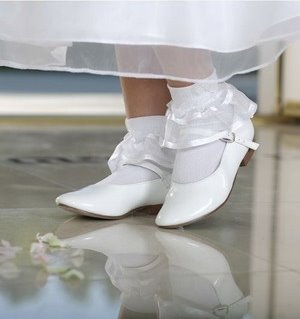 As a child, Easter meant a new dress and a fine white purse to match my shiny, new, white shoes which I would wear only to church. It meant traveling across town to share dinner with a family of friends from Chicago, who marked the occasion by molding butter into the shapes of lambs and crosses. Our Easter baskets were always grandiose things; large and round they were stuffed with chocolate, before being wrapped in pastel-colored cellophane, cinched with matching ribbon. Easter morning found four of them, arranged in a grand display upon the kitchen table. The trick was to slide your hand into the flap created by the cellophane in order to pilfer a peep before Mom and Dad woke up.
By the time my children were born, Easter dinner had become a strictly family affair. Easter egg hunts were added to the celebration, meaning my children usually had at least two opportunities to load their baskets. The hunt at my parent’s house was always conducted outside, while I occasionally chose to nestle my children’s loot against window sills, behind curtains, under a lamp, or between two books on a bookshelf. The children seemed to prefer the indoor hunts. I like to think they enjoyed the intimacy.
“What are we going to do today, Mom?” Shane’s question left me wanting. We settled on a trip to the park. He and his Dad will play pitch and catch, while I walk the dog around the track. It should be a good day for it. The weather is beautiful. Later, we’ll cook out.
But I can’t help wishing there was something more…

My father attended church with us only twice a year, Christmas and Easter. Mother went more regularly until we were older, at which point the car barely came to a full stop before she started shooing us out the door.
“Meet me right here when church is over!”, she shouted as she accelerated past the crosswalk.
There was always a line of people waiting to enter the sanctuary. Dark-suited, older, white males stood solemnly, just outside two sets of double doors, holding small stacks of church bulletins which I had came to think of as my ticket; Admit One. As my sisters and I waited our turn in line, I studied the ushers. They always put me more in mind of sentries guarding a castle than greeters for the “House of God”.
Standing in that line was a bit like walking downtown sidewalks surrounded by sparkling skyscrapers of varying heights. The air lay thick with a potpourri of scents spritzed from cut-glass atomizers, as I shuffled my feet inside black patent leather. Women, who had soldiered through the previous week in their uniform of polyester pants and rubber-soled, terry-cloth scuffs, now fanned their tails like so many peacocks in designer finery. I studied the mink stole draping the shoulders of the woman in front of me, appreciating the varying hues of brown, gold, and black while following the seams connecting the pelts with my eyes.
“Love the dress!” The furred woman spoke to another woman just to the right of us whose eyes sparkled above her rouged cheeks before looking down at her dress, as though she had forgotten what she was wearing.
“Oh, thank you!” Her hands went to her bare arms and I felt her self-consciousness. “What a gorgeous fur! Is it mink?”, she asked through strained painted lips.
“Yes, Gordon brought it back from his last trip to New York.” Red-tipped nails caressed both arms. “I wore it today since it might be my last opportunity before summer.”
“Gayle! Is that a new ring?” Another feminine voice swiveled my head to the left, just as the older woman next to me retrieved her hand from its spot under her husband’s arm.
“Yes! Robert gave it to me for Christmas.”, she said, flashing a smile at her benefactor, who answered with one of his own. She raised her hand towards her friend who turned it this way and that, in appreciation.
“Wow! Pretty snazzy, Robert. Gayle must have been a good girl!” Gayle lost her footing in laughter, bringing the tip of her pointed-toed pump firmly against my Mary Jane. I turned swiftly so as not to be caught staring. By the time I reached the sentries, the aisle separating the pews looked more like a catwalk.
If most Sundays produced a fashion show, Easter Sunday served as “Fashion Week”. No one was immune. Men bought new suits, and corsages for their ladies. Women scanned racks for weeks, in search of the perfect dress and dyed new pumps to match, before retrieving their jewelry from velvet beds inside safe deposit boxes.
Girls were taken shopping for Easter dresses. Most girls. My sisters and I were taken instead to “Cloth World”, where we were encouraged to choose from one of several fabrics from which my mother would fashion a suit. The fabrics were coordinated so that each girl would wear a solid and a print, and the style would vary, if only slightly.

My mother was an excellent seamstress, having culled the talent from her mother who made her living as a tailor in an exclusive men’s clothing store. She made most of our clothes and some of her own. One of my fondest memories involves a church fashion show, for which my mother created four identical white dresses; one for her, and one for each of us. Walking as ducks in a row, we took the stage together the afternoon of the show. I don’t remember who actually won, and it never was important. In my mind, my mother stole the show.
As a child, I never appreciated our carefully coordinated Easter suits. I felt dowdy and out of fashion. I watched other girls swish by in taffeta, and lace and wished the sewing machine had never been made available for purchase by the public. And, I resented my mother for not understanding.

Several years ago my grandmother died, leaving behind boxes and boxes of photographs my mother had sent her in celebration of our childhood. My youngest sister, who had been my grandmother’s primary caretaker, arranged a luncheon at which she invited us to open the boxes and take the pictures that meant the most to us. As we leafed through the photographs, there were countless images of my sisters and me, usually backed up against a wall and standing in descending order, wearing our mother’s handiwork. When I searched my mind today, for Easter memories, these pictures were the first thing that came to mind.
We miss so much when we are children, when our minds are not yet fully formed and ready to understand the importance of things. As I study the photographs now, I see more than meticulous construction and careful coordination. Forty-plus years later, I see time, and effort, and sacrifice, and love. And, in her sharing of the photographs, I interpret pride; pride in her children, yes, and something more. By sending these photographs to her mother she shared, and appreciated, her legacy.
I hope I said it then. I wish she could hear it now.
Thanks, Mom.
© Copyright 2007-2009 Stacye Carroll All Rights Reserved
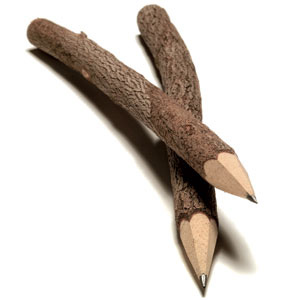
“I’m a table sitter, just like my Mother.”
Knowing she wouldn’t be joining me allowed me the freedom to stretch out on her well-worn sofa.
Hallie eased herself into her usual spot next to a blinded window. A heavy sigh accompanied the release of her weight onto a vinyl captain’s chair, and the years washed away in my anticipation of her next move. Both hands went to her head, grasping at gossamer wisps which had rudely escaped the band she’d swept them into that morning. Another sigh and her hands went to the tabletop. Her lips pursed as her hands moved about the table, straightening a pencil against the edge of a writing tablet, carefully lining up book spines along their mitered corners, and touching each of three small stacks of paper.
As she took assurance in the precision of her surroundings I remembered rows of pencils, sorted by color and length, lying alongside a notebook in the laboratory where she worked. On quiet days, and sometimes just during a lull, I took particular delight in flicking one end of the pencil closest to me and watching the others careen like pick-up-sticks. She feigned disgust, but I understood the satisfaction she took in realigning her environment.
As she sighed, and sorted, and sorted, and sighed, I searched her face for change. Other than a slight gravitational pull around the corners of her mouth, there was none. Despite her claim of green, her eyes had always been of indeterminate color. They snapped just as they always had, behind eyeglasses whose shape demanded the word “spectacles”. The freckles that had always danced across her cream-colored skin were just where I’d left them, and her small, colorless mouth pursed between spurts of speech enriched with invectives.
 “Remind me to give you a blow job later!”
It was the fall of 1992, the year the Braves won the pennant. Both of us had followed the Braves throughout the season. We knew stats. We referred to the players in such a way as to suggest we might have had them over to dinner the night before, and each of us had our favorites. John Smoltz was mine. We both agreed he bore an eerie resemblance to my wayward husband, who Hallie described as “poetic looking”. Hallie appreciated the talents of the wiry Otis Nixon and the second baseman, who she referred to as “Little Lemke”.
Sometime over the course of the Championship series, we had begun to watch the games together, by telephone; she ensconced inside her cozy duplex less than ten miles away from my little farmhouse, filled by the sounds of soundly sleeping children. The call usually came sometime after the seventh-inning-stretch.
It was the bottom of the ninth, and the Pirates were up two to zip. In an era free of steroid controversy, we thought nothing peculiar about the guns on Ron Gant, as he took the plate with the bases loaded. He sacrificed, making the score two to one. Brian Hunter popped up, leaving us with scant hope as a little-known pinch-hitter, named Francisco Cabrera, loped towards the plate. He singled, scoring David Justice, and an oft-traded, unlikely hero named Sid Bream. As Sid slid into home, securing the pennant, Hallie shouted her reminder into the receiver. I remember collapsing with laughter, and would recall little else about that game, or the ensuing World Series.
“I thought you were bringing Shane!”
Hallie stood on the steps leading to her front door.
“This can’t be Shane! Shane’s just a little guy! Who is this tall boy you brought with you?”
Color seeped into Shane’s cheeks as he shut the car door and walked, sheepishly, in the direction of my friend.
“Hi, Aunt Hallie.”, he said into his chest.
He walked, obligatorily, into her waiting arms and hugged her back. There was less than two inches difference in their height.
Gathering the few things I needed before leaving in search of a hotel room, I left the car and replaced Shane’s body with mine. My arms embraced her shoulders as hers encircled my waist. Time had carved precious inches from her already diminutive stature.
“Come in, honey.” She always calls me “honey”. “Be careful with that door. I need to fix the latch.”
Our love for each other spans twenty years, one birth, two marriages, two divorces, and the deaths of two children, both our mothers, and her beloved Aunt Flo. As I study her face for change, I realize mine is the one that is different. I am where she was when I left her to start over, again. Her changing was done. Mine had just begun. I shifted against the soft fabric of the sofa I rested upon, uncomfortable with the knowledge.
“I see you’ve changed your hair.” She made no effort to hide the disdain in her voice. “You’re wearing it like everyone else; like you haven’t combed it in days.” Ill health forced another sigh. “I don’t know why you want to do that. You have such nice hair. I liked it when you flipped it back.”
The fingers of her left hand weaved themselves into my hair.
“Oh, it’s very soft. It doesn’t look soft. It looks hard, but it’s very soft…just like it always was.”
And, it is…just like it always was.
“You’re my touchstone…”

Our trip was unexpected, unplanned, and unbudgeted, which helps to explain my presence in the drive-thru line at McDonald’s at 11:47 a.m. We rolled to a stop in front of a daunting menu of gastronomic atrocities too crowded to read. I allowed my eleven-year-old to order for both of us.
“Please drive around to the first window.”
A heavy-set girl with long brown hair manned the register, behind a small glass door that seemingly opened and closed of its own accord. I hit the mute button on the stereo as she logged another order. She turned in our direction, and the door opened as she extended her hand, palm up. I laid several bills inside with a smile that went unnoticed as she stashed them before collecting my change while focusing, intently, on the LED display of the register. Her left hand extended again, dropping my change while her right hand hit a button on her head set, and I rolled to the second window.
A hundred miles or so later, my cup was empty, but my bladder wasn’t. I searched large, green, roadside signs for another iconic fast-food restaurant that would offer relief for both. As I rolled into the Krystal’s parking lot, my son sat forward on his seat.
“Are we going to eat again?” Shane’s voice sounded exactly like you would expect it to sound, given his usual diet of whole grains, fish, and fruit.
“No, honey. Just the bathroom and a drink!”

As I entered the bathroom, I was accosted by an odor that said “Turn back!” in a deep, unnerving voice. Shaking it off, I pushed open the painted metal door, expecting the worst. I considered myself lucky in not uncovering the source of the odor and attended to the matter at hand, post-haste. I rinsed my hands hurriedly, and opened the door with my elbow. Shane was waiting outside.
The counter was clear of customers, allowing us to stand, unimpeded, in front of the register. A large woman, whose hairstyle must have cost at least a day’s pay, approached from the back of the restaurant throwing one hand in the direction of another woman as her eyes glazed mine.
“You got customers.”, she said as she walked by, carrying a sheaf of paper cups.
The woman she addressed stood at the other end of the counter, bent at the middle, her face just inches above a laminated paper.
“You really got her worried ‘bout that schedule!”, the female voice came, complete with laughter, from the grill area.
A painfully thin, uniformed young man approached from the dining area.
“Whatchew doin’?” He mimicked her posture so that their visored heads met.
Shane and I stood with necks arched; studying a menu we had no intention of ordering from, until a man wearing a white shirt that said “I Am The Manager” approached, carrying a bundle of bags.
“Can I take your order?” I was relieved to hear self-consciousness in his voice.

Sunlight did nothing to enhance the pallor present on my friend’s skin as we sat around her picnic table. We sipped, and laughed, and talked, and laughed. The telephone rang, and she answered it. I made my decision while she assured our friend I had made the trip safely.
As she pressed “End”, I eased myself off the weathered, wooden bench.
“We’re going to get a room.”
She argued despite my tone of finality.
“It’s just two miles away….” I ended the conversation.
I hit the button, locking my son safely inside the car before walking towards the lobby. A blonde woman who hadn’t yet accepted the reality of her morbidity manned the desk.
Her expression never changed as she managed, “You want a room?”
I leaned both arms on the desk as she typed, wondering if she knew that the boxed-blonde curtain hanging down either side of her haggard face failed to hide the collection of chins the years had provided her.
Tiny cowbells rang, and we both turned. Shane entered, mute. He approached a display of brochures while I felt validation.

“How old is the child?”
“Eleven.”
Several minutes and colorful invectives later, I tapped Shane’s shoulder and left with credit card-shaped “keys”.
“Mom?” I pulled my sweatshirt closed as we walked against a cool breeze.
“Yes.” Shane hurried to catch up to my stride.
“Aren’t there a lot of people looking for jobs?”
“Yes.”, I answered, not sure where he was going.
“Then why does everybody act like they hate their job? Don’t they know they’re lucky to have one?”
From the mouths of babes…
© Copyright 2007-2009 Stacye Carroll All Rights Reserved

I love to sing. I used to be pretty good at it; good enough to be asked to sing in a band. My stint there afforded me the opportunity to work as a background singer in a local studio, but family obligations sang louder, and I retired my tambourine.
I now perform in very limited engagements. With my IPOD as accompaniment, I sing as I clean, and croon when I garden. And, playing Beth Hart wide open, in my car, has been known to illicit a throaty growl or two. On one such occasion, when my son and I were running Saturday errands, he asked, “Where did you learn to sing like that?”.

I’m an avid gardener, and surround myself with growing things year-round. My vegetable garden satisfies my preference for fresh herbs while providing a variety of fruits and vegetables for friends and family. And, I never met a flower I didn’t like.
For years, my gardens were populated randomly, by an assortment of annuals. Lately though, I’ve tended towards more permanent plantings and the creation of gardening environments, my favorite being an “English Garden”. The space is a constant work in progress, as the drought we’ve suffered for the last two years has taken a toll, but I love knowing that a feeling of peace and connectivity is as close as a stroll through my own backyard.
Last week, a friend and I shared a glass of merlot on my patio, surrounded by a cacophony of pansies in hues ranging from deepest purple to palest yellow. She remarked on their beauty, the way they winked in the breeze, and their fragile strength. “Where did you get your green thumb?”, she asked.

My family has always been appreciative of my writing. They comprise a large block of my readership. It was, in fact, at the persistent prodding of my youngest sister that I began to blog.
I’ve written since I was a young girl, though not always on paper. An ongoing saga, detailing the lives of a homeless, orphaned girl and the brother she cared for, provided pleasant distraction for what seemed like hours and hours as I mowed the front lawn. Recently, I’ve come to regret that I never gave the story permanence. I have attempted, on occasion, to recreate the drama, but only tiny bits and pieces remain in my much older brain.
A high school English teacher took an interest in my work, asking my permission to submit two of my poems to a literary journal. She provided me with a copy of the finished product which was left behind, along with my music boxes, Barbie dolls, and a complete set of Nancy Drew mysteries, when I struck out on my own. I wish now I’d packed an extra box…
Last week, my aunt sent me a nice note in praise of my writing, and for at least the second time mused as to its legacy. “Where do you think that talent comes from?”, she queried. “We don’t have any other writers in the family!” I hadn’t thought to ask that question. I’d never pondered the parentage of my propensities.

Yesterday, as I aimed my pencil at a sketch I’ve been working on, my mother’s unbidden image swam into view. She sat head down, at the kitchen table. Using one of our number two pencils, she transformed a simple sheet of blue-lined notebook paper into a work of art. And there are more memories; of sitting in the back seat of our station wagon and wondering why she wasn’t singing on the radio, and of plants, rows and rows of growing green things. Later in life, she took painting classes, and, even now, her needlework hangs on my walls.
I brought the pencil closer to the paper, angling the point to achieve shading that suggests shadow, knowing it is her hand that guides me. And, I appreciate the legacy…

The sun coaxed color into your ever-pale face,
sprinkling darker spots along the bridge of your nose,
that only brought your observer closer,
in an effort to see if you were real.
Your eyes,
always light, drew refection from your skin,
until their green matched the hue of the surf
as it rushed in between our feet on white sand.
The wind blew.
And your hair danced;
long, blonde diaphaneity.
Part Siren,
part Mermaid,
my Sister,
on the beach.

He is thinner than the last time I saw him. His t-shirt flutters over his abdomen in greeting.
Shrimp dance about the pan as he shares the mundane.
“Went to Ace Hardware today!”
“Oh, yeah? What did you buy there?” I add a splash of Worcestershire.
“Oh, you know…those flowers you always had.”
I smile into the steam of sautéing shellfish.
“Honey, that doesn’t help me.”
“You know! The ones you always pinched the dead blooms off of…”
Another smile, as I moved the pan to a cooler surface.
“Ok…”
“I think Nanny had ‘em…Four-o-clocks? Were they Four-o-clocks?”
“Yes!” I turn to face him. “Four-o-clocks! You got Four-o-clocks? You know they spread. You will have lots of Four-o-clocks!” I smile at the image of my son in his garden. I never pinched Four-o-clocks. Four-o-clocks don’t require pinching. But he remembered. He remembered the pinching. The flower is of little consequence.
“I know…” I see the smile spreading underneath his hanging head. He did it for her.
“Heather picked ‘em. I told her they spread. She got those, and the others you always had…Begonias? Didn’t you always have Begonias?”
“Yes.”
“And, Bachelor Buttons. She got Bachelor Buttons!”
“Ok, the Bachelor Buttons are small. You need to plant them in front of the Four-o-clocks.”
“Ok…”
The conversation continued as I relished the memory. He never came out with me. He never accompanied me on my walks through the garden. He never commented. He never asked a question.
But, somehow, he knew. Somehow, he was there, as we grew together. And, when the memory surfaced he acted on it, creating new memories…his memories, and hers.
Mother’s potted plants lined our patio. I never went out with her. I never accompanied her as she watered each one. I never commented, or asked a question…but, somehow I knew…
© Copyright 2007-2009 Stacye Carroll All Rights Reserved
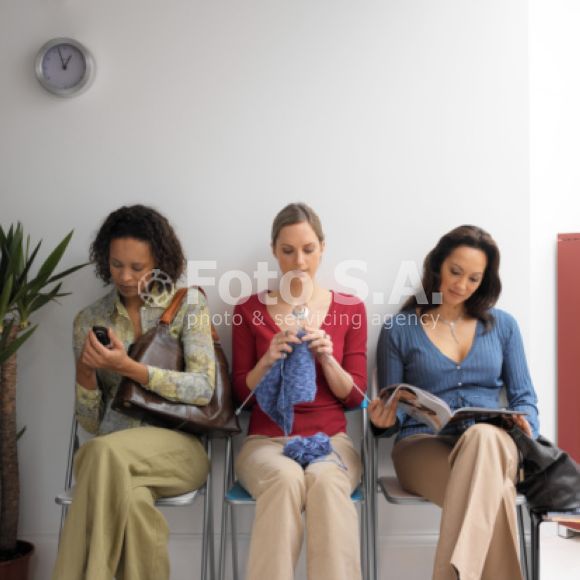
Women learn, from a very early age, to be good waiters.
The first thing I remember waiting for was my birthday. As the oldest of four girls, it was the only day of the year when the spotlight would be for me, and only me. Children came to a party for me. People bought presents for me. Mother baked a cake for me. Birthdays were always worth waiting for.
And then, of course, there was Christmas. True anticipation usually began about a week after Thanksgiving, when large, brown cartons were extracted from the attic and strewn haphazardly about the living room. It was mother’s job to string the lights, which meant more waiting for my sisters and I as we perched on the edge of a couch rarely sat upon, waiting for her signal to breach the boxes. Completion of decoration led only to more waiting. Twinkling, multi-colored lights reflected in our eyes as we “watched” the tree while imagining what hidden treasures lay underneath.
In a house with four girls and one bathroom, there is always a wait.
Soon after my sixteenth birthday, my father presented me with a reasonable facsimile of a car, featuring two seats on four wheels, and very little else. I soon realized it was the seating that concerned him most, and the words “Wait for your sister!” became the bane of my existence.

My sister, Laura, had one speed. A snail once challenged Laura to a foot race. The snail won. Most weekday mornings found me biding my time in an idling car with a blaring radio, for what seemed like hours, as Laura completed her toilette. Weeks of begging, and pleading, and screaming, and warning fell on immutably deaf ears. Finally, I cracked. Bidding her adieu with a foundation-jarring slam of the back door, I jammed the gear shift into reverse. All I remember of my return home is the anger in my mother’s eyes. The rest has been mercifully carved from my memory, but whatever the punishment, it was worth it!
The summer after my senior year in high school was spent waiting by the telephone. I met John, weeks before, while on a trip to Washington, DC with a youth group. When he called, it was to say he would be in Atlanta the following week. My excitement was tempered by the knowledge that I was scheduled to be in Destin on a family vacation. To her credit, my mother allowed me to make the decision. I remember very little of that week spent on the beach, besides a feeling of longing.
College graduation began the wait for my big move. My best friend and I had planned this day for years. Numerous shopping trips for linens, and dishes, and what passed as artwork, made the waiting easier. The experience of living together wasn’t the euphoria we knew it would be, and I gained a valuable life lesson. With the assistance of a good attorney, it only cost $400.00 to get out of the lease.

The only thing more difficult than waiting for the results of a pregnancy test is waiting for his reaction. Pregnancy is the ultimate exercise in waiting. I skipped waiting to discover the gender of my children. A long-ago forbidden foray into my parents’ closet, just before Christmas, had taught me that surprises are to be relished.
Pregnancy came naturally to me, as affirmed by the midwife who announced I had “childbearing hips”. For thirty-six months of my life I was a walking miracle, and I never forgot it.
I loved the quaint expression of being “with child”, and all that came with it. Pregnancy, of course, meant shopping in exclusive shops; exclusive as in those selling maternity clothes, nursing bras, baby furniture, bibs, pacifiers, and the genius that is the One-sie. My children were of the generation first introduced to this remarkable example of adorable efficiency. Thanks to the invention of the One-sie, babies no longer required trussing in order to get to the diaper; just four simple snaps, and you were in!
Mothering is synonymous with waiting. Waiting room carpet patterns are memorized, and it isn’t long before a tote bag filled with the necessities of waiting, takes up permanent residence on the back seat of a mother’s car. Mothers wait for hours in check-out lines accompanied by the wailing of an over-tired child; hers or someone else’s. Her first child’s first day of school is torturous for a mother who imagines, all day, trails of tears running down her child’s face when in reality it is her face that is wet. She can’t wait for her baby to come home.

Mothers think of clever ways to pass the time spent in carpool lanes, and later, outside movie theaters and shopping malls. Mothers wait outside dressing rooms until, curious, they grasp the doorknob, prompting the rebuke, “Not yet!”. Mothers wait, sometimes anxiously, for school to start as summer wanes, along with her children’s patience with one another.
As our children grow, waiting mixes with worry. I sat white-knuckled, at the front window, for the full fifteen minutes it took my son to drive around the block for the first time, alone. That was almost ten years ago. Yesterday, when he didn’t arrive within fifteen minutes of our agreed upon time, my face appeared again, at that window.
Even today, I am hard pressed to say which was more shocking, my mother’s announcement of her diagnosis with cancer, or her concurrent use of the word “shit”, as in “Pretty heavy shit, huh?”. On the day of her surgery, the sunny environment of the waiting room, walled floor-to-ceiling by glass, competed with the emotions of the large group of friends and family it housed. Having recently returned to school, I spent most of the day with a textbook. I turned pages filled with words I only appeared to read, until the entry into the room of a small group of green-clad men wearing serious expressions. Their words left no doubt as to the arduous journey ahead, and I would begin my night-time sojourns in the ICU waiting room within weeks.

My father didn’t want my mother left “alone”. He and one or more of my sisters spent the day at the hospital, never missing one of the fifteen minute intervals during which my mother was allowed visitors. Visits were not allowed after nine at night, so my brother-in-law and I took turns sleeping in the waiting room. For many months, waiting became a way of life, as my mother slowly healed.
Commuting lends itself to reflection. Commuting in the rain requires more careful attention, until rainy streets become the norm, and reflections resurface. Such was the case on Wednesday, when, as I rolled to a stop under a murky, red beacon, I realized I have unknowingly adopted a constant state of wait.
Last year was a year of unwanted, if not unexpected, consequences. Reminders of what proved to be an achingly short spate of purest joy, plague me, in the form of physical reminders with psychological presence. The realization that I have been waiting for a different outcome brought an ironic smile to my lips, and a reminder. Inherent in waiting is hope. And, with hope, all things are possible.
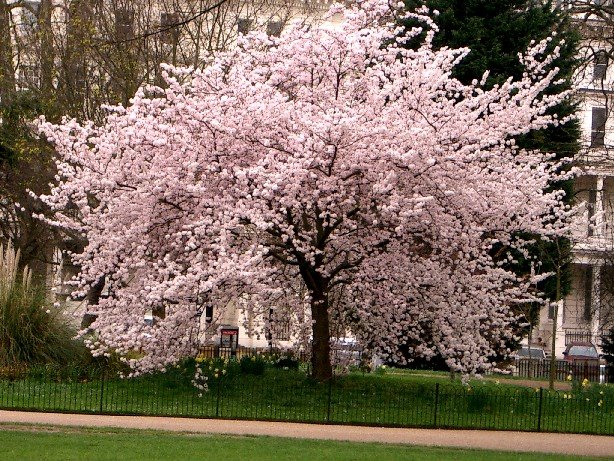
She’d always meant to plant a cherry tree. The blooms, a true harbinger of spring, danced in her favorite shade of softest pink, from spindly branches in her neighbor’s yard. Emily sat in her office chair admiring the way the bluest sky separated the twisted branches, and highlighted the flowers.
“Thinking, again?” Troy’s hand slapped the door facing just before his feet came down with a thud against the hardwood floors.
Emily grimaced before spinning the chair in his direction.
“I’ve asked you not to do that.”, she said before turning again, this time in the direction of her desk.
Troy’s arms snaked around her neck as he clumsily placed a kiss on her cheek, displacing the earpiece of her glasses.
“I’m going to shoot hoops!”, he called, already halfway across the room before she successfully resettled her glasses.
“K…” The gaiety she forced into her voice left just a hint of bewilderment as she watched him lope away.
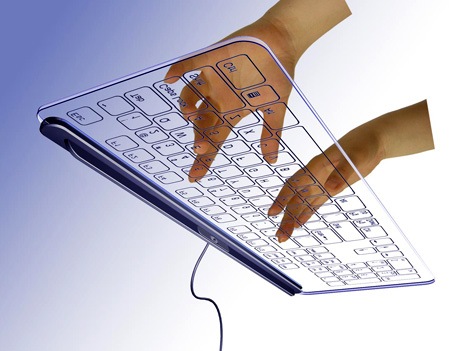
The backdoor slammed, as expected, and she raised her hands above the keyboard and considered the white screen in front of her. Images played inside her head where words should have been, as she replayed the scene in her office the day before.
She never realized desperation had a scent until the last applicant of the day entered timidly to stand before the interview committee she chaired.
“Welcome, Mr…” She had drawn out the title while scanning for the applicant’s name on the list her secretary had prepared. After several seconds, she realized she had expected the man to provide his name, and he hadn’t. Surreptitiously, she glanced at Tom, who sat next to her, for help.
“Wang. I believe this would be Mr. Wang.” Tom stood and offered his hand, sending his reflection streaming across the burnished wood of the table that separated them.

She didn’t know when the blush had begun to color his face, but the sweating had just begun. A single drop snaked down one side of Mr. Wang’s face just in front of his left ear.
She smiled her most welcoming smile.
“Have a seat, Mr. Wang, please.” And, as he slid into the chair opposite her, “We’re all here to learn a little more about you, so why don’t you start by telling us a little about yourself?”
As the man stumbled through words he had obviously attempted to memorize, she wondered when. Had he crammed mightily the night before to come up with an impressive speech, only to have his mouth betray him? Or had he simply interviewed so many times that the speech played like a badly prepared regurgitation? When he finished, she realized she’d heard very little of what he had said.
Tom glanced in her direction before pushing the paper in front of him forward and addressing Mr. Wang. He asked the usual questions ending by asking Mr. Wang to predict his future.
“Where do you see yourself in ten years, Mr. Wang?”
The man raised a hand to his chin to catch the drop of moisture that had finally traversed the planes of his tired face before answering.
“I thought I’d be at Bailey’s forever…”, he started. “I would hope I could be here for the rest of my life.” The last sentence was said through an uncomfortable wrenching of his face that never quite became the smile he had hoped for.
Emily felt his expression resonate somewhere deep inside, and a scream began to fill her head, “Noooo…”.
Now, as she sat at home, in front of her computer, the sound of rubber striking concrete punctuated the five words that played again and again inside her head over an image of hopeless desperation, “The Rest of My Life, The Rest of My Life, The Rest of My Life”.
Her fingers began to move along the keyboard, and she watched disinterestedly as words began to file onto the screen in front of her. It wasn’t what she’d meant to write, but that happened. Often, an idea occurred to her during the day, and she scribbled it on the nearest scrap of paper before she had a chance to forget. Sometimes, as she sat in front of the computer later that evening, the idea actually fleshed out and became something she was proud of. Other times, after several attempts, the story wouldn’t come, and she pulled the chain on the desk lamp with a sigh after giving up.
Her fingers flew, forming two paragraphs through their efforts. After placing the last period, she scrolled up and read before adding, “Sincerely, Emily Walker”.
The next time she approached the keyboard she wouldn’t be pursuing a hobby, she would be embarking on a new career, and the rest of her life.
Inspiration for Domestication
Noun doyenne: The senior or eldest female member of a group, especially one who is most or highly respected. A woman who is highly experienced and knowledgeable in a particular field, subject, or line of work; expert Synonym: grande dame
"Sex, Drugs and Rock and Roll from a 75 year old woman --- with some stories, life experiences and wisdom thrown in."
Life • Art • Technology
 Are We There Yet?