Ordinary Origins


I love to sing. I used to be pretty good at it; good enough to be asked to sing in a band. My stint there afforded me the opportunity to work as a background singer in a local studio, but family obligations sang louder, and I retired my tambourine.

I now perform in very limited engagements. With my IPOD as accompaniment, I sing as I clean, and croon when I garden. And, playing Beth Hart wide open, in my car, has been known to illicit a throaty growl or two. On one such occasion, when my son and I were running Saturday errands, he asked, “Where did you learn to sing like that?”.

I’m an avid gardener, and surround myself with growing things year-round. My vegetable garden satisfies my preference for fresh herbs while providing a variety of fruits and vegetables for friends and family. And, I never met a flower I didn’t like.

For years, my gardens were populated randomly, by an assortment of annuals. Lately though, I’ve tended towards more permanent plantings and the creation of gardening environments, my favorite being an “English Garden”. The space is a constant work in progress, as the drought we’ve suffered for the last two years has taken a toll, but I love knowing that a feeling of peace and connectivity is as close as a stroll through my own backyard.

Last week, a friend and I shared a glass of merlot on my patio, surrounded by a cacophony of pansies in hues ranging from deepest purple to palest yellow. She remarked on their beauty, the way they winked in the breeze, and their fragile strength. “Where did you get your green thumb?”, she asked.

My family has always been appreciative of my writing. They comprise a large block of my readership. It was, in fact, at the persistent prodding of my youngest sister that I began to blog.

I’ve written since I was a young girl, though not always on paper. An ongoing saga, detailing the lives of a homeless, orphaned girl and the brother she cared for, provided pleasant distraction for what seemed like hours and hours as I mowed the front lawn. Recently, I’ve come to regret that I never gave the story permanence. I have attempted, on occasion, to recreate the drama, but only tiny bits and pieces remain in my much older brain.

A high school English teacher took an interest in my work, asking my permission to submit two of my poems to a literary journal. She provided me with a copy of the finished product which was left behind, along with my music boxes, Barbie dolls, and a complete set of Nancy Drew mysteries, when I struck out on my own. I wish now I’d packed an extra box…

Last week, my aunt sent me a nice note in praise of my writing, and for at least the second time mused as to its legacy. “Where do you think that talent comes from?”, she queried. “We don’t have any other writers in the family!” I hadn’t thought to ask that question. I’d never pondered the parentage of my propensities.

Yesterday, as I aimed my pencil at a sketch I’ve been working on, my mother’s unbidden image swam into view. She sat head down, at the kitchen table. Using one of our number two pencils, she transformed a simple sheet of blue-lined notebook paper into a work of art. And there are more memories; of sitting in the back seat of our station wagon and wondering why she wasn’t singing on the radio, and of plants, rows and rows of growing green things. Later in life, she took painting classes, and, even now, her needlework hangs on my walls.

I brought the pencil closer to the paper, angling the point to achieve shading that suggests shadow, knowing it is her hand that guides me. And, I appreciate the legacy…
© Copyright 2007-2009 Stacye Carroll All Rights Reserved

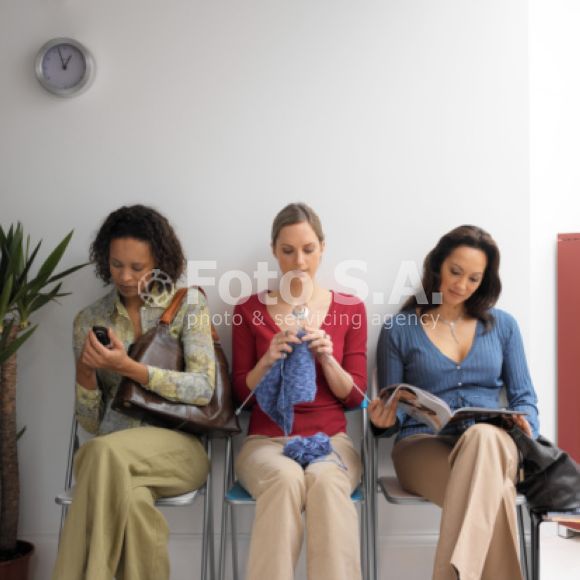
Weighing Waiting Women


Women learn, from a very early age, to be good waiters.

The first thing I remember waiting for was my birthday. As the oldest of four girls, it was the only day of the year when the spotlight would be for me, and only me. Children came to a party for me. People bought presents for me. Mother baked a cake for me. Birthdays were always worth waiting for.

And then, of course, there was Christmas. True anticipation usually began about a week after Thanksgiving, when large, brown cartons were extracted from the attic and strewn haphazardly about the living room. It was mother’s job to string the lights, which meant more waiting for my sisters and I as we perched on the edge of a couch rarely sat upon, waiting for her signal to breach the boxes. Completion of decoration led only to more waiting. Twinkling, multi-colored lights reflected in our eyes as we “watched” the tree while imagining what hidden treasures lay underneath.

In a house with four girls and one bathroom, there is always a wait.

Soon after my sixteenth birthday, my father presented me with a reasonable facsimile of a car, featuring two seats on four wheels, and very little else. I soon realized it was the seating that concerned him most, and the words “Wait for your sister!” became the bane of my existence.

My sister, Laura, had one speed. A snail once challenged Laura to a foot race. The snail won. Most weekday mornings found me biding my time in an idling car with a blaring radio, for what seemed like hours, as Laura completed her toilette. Weeks of begging, and pleading, and screaming, and warning fell on immutably deaf ears. Finally, I cracked. Bidding her adieu with a foundation-jarring slam of the back door, I jammed the gear shift into reverse. All I remember of my return home is the anger in my mother’s eyes. The rest has been mercifully carved from my memory, but whatever the punishment, it was worth it!

The summer after my senior year in high school was spent waiting by the telephone. I met John, weeks before, while on a trip to Washington, DC with a youth group. When he called, it was to say he would be in Atlanta the following week. My excitement was tempered by the knowledge that I was scheduled to be in Destin on a family vacation. To her credit, my mother allowed me to make the decision. I remember very little of that week spent on the beach, besides a feeling of longing.

College graduation began the wait for my big move. My best friend and I had planned this day for years. Numerous shopping trips for linens, and dishes, and what passed as artwork, made the waiting easier. The experience of living together wasn’t the euphoria we knew it would be, and I gained a valuable life lesson. With the assistance of a good attorney, it only cost $400.00 to get out of the lease.

The only thing more difficult than waiting for the results of a pregnancy test is waiting for his reaction. Pregnancy is the ultimate exercise in waiting. I skipped waiting to discover the gender of my children. A long-ago forbidden foray into my parents’ closet, just before Christmas, had taught me that surprises are to be relished.

Pregnancy came naturally to me, as affirmed by the midwife who announced I had “childbearing hips”. For thirty-six months of my life I was a walking miracle, and I never forgot it.

I loved the quaint expression of being “with child”, and all that came with it. Pregnancy, of course, meant shopping in exclusive shops; exclusive as in those selling maternity clothes, nursing bras, baby furniture, bibs, pacifiers, and the genius that is the One-sie. My children were of the generation first introduced to this remarkable example of adorable efficiency. Thanks to the invention of the One-sie, babies no longer required trussing in order to get to the diaper; just four simple snaps, and you were in!

Mothering is synonymous with waiting. Waiting room carpet patterns are memorized, and it isn’t long before a tote bag filled with the necessities of waiting, takes up permanent residence on the back seat of a mother’s car. Mothers wait for hours in check-out lines accompanied by the wailing of an over-tired child; hers or someone else’s. Her first child’s first day of school is torturous for a mother who imagines, all day, trails of tears running down her child’s face when in reality it is her face that is wet. She can’t wait for her baby to come home.

Mothers think of clever ways to pass the time spent in carpool lanes, and later, outside movie theaters and shopping malls. Mothers wait outside dressing rooms until, curious, they grasp the doorknob, prompting the rebuke, “Not yet!”. Mothers wait, sometimes anxiously, for school to start as summer wanes, along with her children’s patience with one another.

As our children grow, waiting mixes with worry. I sat white-knuckled, at the front window, for the full fifteen minutes it took my son to drive around the block for the first time, alone. That was almost ten years ago. Yesterday, when he didn’t arrive within fifteen minutes of our agreed upon time, my face appeared again, at that window.

Even today, I am hard pressed to say which was more shocking, my mother’s announcement of her diagnosis with cancer, or her concurrent use of the word “shit”, as in “Pretty heavy shit, huh?”. On the day of her surgery, the sunny environment of the waiting room, walled floor-to-ceiling by glass, competed with the emotions of the large group of friends and family it housed. Having recently returned to school, I spent most of the day with a textbook. I turned pages filled with words I only appeared to read, until the entry into the room of a small group of green-clad men wearing serious expressions. Their words left no doubt as to the arduous journey ahead, and I would begin my night-time sojourns in the ICU waiting room within weeks.

My father didn’t want my mother left “alone”. He and one or more of my sisters spent the day at the hospital, never missing one of the fifteen minute intervals during which my mother was allowed visitors. Visits were not allowed after nine at night, so my brother-in-law and I took turns sleeping in the waiting room. For many months, waiting became a way of life, as my mother slowly healed.

Commuting lends itself to reflection. Commuting in the rain requires more careful attention, until rainy streets become the norm, and reflections resurface. Such was the case on Wednesday, when, as I rolled to a stop under a murky, red beacon, I realized I have unknowingly adopted a constant state of wait.

Last year was a year of unwanted, if not unexpected, consequences. Reminders of what proved to be an achingly short spate of purest joy, plague me, in the form of physical reminders with psychological presence. The realization that I have been waiting for a different outcome brought an ironic smile to my lips, and a reminder. Inherent in waiting is hope. And, with hope, all things are possible.

© Copyright 2007-2009 Stacye Carroll All Rights Reserved

High, and Outside


Baseball is not my favorite sport. At best, I endure it. And if Major League baseball is boring, Little League offers up a level of ennui unparalleled by any other activity this side of watching paint dry.

It seems every game is plagued with huge lapses of time during which the most exciting play involves watching someone else’s son kick up a cloud of red dust, as he rolls around behind home plate searching for the ball that lays just millimeters from his left shoe. I specify “someone else’s son”, because from the first time we breached the diamond, I made one thing clear; Shane will not play catcher.

He has a catcher’s build. He is somewhat vertically challenged, at present, and, his lack of height compacts his generous frame in such a way as to produce drool in coaches looking for a big target behind home plate. So, every year I am asked the question, and every year, I give the same answer, “No, I like his head. I’d like to keep it around. But, thank you for asking.”

I realize this is an unreasonable fear. As a child, burdened with a build similar to my child’s, I played catcher for a time, until it became apparent that my skills were more suited to another position; left field, perhaps. In all the time that I played, and/or watched the game, I have never witnessed a decapitation. And yet, the fear persists.

My rigidity hasn’t hurt Shane’s baseball experience. He has played nearly every position on the field, making a name for himself particularly at third base; think Terry Pendleton or Bob Horner.

This year, Shane is sharing time between third base and the pitcher’s mound. He has pitched before, and has a mean change-up. The anxiety I used to feel as he mounted the mound has given over to relief, as I know for at least this inning; the other team’s at-bat won’t resemble an extended version of musical chairs.

He is batting, this year, with a new bat. Adding a couple of ounces to its weight has improved his hitting, as he tends to swing a little late. As he approaches the plate, I slide forward on metal bleachers, resting my chin in my hand. As his coach requested, Shane lets the first pitch go. He wails at the next one, failing to make contact.

“That’s ok, Shane! You can do it!”

Another pitch sails over the plate and misses his bat. Shane steps away from the plate, shaking his head. The bat dangles, loosely, from his right hand.

“That’s it, Shane! Good cut!”

The next pitch sends him backwards, as Shane employs dramatics to ensure the call.

“Ball One!”

The “ping” signals that he has made contact. The ball stays on the ground, careening, wildly, through two gray-clad pairs of infield legs. An outfielder snags the ball well after Shane has rounded first base.

Carson ambles towards the plate, and an unexpressed moan hangs in the air.

We met Carson last year, when he came out for basketball, and the surprise I felt upon first seeing his face, quickly changed to respect when looking into the faces of his parents. Carson was born with a defect that prevented his skull from fully forming, leaving his brain exposed. In the eleven years since birth, he has suffered seven surgeries leaving him with a Picasso-like visage. The unnatural set of his eyes presents vision challenges that might have dissuaded his parents from enrolling him in sports. But, they would not be deterred. Both parents insist that Carson make the most of what he has, and that he experience life in the same way as anyone else.

It took Carson most of one season to get the hang of basketball, but by tournament time, he was a contributor. This year Carson came out for baseball.

The coaches allow for extra time to train him. Many practices find Carson part of a trio that includes a coach and another, more seasoned, player. They work on throwing, and catching, and batting. After several weeks, Carson knows how to stand. His knees are bent, slightly splaying his legs to either side. The bat is up, in ready position, and his eyes are on the pitcher.

The ball sails over the plate, and Carson’s bat languidly forms a “C” before coming to rest, tip down, in the dirt. He hefts it again. Another ball, in much the same position, comes at him. Again, the bat lazily arcs to the ground.

This is hard to watch. Again, I slide to the end of my metal perch, bringing my hands to my face as I squint. Given the velocity of his swing, the ball wouldn’t travel very far, even if he did manage to hit it. Would he know what to do? Would the force of the hit jolt his slender frame backwards? Silently, I urge him to resist. A walk would put him on base.

Out of the corner of my eye, I sense another mother on the edge of her seat. Turning, I see Carson’s Mom resting her chin in her hands. And, I feel her.

© Copyright 2007-2009 Stacye Carroll All Rights Reserved

Skin Deep


“What was that?” Hallie’s voice, bristling with indignation, scraped along my ear canal.

“What was what?” Most of our conversations start somewhere in the middle, and usually, I can pick up the thread. This time I had no clue.

“That picture!” Horror replaced indignation, quickly melting into dismay. “I don’t know what you were thinking. You are so photogenic! There are so many good pictures of you!”

I let the inaccuracies in her statement lie, in an effort to discern the source of her distress.

“Honey? I don’t know what you’re talking about. What picture?”

“On the blog! That horrible picture on the blog!”

“Oh, you mean the one in the bathrobe?”

“No! There was no bathrobe! Just your face; your tired, haggard, sick looking face! Why would you do that, honey?”

“You must be talking about the one in the bathrobe. I took it as a favor to a friend. It fit where I placed it in the blog.” My voice reflected the fatigue I felt at having to explain, yet again, why I had taken the picture.

“No! There is no bathrobe!”

“Ok, do you mean the one at the beginning? The one where the little boy is shaking his fist?” I struggled to remember the boy’s face. Could he have resembled me?

“No! There is no little boy, and no bathrobe; just you, looking tired and hurt and ready to die!”

The conversation ended with my friend promising to send me a copy of the offending photo, and it was as I had thought, my early morning picture.

Later that evening, another friend shared his opinion. Where she saw tired and haggard, he saw quiet and pensive. Instead of current illness, he saw tempered strength brought about by obvious wounds. He liked the picture, he said, because he felt it a true reflection.

For a time, I was struck by this difference of opinion between two people who know me as well as anyone, until I realized they both saw the same thing. The difference was acceptance.

Hallie’s view mirrored my own. I am seldom satisfied with a photograph of myself. On a recent occasion in which I was called upon to provide a current photo, I took fifty shots before settling on one I felt was passable. I can always find something wrong. My eyes don’t look right. The lines around my mouth are too obvious. My hair isn’t messy enough.

But it’s really not about physical appearance. It’s about vulnerability. It’s about being stripped down, and allowing the real to show.

The eyes don’t look right because they are sad. The lines around the mouth tend to drift unflatteringly, and messy hair provides a pleasant distraction from the rawness of a well-traveled face. And, all of this is difficult to show and unpleasant to see.

The friend who saw sick and tired, knew the pain first-hand, and couldn’t bear being reminded. The friend who saw quiet and pensive, viewed with accuracy, from a distance.

And, both are right.

© Copyright 2007-2009 Stacye Carroll All Rights Reserved

The Joy of Cooking

At age eighty-three and counting, Joy has rediscovered the culinary arts.

Last week…

“I bought the most amazing pot roast at the market yesterday!” This would have been said on a Thursday, as Senior Discount Day is Wednesday, and Joy never misses Senior Discount Day.

“I bought potatoes, and carrots, and onions, and I’m going to throw it all in the crock-pot.” Despite my disdain for pot roast, her exuberance was almost contagious.

“Sounds good!”, I lied.

“So, I’m wondering…” Her five-foot-two body began to bounce on the tips of her rubber soled feet. “…what types of herbs should I use?”

Allowing for a moment to wonder why she considered me an expert in cooking herbs, I offered the first thing that came to mind.

“Garlic, of course. Salt, pepper, about a half cup of red wine…” I searched my brain as I stated the obvious.

“…and thyme!”, I announced proudly. “I like thyme with meat.”

“Thyme! Yes!” Joy clapped her diminutive hands for emphasis. “I’m cooking it this weekend, and if it turns out, I’ll send you the recipe!”

This morning…

Grasping both zippered sides of one of a collection of woolen cardigans she purchased during a tour of Slavic countries, Joy hurriedly entered my office.

“The pork chops were delicious!”, she proclaimed.

Spinning my chair to face her, I asked “Pork chops?”

“Oh, yes! Pork chops in the crock pot!” She dropped the sweater to clasp her hands with glee.

“I don’t think I’ve ever cooked pork chops in a crock pot.”, I mused. “I’ve fried them, and baked them, and….”

“Oh, we usually barbeque them!”, Joy interjected with a bounce.

“Yes.”, I agreed. “I’ve grilled them…”

The expression on Joy’s face was familiar to me. It was the same expression Shane wore after scoring the winning run, or making a clutch catch with the sun in his eyes. I knew what to do….

“Tell me about it.”

“It called for mushroom soup!” And, she was off. “I know some people don’t like mushroom soup. But this had just half the sodium of most mushroom soup. And, I left the bouillon cube out. I love bouillon, but have you ever noticed how much sodium is in a bouillon cube?” She paused for just a moment, inhaling deeply for effect. “It’s terrible!”

“I like cream of mushroom soup.”, I offered.

“Well, I did something different.” Ignoring my comment, she leaned in conspiratorially. “I lined the bottom of the crock pot with onions!”

“The recipe didn’t call for onions?”, I asked, with just a hint of dismay.

“No, but they added so much to the dish!”, she crowed proudly.

She went on with her list of ingredients, ending with tapioca.

“Tapioca?” This time my dismay was genuine. “Tapioca, with pork chops? I don’t like tapioca. Doesn’t it have those little balls in it?”

“I know…”, Joy nodded. “I know…Well, if you don’t like tapioca you could use something else. But, it thickened wonderfully!”

I wrestled with the image of pork chops swimming in mushroom-flavored tapioca, while Joy detailed the rest of her meal, and the conversation turned, again, to herbs.

“Dick loves cauliflower.” Her frown said she didn’t. “I put a little thyme on the cauliflower.”

Her forehead wrinkled under steel-hued bangs. “Was it thyme?”

I opened my mouth to help just as the correct herb came to her.

“No, it was basil! Basil is very good with insipid vegetables, you know…”

© Copyright 2007-2009 Stacye Carroll All Rights Reserved

Are You Really Gonna Eat That?


“You’re actually going to eat that?”

Gingerly, careful not to touch it’s fiery lip, I slid the bowl of steaming cream-of-chicken soup out the microwave.

“Yeah!”, I answered. “It’s only got one-hundred-twenty calories.” I pushed the red and white can in her direction.

Slowly stirring to break up small clumps of chickeny goo, I looked up to see a look of utter distaste on Susan’s face.

“What?”

“I just never saw anyone eat it. I mean I use it in recipes and all, but I’ve never actually eaten it.”

I slowly walked the hot soup to my designated spot at the break table and joined another co-worker who was arranging chicken salad atop a concoction of apple chunks and red pepper strips.

“Apples and peppers?”, I asked, raising an eyebrow.

“Oh yes!”, she exclaimed. “I make my chicken salad the same way I make my potato salad. I dump in anything I can find in my refrigerator.”

I sat with that a while before turning the conversation back to the soup.

Sipping first, I offered, “I just remembered how I got started eating cream-of-chicken soup.”

Two interested faces turned my way.

“My mother used to give it to us when we were sick. She started with chicken noodle, and when that stayed down, we graduated to this.” I slurped another spoonful.

“And ginger ale!”, I said after swallowing.

“My mother gave us ginger ale.” Susan concurred, still casting a doubtful eye in the direction of my bowl.

“And not even good ginger ale, just regular ginger ale. It was one of my favorite things about being sick.” As I spoke, I flashed on the sickroom of my childhood.

Days spent home from school were spent in the bed, and Mom had a television, reserved for just this occasion. After my sisters had left for the bus stop, she pushed it in on the rolling cart it lived in. It was the only time we ever had the television all to ourselves. The door to the bedroom remained closed unless she opened it to bring in ginger ale, soup, aspirin, and/or Pepto-Bismol. I think about those days often, even thirty-plus years later. It was the only time I had Mom all to myself, and the time when she seemed the most caring.

“We had broth.”, I realized Susan was speaking.

What ensued was a discussion of forgotten culinary delights. The fish sticks that were a mainstay of many a baby-boomer’s Friday night, as Mom finished applying her lipstick, while Dad left to pick up the baby sitter. The SpaghettiOs, which Mom later insisted she had never served us at the picnic table while on vacation at the beach. But I can still remember how good they tasted paired with pan-fried luncheon loaf. And pimento cheese! Specifically toasted pimento cheese sandwiches and the pimento cheese toast Dad baked in the oven on Saturday mornings.

We came away with the realization that dietary habits have changed drastically over the past thirty years, and probably for the best. At the same time though, I wonder at the loss of simplicity and routine inherent in the foods of our childhood.

Our children may have a finer grade of food, but I wonder if it loses something in the translation. My children never experienced the camaraderie of Friday nights in front of the television, watching the same sit-coms for years on end, after finishing a plate of breaded, compressed fish parts. They won’t remember the anticipation of smelling the scent of rosewater that preceded Mrs. Jordan into the house, or the sense of awe when Mom finally emerged from the back of the house, having traded her uniform of polyester pull-ons for a skirt and heels.

A cherry armoire hides my son’s television from view, but it’s always there. When he stays home from school, he does so in the bed, watching the same television he always watches. And the door to his bedroom remains closed until I open it, bearing a glass of ginger ale, a cup of soup, or ibuprofen.

A couple of weeks ago, I took a day off to spend with my son. I called him in for lunch, and as he washed his hands, I filled his plate with greasy, brown fish sticks.

“Mom! We never eat this stuff!”, he exclaimed through a grin.

“Is it ok?”, I asked.

“Yeah!”, he exuded.

Yeah…

© Copyright 2007-2009 Stacye Carroll All Rights Reserved

Older People


I try to avoid labels, all labels. But, I particularly dislike the label we apply to any human blessed with longevity. The term “Senior Citizen” is a misnomer on a number of levels. After all, an older person may not be “Senior” at all. He might be a junior. And what is the significance of “Citizen” here? Aren’t we all citizens? We don’t call babies “Newborn Citizens”. We wouldn’t refer to a forty-year-old as a “Midlife Citizen”. The mere idea sounds awkward and ludicrous.

I have heard the argument that the term “Senior Citizen” was borne out of respect for a person’s advanced age, but I’m not buying it. I believe the term to be market driven, much like the terms “Soccer Mom”, “Gen-Xer”, and “Baby-boomer”. Unfortunately, as the media makes use of these catch-phrases, the terms become part of our collective consciousness, morphing images born as marketing tools into stereotypes with inherently negative connotations.

I don’t like the word “elderly”, either. As soon as it reaches my ear, it becomes another word entirely, registering in my brain as “feeble”. Left with few options, due to my own semantic prejudices, I refer to those “of a certain age” as “older”.

I enjoy older people. I always have. As a young child, one of my best friends was our next-door neighbor, Earl Witcher. I wish I had a dollar for every time my parents told the story of my running, with arms out-stretched, from our driveway to his, shouting “Ale! Ale!”.

As a young mother, I was blessed to live next door to Ruby Kitchens, a hard-scrabble, deeply southern woman of indeterminate age, though her tight, pewter-colored perm suggested at least sixty. Ruby loved babies, which was lucky as I proved to be a prolific bearer. She loved to hold them, sing to them, and make faces at them. And, I enjoyed a rare empty lap as I watched her love them. For eight years we shared a driveway, and our markedly divergent lives, becoming dear friends. When the walls began to close in on my burgeoning family, visits were less frequent, but no less enjoyable. The children she helped me to raise are adults now, and Ruby has been gone for many years, yet I still think of her several times a week.

~~~

Joy is a spritely eighty-five, though if you ask her, she isn’t a day over eighty-three. Lucie turned eighty this year, passing the day in the hospital bed she has occupied since she was seventy-eight.

Joy came to work in our office three years ago, and within weeks had become one of my favorite things about weekdays. Last February, Lucie was the first hospice patient assigned to my care. I fell in love on sight.

Joy runs circles around most of the much younger employees in our office, coaxing productivity out of office equipment most of us have never learned to use, and doing it with a smile. Lucie is paralyzed, from the neck down, as the result of a stroke. She lays, a helpless, horribly contracted heap, in the center of her twin-sized world. She is completely dependent on others to meet her needs, and she doesn’t mind telling you what they are. I rarely visit without a small container of vanilla ice-cream.

Joy hums. You don’t so much look for Joy, as listen for her. The one time Joy isn’t humming is when she is talking, and she loves to talk. Her conversations usually surround some form of culture; she might recommend a book she’s just finished reading, or review a night at the symphony or an afternoon spent at the museum. An avid “Dancing with the Stars” fan, she loves to rehash the latest episode while stirring hot chocolate mix into a cup of steaming hot water.

Lucie’s eyes are usually closed when I enter her room. I’m careful to bend close before I say her name quietly, while softly touching one tiny, bony shoulder. Despite her efforts to open them, her right eye never fully cooperates, prompting my perch on the left side of her bed.

“Miss Lucie? It’s Stacye…” I encourage her to wakefulness.

“Hey!” She exudes enthusiasm in a voice barely above a whisper.

“It’s Saturday, Miss Lucie, February twenty-first, almost spring-time! How are you doing today?” I slide one hip up onto the bed, feeling the egg-crate mattress beneath its thin cotton covering.

“Oh…I’m alright…” She answers every time.

I stand, and move to draw the drapes.

“You want these open, don’t you Miss Lucie? Look at that gorgeous sunshine!”

I return to the side of her bed.

“Are you eating?” At last check she weighed less than seventy pounds.

“These people don’t cook right.” She answers with a lop-sided sneer and averted eyes.

“It’s not what you’re used to, is it?”

“It sure ain’t!” Images from an earlier visit, remnants of camouflage-colored puree decorating thick, institutional stoneware, fill my head.

White noise, from the television she insists must play at all times, accompanies our words. Sometimes I carry the conversation. Raised by a father whose green thumb was more of a necessity than a hobby, Lucie loves to hear about my garden.

And, when she’s up to it, Lucie has stories to tell. Hours, spent at her bedside, have taught me much about life in pre-integration Atlanta, as she takes me along on the bus ride across town to “care for a white family”. Most interesting, though, are her ruminations on Lucie; Lucie the daughter, Lucie the independent woman, Lucie the single mother. The injured cadence of her voice urges me closer, as she shares her disappointment in the father of her only child who “…left, and never came back”.

Two framed photographs provide the only break in the institutional green of our surroundings. Lucie’s grandson smiles through an eight-by-ten rectangle of glass. And, just underneath, hangs a six-by-four photo of his infant son, also known as “the baby”.

“Did your grandson bring the baby to see you this week?”, I ask as I dab at the unbidden tear falling from an eye that won’t quite open.

“Nah…”, she answers. “He’s busy…”

“Well, I bet he’ll be here next week!” I rise to leave, readjusting the blankets displaced by my hip.

Bending, I kiss her shiny, cocoa-colored forehead.

“I’m going now, Miss Lucie. I’ll see you next week…”

“Alright…”

“I love you.”

“I love you, too.”

© Copyright 2007-2009 Stacye Carroll All Rights Reserved

“Worry Beads”


As a civil engineer working with a large real estate firm, my father was part of the boom that built Atlanta during the 1960’s. It was in this way we came to know the Kwechs, a family of Chicagoan transplants. They talked funny, slathered both sides of their sandwiches with butter instead of mayonnaise, and ate pickled fruit. They were also Catholic, which was my mother’s way of explaining Mrs. Kwech’s habit of pinning a handkerchief into her hair before entering a church.

As we sat down to a Thanksgiving dinner featuring butter molded into the shape of a lamb alongside pickled peaches, all five Kwechs made a mysterious hand-motion after “the blessing”. Fascinated, I studied the motion and practiced it; thinking it “neat”, until my mother reprimanded me. This was the first time I heard the word “sacrilegious”.

Of course, my mother’s horror only served to accentuate the exotic nature of this mysterious faith. Obviously, the Catholic Church was much more holy than the garden-variety, Southern Methodist church I’d been brought up in.

I am a Jack-of-all-churches, and master of none. I have studied most of the major religions, and many of the lesser known. Faith, as a practice, fascinates me. So it is, that almost forty years later, I understand that much of the mystery of the Catholic faith isn’t so much a matter of secrecy as it is ritual. Still, compared to Methodism, one of the least imaginative religions ever practiced, Catholicism piqued my interest.

It’s aura lies in its accoutrement; priests in fine robes with satin sashes and impressive head-gear, an assortment of ranked deities, confessionals, and, of course, the rosary.

The first rosary I ever saw was made of rose quartz. I remember thinking it beautiful. Respecting my mother’s admonition, I never considered I could own one until learning that Catholic’s don’t own the patent on the rosary. It seems that this, like so many Protestant traditions, is a practice borrowed from a much older religion.

Buddhists, too, worry rosaries, or malas, during prayer. Traditionally consisting of one hundred and eight beads, a mala is used to keep count while reciting a mantra in meditation. Elizabeth Gilbert elaborated on this tradition, beautifully, in her book “Eat, Pray, Love”. In the book, she points out the symbolism of the number three, inherent in the Buddhist mala. She refers to the number of beads, one hundred and eight, as the perfect number because, while being divisible by three, its individual numbers add up to nine, which, when perfectly divided, also amounts to three, a number of importance in many religions; as in Father, Son, and Holy Ghost.

After reading, and being inspired by, Ms. Gilbert’s book, I ordered and received a Tibetan mala. One hundred and eight, perfectly symmetrical, wooden beads line up along a piece of ordinary twine that, purportedly, has been blessed by one or more Tibetan monks. The beads came protected by a tiny satin, hand-embroidered purse, and they reside within the confines of my over-sized, designer hand-bag.

Today, after receiving several prayer requests from an assortment of friends, residing in a variety of locales across the globe, I retrieved the beads. They rode in my pant’s pocket for most of the day, and now, are secreted against my chest.

Oils, from my hands, lend a new-found gleam to their wooden faces, as my touch reminds me of their purpose, and I pray…

© Copyright 2007-2009 Stacye Carroll All Rights Reserved

“California Dreamin'”


Dean called today from California….

Among other things, we discussed the weather. The “Mamas and Papas” played in my head as I listened, expecting him to conjure balmy, beach-breezes. Instead, I saw his fifty degrees, and raised him, with my seventy.

Every call from Dean brings with it, a memory of a sunny, southern, summer day….

I held the car door open for Charlie, The World’s Best Dog, as I surveyed my surroundings. Dean busied himself in his truck-bed, in search of some kind of tool, to the accompaniment of the sort of greeting only Zan is capable of giving.

“Well…” It is one of her favorite words, and usually spoken loudly. “…there she is!”

She approached, in her uniform of Levi’s and ribbed tank, arms outstretched. Even then, something told me to savor every one of those vanilla-scented hugs…

Hallie was coming home, after an out-of-town visit, and we were preparing her welcome. Coaxing soap-scum off a ceramic bathtub, Zan sang:
“I feel lucky, I feel lucky, yeah
No Professor Doom gonna stand in my way
Mmmmm, I feel lucky today.”

I joined in, and we sang. We laughed, and we sang, and we scrubbed, and we loved, as Charlie, The World’s Best Dog, curled up in a corner, and Dean busied himself outside.

Zan and I emerged from the cool darkness of the house to the sight of Dean, and a ladder. I don’t remember the incident. I can’t recall what raised her ire. But, I won’t forget the epitaph, “Ladder Bastard”. From Zan’s lips, to my memory, the words burn nearly twenty years later.

I remembered them today, as we spoke. I wondered if Dean was bothered by them, or if like me, he remembered them with fondness for a sunny, southern, summer day.

“I’ve got some new music for your site!”, Dean started as though we’d spoken just yesterday.

“Cool!”, was my response. “What is it?”

He answered, the conversation continued, and later, I looked up his suggestions. They are what I would expect from Dean, uniquely diverse, and I’m glad for the connection…

“>

Everything…


I left home at age twenty with a nursing degree I never really wanted and no sense of direction. This helps explain why, by the age of twenty-one, I was married and pregnant. Nine years later, my daily routine began with dropping all three of my children at school on my way to work in a midwifery clinic. This is where I met Zan.

Some may call it “luck”, or “fate”; others might invoke “kismet”. But I know that the universe provides, and throughout my life, I have been fortunate to have been blessed by people Zan would refer to as “guides”.

Zan is Native American, and she looks the part. Tall, and lithe, she wore her black hair long and flowing until it got in her way, at which point she clipped it, haphazardly, atop her head. She came to work as a midwife one year after I was hired as office manager, and fortunately, my world has never been the same.

At the time we met, my life was a mess. My marriage to an alcoholic, drug-addicted, philanderer was nearing an end. Listening to Zan’s dulcet-toned words of support and encouragement, I came to believe that I could raise my children in a healthy environment on my own. Later, it was through her suggestion that I found an Adult Children of Alcoholics’ meeting, where I realized it wasn’t just me; there were others like me who had taken what life had served up, and done the best they could with the little they had been given.

When she wasn’t occupied with turning my life right-side-up, Zan taught me about Native American culture, herbology, and bred in me a love for wolves. She introduced me to Bonnie Raitt, fried bread, and the art of healing massage. Most important though, as she taught me to love myself, she demonstrated how that love could, and should, be spread. Zan grew me up.

She returned to her beloved horse farm in Virginia about fifteen years ago, and it has probably been five since I’ve seen her, but if she called right now, we would pick up exactly where we left off. Zan would start by saying “Hello, Beautiful…”

Some may call it “midlife crisis”, or “menopause”; others might just call me “crazy”. But I know that, lately, I’ve gotten off track. The self-esteem I worked so hard to bring to fruition got trampled somewhere, and I forgot to notice. Lost, too, was my sense of direction. But I remembered today that the universe provides, and while I haven’t always gotten what I wanted, I am always provided with what I need.

I realized the presence of another “guide” who, through words of support and encouragement, demanded I be true to myself, while tenaciously prodding me to find my path. For the first time in a very long time, I not only know what I want, I believe I can have it. Simply put, I want everything….

“I want to learn what life is for
I don’t want much, I just want more
Ask what I want and I will sing
I want everything (everything)

I’d cure the cold and the traffic jam
If there were floods, I’d give a dam
I’d never sleep, I’d only sing
Let me do everything (everything)

I’d like to plan a city, play the cello
Play at Monte Carlo, play Othello
Move into the White House, paint it yellow
Speak Portuguese and Dutch
And if it’s not too much
I’d like to have the perfect twin
One who’d go out as I came in
I’ve got to grab the big brass ring
So I’ll have everything (everything)

I’m like a child who’s set free
At the fun fair
Every ride invites me
And it’s unfair
Saying that I only
Get my one share
Doesn’t seem just
I could live as I must
If they’d
Give me the time to turn a tide
Give me the truth if once I lied
Give me the man who’s gonna bring
More of everything
Then I’ll have everything
Everything”

© Copyright 2007-2009 Stacye Carroll All Rights Reserved