Skin Deep


“What was that?” Hallie’s voice, bristling with indignation, scraped along my ear canal.

“What was what?” Most of our conversations start somewhere in the middle, and usually, I can pick up the thread. This time I had no clue.

“That picture!” Horror replaced indignation, quickly melting into dismay. “I don’t know what you were thinking. You are so photogenic! There are so many good pictures of you!”

I let the inaccuracies in her statement lie, in an effort to discern the source of her distress.

“Honey? I don’t know what you’re talking about. What picture?”

“On the blog! That horrible picture on the blog!”

“Oh, you mean the one in the bathrobe?”

“No! There was no bathrobe! Just your face; your tired, haggard, sick looking face! Why would you do that, honey?”

“You must be talking about the one in the bathrobe. I took it as a favor to a friend. It fit where I placed it in the blog.” My voice reflected the fatigue I felt at having to explain, yet again, why I had taken the picture.

“No! There is no bathrobe!”

“Ok, do you mean the one at the beginning? The one where the little boy is shaking his fist?” I struggled to remember the boy’s face. Could he have resembled me?

“No! There is no little boy, and no bathrobe; just you, looking tired and hurt and ready to die!”

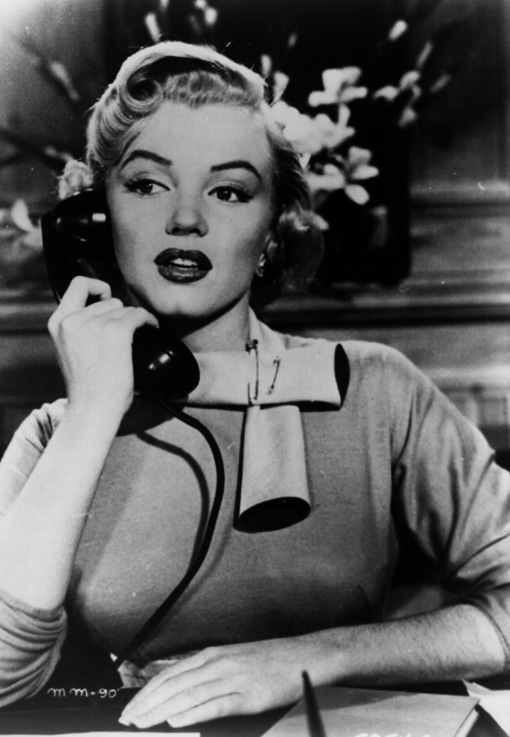
The conversation ended with my friend promising to send me a copy of the offending photo, and it was as I had thought, my early morning picture.

Later that evening, another friend shared his opinion. Where she saw tired and haggard, he saw quiet and pensive. Instead of current illness, he saw tempered strength brought about by obvious wounds. He liked the picture, he said, because he felt it a true reflection.

For a time, I was struck by this difference of opinion between two people who know me as well as anyone, until I realized they both saw the same thing. The difference was acceptance.

Hallie’s view mirrored my own. I am seldom satisfied with a photograph of myself. On a recent occasion in which I was called upon to provide a current photo, I took fifty shots before settling on one I felt was passable. I can always find something wrong. My eyes don’t look right. The lines around my mouth are too obvious. My hair isn’t messy enough.

But it’s really not about physical appearance. It’s about vulnerability. It’s about being stripped down, and allowing the real to show.

The eyes don’t look right because they are sad. The lines around the mouth tend to drift unflatteringly, and messy hair provides a pleasant distraction from the rawness of a well-traveled face. And, all of this is difficult to show and unpleasant to see.

The friend who saw sick and tired, knew the pain first-hand, and couldn’t bear being reminded. The friend who saw quiet and pensive, viewed with accuracy, from a distance.

And, both are right.

© Copyright 2007-2009 Stacye Carroll All Rights Reserved

Gathering Scraps


She’d always meant to plant a cherry tree. The blooms, a true harbinger of spring, danced in her favorite shade of softest pink, from spindly branches in her neighbor’s yard. Emily sat in her office chair admiring the way the bluest sky separated the twisted branches, and highlighted the flowers.

“Thinking, again?” Troy’s hand slapped the door facing just before his feet came down with a thud against the hardwood floors.

Emily grimaced before spinning the chair in his direction.

“I’ve asked you not to do that.”, she said before turning again, this time in the direction of her desk.

Troy’s arms snaked around her neck as he clumsily placed a kiss on her cheek, displacing the earpiece of her glasses.

“I’m going to shoot hoops!”, he called, already halfway across the room before she successfully resettled her glasses.

“K…” The gaiety she forced into her voice left just a hint of bewilderment as she watched him lope away.

The backdoor slammed, as expected, and she raised her hands above the keyboard and considered the white screen in front of her. Images played inside her head where words should have been, as she replayed the scene in her office the day before.

She never realized desperation had a scent until the last applicant of the day entered timidly to stand before the interview committee she chaired.

“Welcome, Mr…” She had drawn out the title while scanning for the applicant’s name on the list her secretary had prepared. After several seconds, she realized she had expected the man to provide his name, and he hadn’t. Surreptitiously, she glanced at Tom, who sat next to her, for help.

“Wang. I believe this would be Mr. Wang.” Tom stood and offered his hand, sending his reflection streaming across the burnished wood of the table that separated them.

She didn’t know when the blush had begun to color his face, but the sweating had just begun. A single drop snaked down one side of Mr. Wang’s face just in front of his left ear.

She smiled her most welcoming smile.

“Have a seat, Mr. Wang, please.” And, as he slid into the chair opposite her, “We’re all here to learn a little more about you, so why don’t you start by telling us a little about yourself?”

As the man stumbled through words he had obviously attempted to memorize, she wondered when. Had he crammed mightily the night before to come up with an impressive speech, only to have his mouth betray him? Or had he simply interviewed so many times that the speech played like a badly prepared regurgitation? When he finished, she realized she’d heard very little of what he had said.

Tom glanced in her direction before pushing the paper in front of him forward and addressing Mr. Wang. He asked the usual questions ending by asking Mr. Wang to predict his future.

“Where do you see yourself in ten years, Mr. Wang?”

The man raised a hand to his chin to catch the drop of moisture that had finally traversed the planes of his tired face before answering.

“I thought I’d be at Bailey’s forever…”, he started. “I would hope I could be here for the rest of my life.” The last sentence was said through an uncomfortable wrenching of his face that never quite became the smile he had hoped for.

Emily felt his expression resonate somewhere deep inside, and a scream began to fill her head, “Noooo…”.

Now, as she sat at home, in front of her computer, the sound of rubber striking concrete punctuated the five words that played again and again inside her head over an image of hopeless desperation, “The Rest of My Life, The Rest of My Life, The Rest of My Life”.

Her fingers began to move along the keyboard, and she watched disinterestedly as words began to file onto the screen in front of her. It wasn’t what she’d meant to write, but that happened. Often, an idea occurred to her during the day, and she scribbled it on the nearest scrap of paper before she had a chance to forget. Sometimes, as she sat in front of the computer later that evening, the idea actually fleshed out and became something she was proud of. Other times, after several attempts, the story wouldn’t come, and she pulled the chain on the desk lamp with a sigh after giving up.

Her fingers flew, forming two paragraphs through their efforts. After placing the last period, she scrolled up and read before adding, “Sincerely, Emily Walker”.

The next time she approached the keyboard she wouldn’t be pursuing a hobby, she would be embarking on a new career, and the rest of her life.

© Copyright 2007-2009 Stacye Carroll All Rights Reserved

Older People


I try to avoid labels, all labels. But, I particularly dislike the label we apply to any human blessed with longevity. The term “Senior Citizen” is a misnomer on a number of levels. After all, an older person may not be “Senior” at all. He might be a junior. And what is the significance of “Citizen” here? Aren’t we all citizens? We don’t call babies “Newborn Citizens”. We wouldn’t refer to a forty-year-old as a “Midlife Citizen”. The mere idea sounds awkward and ludicrous.

I have heard the argument that the term “Senior Citizen” was borne out of respect for a person’s advanced age, but I’m not buying it. I believe the term to be market driven, much like the terms “Soccer Mom”, “Gen-Xer”, and “Baby-boomer”. Unfortunately, as the media makes use of these catch-phrases, the terms become part of our collective consciousness, morphing images born as marketing tools into stereotypes with inherently negative connotations.

I don’t like the word “elderly”, either. As soon as it reaches my ear, it becomes another word entirely, registering in my brain as “feeble”. Left with few options, due to my own semantic prejudices, I refer to those “of a certain age” as “older”.

I enjoy older people. I always have. As a young child, one of my best friends was our next-door neighbor, Earl Witcher. I wish I had a dollar for every time my parents told the story of my running, with arms out-stretched, from our driveway to his, shouting “Ale! Ale!”.

As a young mother, I was blessed to live next door to Ruby Kitchens, a hard-scrabble, deeply southern woman of indeterminate age, though her tight, pewter-colored perm suggested at least sixty. Ruby loved babies, which was lucky as I proved to be a prolific bearer. She loved to hold them, sing to them, and make faces at them. And, I enjoyed a rare empty lap as I watched her love them. For eight years we shared a driveway, and our markedly divergent lives, becoming dear friends. When the walls began to close in on my burgeoning family, visits were less frequent, but no less enjoyable. The children she helped me to raise are adults now, and Ruby has been gone for many years, yet I still think of her several times a week.

~~~

Joy is a spritely eighty-five, though if you ask her, she isn’t a day over eighty-three. Lucie turned eighty this year, passing the day in the hospital bed she has occupied since she was seventy-eight.

Joy came to work in our office three years ago, and within weeks had become one of my favorite things about weekdays. Last February, Lucie was the first hospice patient assigned to my care. I fell in love on sight.

Joy runs circles around most of the much younger employees in our office, coaxing productivity out of office equipment most of us have never learned to use, and doing it with a smile. Lucie is paralyzed, from the neck down, as the result of a stroke. She lays, a helpless, horribly contracted heap, in the center of her twin-sized world. She is completely dependent on others to meet her needs, and she doesn’t mind telling you what they are. I rarely visit without a small container of vanilla ice-cream.

Joy hums. You don’t so much look for Joy, as listen for her. The one time Joy isn’t humming is when she is talking, and she loves to talk. Her conversations usually surround some form of culture; she might recommend a book she’s just finished reading, or review a night at the symphony or an afternoon spent at the museum. An avid “Dancing with the Stars” fan, she loves to rehash the latest episode while stirring hot chocolate mix into a cup of steaming hot water.

Lucie’s eyes are usually closed when I enter her room. I’m careful to bend close before I say her name quietly, while softly touching one tiny, bony shoulder. Despite her efforts to open them, her right eye never fully cooperates, prompting my perch on the left side of her bed.

“Miss Lucie? It’s Stacye…” I encourage her to wakefulness.

“Hey!” She exudes enthusiasm in a voice barely above a whisper.

“It’s Saturday, Miss Lucie, February twenty-first, almost spring-time! How are you doing today?” I slide one hip up onto the bed, feeling the egg-crate mattress beneath its thin cotton covering.

“Oh…I’m alright…” She answers every time.

I stand, and move to draw the drapes.

“You want these open, don’t you Miss Lucie? Look at that gorgeous sunshine!”

I return to the side of her bed.

“Are you eating?” At last check she weighed less than seventy pounds.

“These people don’t cook right.” She answers with a lop-sided sneer and averted eyes.

“It’s not what you’re used to, is it?”

“It sure ain’t!” Images from an earlier visit, remnants of camouflage-colored puree decorating thick, institutional stoneware, fill my head.

White noise, from the television she insists must play at all times, accompanies our words. Sometimes I carry the conversation. Raised by a father whose green thumb was more of a necessity than a hobby, Lucie loves to hear about my garden.

And, when she’s up to it, Lucie has stories to tell. Hours, spent at her bedside, have taught me much about life in pre-integration Atlanta, as she takes me along on the bus ride across town to “care for a white family”. Most interesting, though, are her ruminations on Lucie; Lucie the daughter, Lucie the independent woman, Lucie the single mother. The injured cadence of her voice urges me closer, as she shares her disappointment in the father of her only child who “…left, and never came back”.

Two framed photographs provide the only break in the institutional green of our surroundings. Lucie’s grandson smiles through an eight-by-ten rectangle of glass. And, just underneath, hangs a six-by-four photo of his infant son, also known as “the baby”.

“Did your grandson bring the baby to see you this week?”, I ask as I dab at the unbidden tear falling from an eye that won’t quite open.

“Nah…”, she answers. “He’s busy…”

“Well, I bet he’ll be here next week!” I rise to leave, readjusting the blankets displaced by my hip.

Bending, I kiss her shiny, cocoa-colored forehead.

“I’m going now, Miss Lucie. I’ll see you next week…”

“Alright…”

“I love you.”

“I love you, too.”

© Copyright 2007-2009 Stacye Carroll All Rights Reserved

“Worry Beads”


As a civil engineer working with a large real estate firm, my father was part of the boom that built Atlanta during the 1960’s. It was in this way we came to know the Kwechs, a family of Chicagoan transplants. They talked funny, slathered both sides of their sandwiches with butter instead of mayonnaise, and ate pickled fruit. They were also Catholic, which was my mother’s way of explaining Mrs. Kwech’s habit of pinning a handkerchief into her hair before entering a church.

As we sat down to a Thanksgiving dinner featuring butter molded into the shape of a lamb alongside pickled peaches, all five Kwechs made a mysterious hand-motion after “the blessing”. Fascinated, I studied the motion and practiced it; thinking it “neat”, until my mother reprimanded me. This was the first time I heard the word “sacrilegious”.

Of course, my mother’s horror only served to accentuate the exotic nature of this mysterious faith. Obviously, the Catholic Church was much more holy than the garden-variety, Southern Methodist church I’d been brought up in.

I am a Jack-of-all-churches, and master of none. I have studied most of the major religions, and many of the lesser known. Faith, as a practice, fascinates me. So it is, that almost forty years later, I understand that much of the mystery of the Catholic faith isn’t so much a matter of secrecy as it is ritual. Still, compared to Methodism, one of the least imaginative religions ever practiced, Catholicism piqued my interest.

It’s aura lies in its accoutrement; priests in fine robes with satin sashes and impressive head-gear, an assortment of ranked deities, confessionals, and, of course, the rosary.

The first rosary I ever saw was made of rose quartz. I remember thinking it beautiful. Respecting my mother’s admonition, I never considered I could own one until learning that Catholic’s don’t own the patent on the rosary. It seems that this, like so many Protestant traditions, is a practice borrowed from a much older religion.

Buddhists, too, worry rosaries, or malas, during prayer. Traditionally consisting of one hundred and eight beads, a mala is used to keep count while reciting a mantra in meditation. Elizabeth Gilbert elaborated on this tradition, beautifully, in her book “Eat, Pray, Love”. In the book, she points out the symbolism of the number three, inherent in the Buddhist mala. She refers to the number of beads, one hundred and eight, as the perfect number because, while being divisible by three, its individual numbers add up to nine, which, when perfectly divided, also amounts to three, a number of importance in many religions; as in Father, Son, and Holy Ghost.

After reading, and being inspired by, Ms. Gilbert’s book, I ordered and received a Tibetan mala. One hundred and eight, perfectly symmetrical, wooden beads line up along a piece of ordinary twine that, purportedly, has been blessed by one or more Tibetan monks. The beads came protected by a tiny satin, hand-embroidered purse, and they reside within the confines of my over-sized, designer hand-bag.

Today, after receiving several prayer requests from an assortment of friends, residing in a variety of locales across the globe, I retrieved the beads. They rode in my pant’s pocket for most of the day, and now, are secreted against my chest.

Oils, from my hands, lend a new-found gleam to their wooden faces, as my touch reminds me of their purpose, and I pray…

© Copyright 2007-2009 Stacye Carroll All Rights Reserved

Through the Eyes of a Child


At eight years old, Lisa dwarfed the desk she leaned upon. Her eyes moved quickly, and side to side, as she read intently from the textbook in front of her.

“She doesn’t even know I’m here.”, Helen thought as she passed the child.

“Child”, the word repeated in her brain as she reminded herself that the person at the desk was, indeed, just a child.

“Then why do I feel so self-conscious?”, she continued the conversation with herself.

This child wasn’t just any child. This child was the boss’s child. Imagined snippets of Lisa’s privileged life played in the form of colorful magazine images inside Helen’s head, as she fed paper into the fax machine.

“What must she think of me, a grunt in her father’s office?”

“Look at the way she studies so intently! She hasn’t moved in minutes! Is this the result of parenting? Is this the effect of having a stay-at-home Mom?”

Helen stood in front of a historically moody fax machine, listening for the sounds of successful transmission, as an image of her own back presented in her head, and she wondered what the child thought of her bulky, discount-store sweater.

A piercing squeal signaled her success and Helen stole a glance at Lisa as she left the room. The child’s head still hung over the book, allowing a curtain of perfectly coiffed, shiny blonde hair to shield her face.

The conversation continued as she made her way back to her cubicle.

“She probably doesn’t see me that way at all. She probably didn’t speak because she’s shy, and I am an adult, and maybe she just doesn’t talk to adults.”

Realizing she needed another copy, Helen turned on her heel upon seeing the crowded bulletin board over her desk.

“This job is embarrassing. It takes no skill.” As she navigated the cubicle maze, the conversation began again. “That child studies that way so that she will never have to work in a place like this!”

Arriving at the antiquated copier, she raised the lid and mitered the paper on the glass.

“But she doesn’t really know what you do! For all she knows, your job is very difficult, requiring lots of skill and education!”

Helen lowered the lid and pressed the button. An image of her boss’s den filled her head as he sat upon an oversized, expensively upholstered ottoman in front of his studious blonde daughter. “We buy this education for you so that you never have to work for someone like me.”

Lights flashed as the mechanism traveled back and forth underneath the glass.
“This isn’t about her, you know. This is about you. That child has no idea what you do or why. But, you do.”

A flood of images filled Helen’s head as she retrieved both copy and original, beginning with that goofy graduation picture, complete with rakishly tilted, white mortar board. She saw an image of her first, hopelessly addicted, husband, and a succession of mindless jobs she worked at to support her children. She saw the jalopies she drove and the unimaginative boxes she’d lived in, and the puzzle began to come together.

She barely noticed the co-worker she side-swiped while rounding a corner of the maze. His “ ‘Scuse me…” brought her head up and she dashed off a smile that stuck as she realized she’d bought it.

Years of negligence and name-calling had left their mark. She saw herself as others experienced her, strong and aloof, yet, caring. Her smile deepened as she realized the permeability of her guise. Her perceived strength was nothing more than a perfected defense mechanism.

Unmasked by and eight-year-old, she filed the copy, and then the original.

© Copyright 2007-2009 Stacye Carroll All Rights Reserved

What is Love?


As a child, love meant racing to be the first to greet Dad as he pushed through the screen door.

As a teenager, I shared confidences with girlfriends, building a love that protected our vulnerably emerging selves.

As a young adult, it was all about the chase; romance, flowers, stolen embraces, and the fever pitch of emotion that tied the rhythm of my heart to the sound of a voice.

Mother-love is unlike any other; constant, sweeter, deeper, purer, and ever-growing.

One of the gifts of this time in my life is the ability to integrate all these different kinds of love, and to see how they build, one upon the other. And, with this cache of love stored away as reference, I now see love in places I had never considered looking before.

Love is a progression. I remember the first time I really heard the following lines, the way they moved me, and the promise in them. They were read by my ninth-grade Sunday school teacher, and many years later, served as my marriage vows.

“1 Corinthians 13:1-13

“If I speak in the tongues of men and angels,
but have not love,
I have become sounding brass or a tinkling symbol.
And if I have prophecy and know all mysteries and all knowledge,
and if I have all faith so as to remove mountains,
but have not love, I am nothing.
And if I dole out all my goods, and
if I deliver my body that I may boast
but have not love, nothing I am profited.
Love is long suffering,
love is kind,
it is not jealous,
love does not boast,
it is not inflated.
It is not discourteous,
it is not selfish,
it is not irritable,
it does not enumerate the evil.
It does not rejoice over the wrong, but rejoices in the truth

It covers all things,
it has faith for all things,
it hopes in all things,
it endures in all things.
Love never falls in ruins;
but whether prophecies, they will be abolished; or
tongues, they will cease; or
knowledge, it will be superseded.
For we know in part and we prophecy in part.
But when the perfect comes, the imperfect will be superseded.
When I was an infant,
I spoke as an infant,
I reckoned as an infant;
when I became [an adult],
I abolished the things of the infant.
For now we see through a mirror in an enigma, but then face to face. Now I know in part, but then I shall know as also I was fully known.
But now remains
faith, hope, love,
these three;
but the greatest of these is love.”

Later, I discovered the writings of the ancient poet, Rumi.

This is Love

“Love is reckless; not reason.
Reason seeks a profit.
Love comes on strong,
consuming herself, unabashed.

Yet, in the midst of suffering,
Love proceeds like a millstone,
hard surfaced and straightforward.

Having died of self-interest,
she risks everything and asks for nothing.
Love gambles away every gift God bestows.

Without cause God gave us Being;
without cause, give it back again.”

A steady mist fell as I drove into work this morning. The light changed, and as I rolled to a stop, I noticed a flurry of activity to my right. A young, heavy-set, African-American man, clothed in ill-fitting blue jeans and Arizona Cardinals football jersey, filled the wet sidewalk. Drawing my attention was the huge bouquet of heart-shaped balloons impeding his progress. Blinking silver and red, they danced and bounced above his smiling face. As he wrestled with the large, red bow serving as his hand-hold, I thought, “Now THAT is love.”

© Copyright 2007-2009 Stacye Carroll All Rights Reserved

Everything…


I left home at age twenty with a nursing degree I never really wanted and no sense of direction. This helps explain why, by the age of twenty-one, I was married and pregnant. Nine years later, my daily routine began with dropping all three of my children at school on my way to work in a midwifery clinic. This is where I met Zan.

Some may call it “luck”, or “fate”; others might invoke “kismet”. But I know that the universe provides, and throughout my life, I have been fortunate to have been blessed by people Zan would refer to as “guides”.

Zan is Native American, and she looks the part. Tall, and lithe, she wore her black hair long and flowing until it got in her way, at which point she clipped it, haphazardly, atop her head. She came to work as a midwife one year after I was hired as office manager, and fortunately, my world has never been the same.

At the time we met, my life was a mess. My marriage to an alcoholic, drug-addicted, philanderer was nearing an end. Listening to Zan’s dulcet-toned words of support and encouragement, I came to believe that I could raise my children in a healthy environment on my own. Later, it was through her suggestion that I found an Adult Children of Alcoholics’ meeting, where I realized it wasn’t just me; there were others like me who had taken what life had served up, and done the best they could with the little they had been given.

When she wasn’t occupied with turning my life right-side-up, Zan taught me about Native American culture, herbology, and bred in me a love for wolves. She introduced me to Bonnie Raitt, fried bread, and the art of healing massage. Most important though, as she taught me to love myself, she demonstrated how that love could, and should, be spread. Zan grew me up.

She returned to her beloved horse farm in Virginia about fifteen years ago, and it has probably been five since I’ve seen her, but if she called right now, we would pick up exactly where we left off. Zan would start by saying “Hello, Beautiful…”

Some may call it “midlife crisis”, or “menopause”; others might just call me “crazy”. But I know that, lately, I’ve gotten off track. The self-esteem I worked so hard to bring to fruition got trampled somewhere, and I forgot to notice. Lost, too, was my sense of direction. But I remembered today that the universe provides, and while I haven’t always gotten what I wanted, I am always provided with what I need.

I realized the presence of another “guide” who, through words of support and encouragement, demanded I be true to myself, while tenaciously prodding me to find my path. For the first time in a very long time, I not only know what I want, I believe I can have it. Simply put, I want everything….

“I want to learn what life is for
I don’t want much, I just want more
Ask what I want and I will sing
I want everything (everything)

I’d cure the cold and the traffic jam
If there were floods, I’d give a dam
I’d never sleep, I’d only sing
Let me do everything (everything)

I’d like to plan a city, play the cello
Play at Monte Carlo, play Othello
Move into the White House, paint it yellow
Speak Portuguese and Dutch
And if it’s not too much
I’d like to have the perfect twin
One who’d go out as I came in
I’ve got to grab the big brass ring
So I’ll have everything (everything)

I’m like a child who’s set free
At the fun fair
Every ride invites me
And it’s unfair
Saying that I only
Get my one share
Doesn’t seem just
I could live as I must
If they’d
Give me the time to turn a tide
Give me the truth if once I lied
Give me the man who’s gonna bring
More of everything
Then I’ll have everything
Everything”

© Copyright 2007-2009 Stacye Carroll All Rights Reserved

Undercover Runner


Anyone who knows me will tell you I am not, by nature, a runner. I don’t have the vibe.

Athletic clothes don’t look chic when pulled over my frame. They don’t even look particularly athletic, unless you consider a frump athletic. I don’t carry a bottle of water everywhere I go, and my sneakers don’t look as though they have been run over by a car multiple times. And, if you see me on a street corner, I will not be running in place in preparation to dart across the sidewalk. I will, instead, have both arms out, wing-like with fingers splayed, in an effort to hold back the child who may or may not be accompanying me. Old habits die hard.

I still look back in horror at the days of the one-piece, polyester, blue-and-white-pinstriped jumpsuit we were forced to wear in PE class. It was the era of the “President’s Council on Physical Fitness Award”, wherein middle-aged jocks with large plastic whistles invoked the memory of JFK to “inspire” children to meet a set of standards set by the federal government. One entire quarter of the school year was set aside for this endeavor, and it quickly became the longest three months of my life.

One day a week we began our day under a cloud of steam emitted by our pre-pubescent mouths. Inside the black asphalt track, the football field sparkled as dewdrops fought the sun’s effort to reclaim them. The runners bounced in anticipation, while the rest of us huddled with arms wrapped around our shapeless midsections, and grimaced against the cold. As the coach approached in his year-round uniform of t-shirt over unattractive, polyester shorts, featuring a six-inch waistband and very deep pockets, I scanned my group of shivering non-runners for the easiest mark, and set my preliminary goal of not coming in last. By the end of the quarter, I had reevaluated. My new goal was, simply, to survive. Recently, though, my experience has served me well.

In the public school system, PE is now treated as an elective that is placed in rotation with Home Economics, Computer Science, and Spanish. So far this school year, my son has learned his way around a kitchen, and mastered at least twenty words in Spanish. He returned from Christmas break full of anticipation for six weeks of PE. His excitement, however, ended when the coach, wearing a t-shirt over unattractive, polyester shorts featuring a six-inch waistband and very deep pockets, raised a large plastic whistle to his lips, signaling the class to run.

Shane is athletic. He has played football for five years. He has excelled in basketball for four years, and fills the time in between with baseball. A couple of weeks ago, I met his descent from the school bus with my usual question.

“How was your day?”

“Crummy.”, he growled.

“I’m sorry. What happened?”

“PE”, was all he said.

“PE? You love PE! You were looking forward to it!”

“Yeah…”, he began. “That was before we had to run.” JFK may be a distant memory, but the President’s Council on Physical Fitness is, apparently, functioning without him.

I smiled down at my notably athletic progeny before saying, “Let me tell you a story.”

I used to joke that if you saw me running you could be sure someone was chasing me. That was before middle-age, and the realization that a simple change in dietary habits no longer reaps the same reward it did twenty years ago. At this time in my life, physical activity is just as important as logging every morsel of food that passes my lips.

I live just minutes from a park that boasts two well-maintained walking tracks. White concrete snakes over several acres between tennis courts and baseball diamonds, and a “nature trail” winds through towering pines behind the football field. The sound of my hurried, measured footsteps barely pierces the music piped into my ears through tiny, white earphones. By keeping my eyes down, I can get into “the zone”, and walk for miles. But when I raise my eyes, I see them; the runners. Loping by me, their long strides mock as I realize they will probably lap me again before I reach the end of the trail.

I want to run, but find it so boring, so tedious. And there is, of course, the picture in my mind of me running, complete with blue-and-white pinstriped, polyester jumpsuit…

Last week, the sun burned the frost out of the air, inviting me to venture outside in my shirt-sleeves. Exhilarated, I fought my puppy’s gangly legs into his harness and attached the leash.

“Let’s go, boy!”, were the last words I would speak before re-entering the house.

Murphy, my five-month-old boxer, headed out at a dead gallop. I resisted him at first, but, upon seeing the joy in his limited freedom, I followed his lead. And, we ran. We ran downhill, and around corners. We ran uphill in the center of the street. We ran into cul-de-sacs, down to the entrance of our subdivision, and back.

As I repeated the harness process, in reverse, I marveled at how good I felt. I felt loose, I felt fit, I felt athletic! And, the difference was made by my companion. Running on the other end of Murphy’s leash freed me from the inhibitions inherent in my awkward appearance in athletic clothing, and stopping to catch my breath warranted no explanation, as everyone knows running dogs stop every few feet to sniff. The presence of a dog changed the entire premise of the activity while keeping me entertained. I’m not putting myself out there as a runner, I’m just a football-Mom on the other end of a leash.

© Copyright 2007-2009 Stacye Carroll All Rights Reserved

Confessions of a Spoiled Brat


The goal leading to my latest psychological growth spurt was to better deal with a person with whom I must deal daily, and with whom I have constant difficulty. Isn’t that always the way? We almost never enjoin in any kind of spiritual or psychological journey because of some fault we sense in ourselves. We journey in an effort to relieve pain, to decrease stress, or to “fix” someone else.

Two weeks into my latest exercise, I made an unsettling, yet wonderfully emancipating discovery. I am a spoiled brat. And, true to form, I’m not just your garden-variety spoiled brat. I am a self-made spoiled brat. I studied to achieve this status. I worked at it. Work, though, is too small a word; I persevered.

“Spoiled brat…”

I’m sure I heard these words burst forth from my mother’s mouth, initially, and apparently more than once, as they come to mind fairly easily. My mother was given to name-calling when angry. She had several favorites. I believe “spoiled brat” was used in situations when her use of the word “No!” was met with some complaint, or perhaps when she sensed we were behaving in an ungrateful manner. I’m sure she directed these words at me on more than one occasion, though I’ve never felt deserving, until now.

My epiphany arose from a single question; “Did he mean to hurt?”

At the risk of sounding simple, I must admit I had never considered this part of the equation before. The question was aimed at a woman detailing her husband’s latest transgression. It seems he had forgotten to take out the trash, or something equally heinous. Then came the question, and I lost my sense of hearing as my brain began to whir, filled with misdeeds I had logged over the years. As they flashed before my eyes, the question repeated; “Did he mean to hurt?”, and inevitably, the answer was “no”.

It was an amazing exercise, and I recommend it to everyone. It’s hard to comprehend how much room is taken up by imagined slights. As I took out each hurtful memory and held it under this light, it disappeared, leaving me lighter, freer, happier. I began to experience people differently and give more of myself as the part of me that had been holding onto hurt was available for real interaction.

Strangely, though, as the hurt peeled away, I noticed a disturbing recurring pattern in my thinking. Roger called to ask if I could come to the gym a little early. My first thought was “I don’t want to.”. The dog trainer called to say she couldn’t make our Thursday evening appointment, but Saturday afternoon was open. My first thought was “I don’t want to.”. Shane asked if I could swing by the school after work to pick him up, so that he could stay for the basketball game. My first thought was “I don’t want to.”. The point is not whether I did these things, because I almost always do. The point is that my thinking immediately turned to what I wanted, and, chances are, if I did do the things I had already decided I didn’t want to do, my demeanor displayed my reticence.

I also became aware of how much of my quiet time is spent in thinking about what I want. Rush hour is prime time for this kind of ruminating. Usually, by the time I get home, my evening is planned according to my desires, and I don’t appreciate interruptions that divert me from my chosen endeavors.

The natural response to uncovering such a distasteful aspect of one’s character is to ask “why?”. The answer came easily. It was survival, really. My divorce left me a working, single mother of four children. Circumstances leading to the divorce left me ill-prepared for this, or any other challenge. After a pity-party that lasted several weeks, I looked around and realized five people were counting on me, and only me…for everything. I pulled up my boot-straps, just as my father had taught me, and forged ahead. In the process, as I felt the pressure of four sets of eyes trained solely on me, my eyes, too, focused inward. Somewhere along the way, I had come to equate strength with doing things my way. This may have worked, then. It may, in fact, have been the only way. But, blessedly, circumstances have changed, and that kind of self-interest is no longer in my best interest.

It will take some time to change a habit I worked so hard to develop. Awareness is the first step. This evening, as I sat amidst hundreds of other weary commuters, my cell-phone rang. The voice on the other end of the line suggested a diversion from my well-thought-out plan for the evening. My first thought was “I don’t….”.

That’s as far as it got…

And, that’s a start.

© Copyright 2007-2009 Stacye Carroll All Rights Reserved

Game Face


I loved those Saturday afternoons. Dad was asleep by half-time, but magically, some kind of internal clock woke him in time to watch the final play. His snores leant a softness to the crowd noise and announcers’ banter.

Later, I married an avid University of Alabama football fan. He hung flags, wore his special game-day shirt, and God help you if you were misguided enough to ask him a question while the ball was in play. While watching with him, I met and fell in love with the Florida Gators.

I graduated from a school whose founder chose as its mascot the White Owl. I believe this to be the reason they were denied the right to field a football team. So, with my back to the wall, I punted, and adopted a team. For the last ten years, the only occasion upon which I’ve missed a televised Florida game, found me sitting in the stands, watching my son play.

When Shane was about four, a complete stranger approached us at a local “Chili’s” as we waited to hear the tell-tale sizzling, announcing the approach of our fajitas.

“Is this boy playing football?”

Managing to speak despite a mouth gone slack, I answered, “He’s only four!”

“Oh! Well, he’s a big boy; got offensive lineman written all over him! See ya’ in two years!”

I don’t know if he was there, but we were. Three nights a week, I hurried home from work to dress my first-grader for football practice. It had never occurred to me, during all those years of coaxing nylons up my own leg, that the experience would benefit my son. Spandex is so unforgiving….

Shane trotted gamely onto the field, as I scanned the row of peopled, nylon-covered, folding chairs, unaware that the spot I chose would, for the next several months, be designated as “my spot”. Fortunately, I chose well. Aluminum fencing, separating us from the boys, served as an adequate footrest, and my neighbor was an interesting man who, at 50, had just reenrolled in school. I found him to be somewhat aloof at first, until he explained he had no hearing in his right ear. From that point on, I leaned in to talk to him, and realized he hadn’t really been ignoring me, after all.

Six year-olds in football helmets look like Atom Ant. They just do. And there is nothing more entertaining than watching twenty-five Atom Ants run (mostly into each other), and kick, and catch. Shane learned a lot that year, and the experience inspired his father. Roger has coached Shane’s teams, in one capacity or another, every year since.

The first year with Roger at the helm was abysmal, or as we have come to call it, “a learning experience”. The team won only one game. Fortunately, it was the last one, and the fervor experienced in that triumph encouraged the parents to give him another chance.

Year two brought in new talent, and we won every game, including the county championship. Riding this wave, we beefed it up for the boys in year three. A parent/policeman arranged for her co-workers/motorcycle-club-members to escort us to the county championship. A show of bravado like this is so much more effective when you actually win the game. Instead, we suffered our first loss in two years, and the boys learned a very valuable lesson. We cleaned it up a bit, but the moral went generally like this; “Don’t let your mouth write a check your ass can’t cash.”

Shane has played football for five years now. Besides the obvious physical aspects of the game, he has benefited in many other ways. Youth sports offer a social “in”, as it introduces boys to others in their peer group they might not otherwise have met. Most importantly, though, youth sports build confidence. And, it’s not just about winning games. The confidence boosters live in the small things; a successful block at practice, the ability to run three laps around the field in one-hundred degree weather without stopping to vomit and/or cry, and being part of a group relying upon one another to complete a task. Add to this, the vision of Mom in the stands sporting the team colors, holding a sign with your name and jersey number on it, and the possibilities for positive self-esteem are endless.

Five years ago, at the age of thirteen, my nephew expressed an interest in football. He had excelled in baseball and soccer, and his parents had hoped he would continue. Football came out of left field. My sister, Laura, was especially skeptical, mostly due to the violent nature of the sport.

For the last four years, Andrew has held the starting safety position on his high-school football team, and his parents have never missed one game. Three years ago, as I sat in my pajamas, enjoying a rare Friday night at home alone, Laura called to say Andrew was playing at a local high-school just minutes from my house. I reluctantly drew on some jeans, pulled a fleece over my pajama-top, and arrived just as the third quarter began. It was my sister’s turn to don the colors, wave the pom-poms, and cheer. Her husband, too, felt his creativity enhanced by his son’s show of athletic prowess. The hats he designed for us to wear at the Championship game were comically supportive, and the cooler he lugged into the stands, packed with assorted hot beverages and warm spicy muffins. Andrew’s team ended the year as State Champions, and I have missed few games since.

Despite our living about forty minutes apart, I don’t see my sister very often. Her son’s football games provided us with an opportunity to share a passion, to laugh, and to connect. I came to relish our time.

I learned the basics of the game from watching it on television, and the nuances by watching my son and nephew play. I learned what splits are, the difference between free- and strong-safety, and how to guess a penalty call by noticing where the pretty, yellow bean-bag is thrown. It is a bean-bag, you know; a bean-bag wrapped in yellow cloth. The only flags in football are those flapping at the edges of the field.

I love American football, and my various experiences with it have left me well-versed. My son and I watch games together, and when he gushes after a particularly gutsy play, I get it. The guys at the office, misguided Georgia Bulldogs all, include me in their pre-game and post-game discussions, and through this experience I have perfected the art of “talking smack”. Ok, I pretty much had that one down already. I just aim it in a different direction now.

As they have for the last four years, my son’s team made it to the semi-finals. This year we lost, but there’s always next year. Shane made a name for himself as the best center in his age group, and his kicking coach has offered to take him to Kicking Camp at Appalachian State this summer.

The Gators won a national championship this year, and I have a tee shirt to prove it. I wear it to work on the occasional “Casual Friday” just to see those Bulldogs bare their impotent teeth.

And my Steelers won the Super Bowl! You’re thinking, “She’s from Atlanta and she’s supporting the Steelers?” Two words: Troy Polamalu.

I may know the game, but I’m still just a girl…

© Copyright 2007-2009 Stacye Carroll All Rights Reserved