Hunting Hearts


She was the definition of grace, as she swooped and swirled in languid circles mesmerizing her prey, effortlessly.

She appeared unaware, uncaring even, of his approach, as she pointed her regal features in the direction of a far horizon and glided into another turn.

Her helpless target paused, not out of fear, but in awe of the beauty before him.

We both watched, as she sailed in the wake of glorious plumage that caught and held the rays of the sun.

As he moved towards her, I prayed a silent blessing, feeling my impotence. His journey was inevitable.

She made another pass, looking for just a moment, in his direction.

I turned to walk back up the drive. The die was cast. For the moment, she had won.

He took several halting steps in her direction before allowing his gait to announce his decision, and as he drew closer, I’m sure I saw her smile.

Little girl on a bicycle….

© Copyright 2007-2009 Stacye Carroll All Rights Reserved

Skinned Cats


She opened the conversation by announcing herself.

“This is Dixie Lee Shapiro.” And, for a moment I was lost in a swirl of images.

A bleached blonde beehive swirled above heavy, dark eyebrows and a prominent nose. As she spoke, the image changed. Dixie still sported the haystack upon her head, but the exclamatory eyebrows and prominent proboscis belonged to the gentleman at her side. Either stereotype was implausible.

A rise in the tone of Mrs. Shapiro’s voice regained my attention. Her words shook in a manner that bespoke age and infirmity, as she explained her dilemma while begging my response. Her problem was not unique. I ferried several of these calls every day, and the pile of paper on my desk seemed much more pressing. I answered her questions in a clipped, business-like manner, steering the conversation towards conclusion. But, Mrs. Shapiro was having none of it. She wanted answers. She pulled out the big guns.

In a quavering voice, she explained that the check she’d written should have allowed her to receive telephone calls from her son who was incarcerated. It had been cashed, but they claimed not to have it. She hadn’t heard from her son in an awfully long time. Was there nothing I could do to help her? Mrs. Shapiro’s hair shrunk considerably as she spoke, and the image of her buxom figure alongside Mr. Shapiro was replaced by the creaking sound made by her rocking chair as it rode wooden floors that had, long ago, lost their sheen. Her worry, anxiety, and loneliness were palpable.

Empathy kicked in, and I went the extra mile, tracing her funds and forgiving the fee usually charged for such service. Her payment had been received. She had a legitimate complaint, and as I shared the information, I embellished with some advice in hopes that the lines of communication between she and her wayward son would soon be open.

“That’s what I thought, and I didn’t especially like it.” Her response was spoken in a voice I hardly recognized. The quiver was missing, and the tenor now carried smoke, and whiskey, and something more, something hard. She spoke for several seconds of her son’s girlfriend, who managed to speak to him “some kinda way”, before thanking me for my assistance and agreeing with my conclusions.

“Let’s start there and see what happens, ok, kid?”

I hung up with a smile.

© Copyright 2007-2009 Stacye Carroll All Rights Reserved

Pieces of Me


I live in a 70’s era brick ranch which was built in a time when closets and bathrooms were allowed the same amount of square footage, and neither is generous. The only extra closet in the house is filled, year-round, with suit jackets and winter coats which won’t bear folding into plastic storage bins. So twice a year, once in spring and again in the fall, I make the climb up complaining, collapsible stairs, into my attic to retrieve our stored clothes.

“Changing out the closets”, as I’ve come to refer to this laborious task, is not a chore I enjoy, which serves to explain why I’ve worn the same two pairs of sandals for the better part of the last two weeks. But, as April wanes into May, spring has taken hold with plans to hang around for at least a couple of weeks before summer begins, in earnest. I’ve spent two full days in my shirt sleeves, with no need for a jacket or shawl of any kind. The time has come. It’s a solitary task, affording lots of time to think, and lots of open space for memories to fill.

This year I am especially surprised by the number of shirts I possess that carry the University of Florida logo. I have one fleece vest, three sweatshirts, three long sleeved tees, two baseball jerseys, and countless t-shirts. Over the years, Roger has expressed his relief in the knowledge that when his imagination fails him, he can always go to the sporting goods store to buy my gift. Perhaps I should help him with more hints.

I wavered this year over whether or not to keep the brown suede skirt. It’s cut on the bias, western style, and the one time I wore it I felt a little like Annie Oakley. The only acceptable shoe to wear with this skirt is, of course, a western boot. Fortunately, I own three pairs. Unfortunately, the skirt doesn’t quite meet the boots and I find that swath of skin, hosed or not, unsightly. But, it’s a great skirt. I’m keeping it.

I bought a pair of boots last year on Ebay. They were fawn colored, high-heeled, and designed by Tommy Hilfiger. When they arrived, I found the heel to be just a little higher than I’d imagined, but they were beautiful. I wore them this winter to a lunch date with my father. As the host beaconed me follow him to the corner where I saw my father sitting, I surveyed the twenty feet of uneven stone flooring and prayed I wouldn’t land in a heap at someone’s feet. Each step felt like I was walking on tip-toe on a very slick surface. At the time, I made a mental note to wear them more often to accustom my feet while scuffing the slick off the bottoms. I didn’t. But, I might next year.

A red and white sailor’s top went directly from bin to the charity pile. My sailor girl days are long over…

I removed a gauzy black jacket from the hanger while admiring it, yet again. It is one of my favorite pieces of clothing. Sheer black nylon is accented by the pinks and greens of hand painted flowers on splotches of black velvet. Beads of differing sizes hang from the hem, continuing up both sides and around the neck. I realized today that, at first glance, one might think it a piano shawl. Loath to knowingly perch upon glass beads, I have worn the jacket very little. Perhaps with some alterations, I might find a place to drape it.

When I ordered the black and gold, ruffled blouse, I had no idea it was constructed of netting. It has ridden the rail in my closet for almost a year. I can’t imagine wearing it anywhere other than a dark bar. I can’t imagine myself in a dark bar.

I kept the blue turtleneck, though I haven’t worn it in several years. I don’t like the feeling of anything against my neck. But blue is one of Shane’s team colors, and some of those football games are played in frigid weather. I might wear it underneath something else…

It saddened me to find my blue and pink, argyle sweater. I bought it new in the fall, and wore it just once before it got lost amidst the racks. It really is cute. I wish I’d worn it more. There’s always next year…

And, that’s when the thought popped into my head, “What if this is the last time you pack these clothes? What if the next time this bin is opened by someone else who won’t appreciate the style in your gray patent lace-up pumps, or the cuteness of your sweaters? What if the next person who opens this bin just sees you, the memory of you?”

I allowed myself just a moment of sadness, more for the person left to collect my effects than for me, and then just one more, one more moment to lament my loss; the loss of invincibility. Life, now, is finite. The end, whether it be ten, twenty, or even fifty years away is as real as the breath I’m breathing right now. For the rest of the day I’ll be looking for a place to store that.

© Copyright 2007-2009 Stacye Carroll All Rights Reserved

Drawing Conclusions


There may be some people who, on the first day of a serious funk, identify it, and set about rectifying it. Would that I were one of those people.

My first instinct is to quash it. A firm believer in the power of positive thinking, I ignore my ennui and go about my days as though nothing were amiss. And, sometimes this actually works. It doesn’t solve anything, of course, but it can help me get to a better place.

The problem with quashing is that when it doesn’t bring about the desired result my angst is doubled. My original problem is now shrouded in a feeling of inadequacy at my failure to meet it, head on. It becomes a true “elephant in the middle of the room”. Quick! Throw a blanket over it!

It is truly amazing how creative I can be without any conscious effort. I have employed a great number of things to prevent my having to actually resolve to make a change, end a habit, or perform a task I dread.

Social networking is my latest drug of choice. Had you told me three years ago that I might spend hours, daily, in front of my computer monitor, accomplishing nothing more important than sending a bouquet of virtual flowers or participating in a virtual food fight, I would have thought you daft and told you so. I am blessed with a group of caring, intelligent, and highly entertaining virtual friends whose constant company allows me to put most anything on the back burner, and I giggle as it boils over.

A nice glass of wine adds a fresh patina to even the most unpleasant day. Several hours and another glass later, all that remains is an easily avoided memory.

My hobbies, too, provide a place in which I can immerse myself. Of late, I have finished two pieces of needlework, completed three jigsaw puzzles, taken numerous photographs, planted several gardens, and begun a large sketch of a nature scene. When I haven’t been posting my answers to “25 Things About Me”, I’ve been busy.

What I haven’t been doing very much of lately is writing. I love to write, but lately, the thought of it makes me weary. Upon recognizing that fact, I accepted it, and as happens so often when I “Let go…”, the reason revealed itself.

Writing, you see, requires introspection. Even when writing fiction, the writer culls from life experience, emotion, and, thus, evaluation. It’s this last part I’ve been avoiding….

A good friend, upon expressing his intense dislike of a photograph of me, asked what it meant to me. I stumbled over several likely answers before he, tenacious as always, asked me to start again.

“And, make it real this time.”

“I was looking out a window…”

“Uh-huh…”

“…because I’m looking for something. I don’t know what it is. I only know it’s not here.”

“Fine. I get that.”

There was no further discussion of the offending photograph, and the answer satisfied me as well, until recently.

As happens quite often when I refuse to deal with my demons, a virus snaked around my wearied defenses, laying me low. For the better part of two days, all I wanted was sleep. When I awoke this morning, the fever seemed to have broken, leaving behind a revelation.

Age, the time I have spent in what seems to have been a circuitous route to nowhere, weighs heavy upon my head. I am the cliché, looking out a window, asking “Is this truly all there is?”

The empirical knowledge that my experience only speaks to my normalcy gives me no more relief than knowing that missing teeth were a normal part of grade school, or that break-outs were expected in puberty. I never aspired to be normal. Normal is boring. I would much rather be me.

And, there’s the rub; because right now, at a time when I really need me, I’m not very happy with me. I’ve ignored me. I’ve abused me. I’ve neglected me and many other people in my life, in pursuit of avoidance.

In truth, what I have here, inside the window, is very nearly picture perfect. I think its time I drew myself back in.

© Copyright 2007-2009 Stacye Carroll All Rights Reserved

From First to Last


I’ve had occasion, lately, to consider my “firsts”; my first kiss, my first sleep-over, my first job…

Days after completing the survey, I find myself still considering. While applying make-up, my first pair of boots walk through my mind. They were black patent leather, and the sound of those heels on institutional tile transformed me from a twelve year-old, angst-ridden seventh-grader into a confident, edgy, prepubescent force. While driving to work, I hear the sound of horses’ hooves on pavement as I relive my first carriage ride. It was mid-afternoon. We were in Chattanooga, on streets packed with tourists. But, the fact of him beside me dimmed the sun, stilled the crowd, and isolated our love to a single point in the middle of a busy thoroughfare wherein we were the only two souls that mattered.

I wish I’d appreciated my “firsts” more. I wish someone had reminded me, before I turned back to make sure no one was watching through a front window, that I would be allowed just one first time to surrender to Jimmy’s embrace. I wish someone had been there to whisper in my ear, “This will be your only first date.” It would have been helpful if, before placing her into my arms for the first time, the nurse had looked at me knowingly as she said, “This is your first, and only, daughter.”

I’ve reached the age when thinking of “firsts” leads, naturally, to consideration of a growing number of “lasts”. I’ve birthed all the children I will ever bear. I will never again feel the sweet pull of infant lips upon my breast, or feel the rush of emotion in realizing the miracle inherent in our relationship.

Since the age of twenty-one, sex has been a repetitive act. And, while each encounter offers a new and wonderful experience, nothing is like the first time; the virgin time. As synthetic fibers scratched against my bare back, I wish I’d had the wisdom to consider; is this the right place, the right time, the right man? Are you ready to be a mother?

What if, before you first stepped onto your college campus, a guide stopped you, taking you by the arms? “Stop!”, he might have said. “Stop, and look around. This is the only first time you will walk upon the ground that will change your life. Your next step will forge your destiny. The decisions you make now will determine your life course, because tomorrow will be your second time.”

I enjoyed driving my first car, but might I have enjoyed it more if I knew that I’d never see another one like it? Would I have relished the feeling of pumping the clutch, and finding the gears, if I knew I’d never feel that again?

I will never again reap the harvest from my first garden. I can never again get my first perfect score in English, or Math, or Spanish, or bowling. I have already baked my first birthday cake.

I know there are more “firsts” ahead of me; my first stress test, my first colonoscopy, my first AARP card. And, I hope for more; my first published book, my first trip overseas, my first healthy dill plant. I can’t grow dill. I’ve tried, and tried.

One day, I know I’m going to find just the right spot…

© Copyright 2007-2009 Stacye Carroll All Rights Reserved

Weighing Waiting Women


Women learn, from a very early age, to be good waiters.

The first thing I remember waiting for was my birthday. As the oldest of four girls, it was the only day of the year when the spotlight would be for me, and only me. Children came to a party for me. People bought presents for me. Mother baked a cake for me. Birthdays were always worth waiting for.

And then, of course, there was Christmas. True anticipation usually began about a week after Thanksgiving, when large, brown cartons were extracted from the attic and strewn haphazardly about the living room. It was mother’s job to string the lights, which meant more waiting for my sisters and I as we perched on the edge of a couch rarely sat upon, waiting for her signal to breach the boxes. Completion of decoration led only to more waiting. Twinkling, multi-colored lights reflected in our eyes as we “watched” the tree while imagining what hidden treasures lay underneath.

In a house with four girls and one bathroom, there is always a wait.

Soon after my sixteenth birthday, my father presented me with a reasonable facsimile of a car, featuring two seats on four wheels, and very little else. I soon realized it was the seating that concerned him most, and the words “Wait for your sister!” became the bane of my existence.

My sister, Laura, had one speed. A snail once challenged Laura to a foot race. The snail won. Most weekday mornings found me biding my time in an idling car with a blaring radio, for what seemed like hours, as Laura completed her toilette. Weeks of begging, and pleading, and screaming, and warning fell on immutably deaf ears. Finally, I cracked. Bidding her adieu with a foundation-jarring slam of the back door, I jammed the gear shift into reverse. All I remember of my return home is the anger in my mother’s eyes. The rest has been mercifully carved from my memory, but whatever the punishment, it was worth it!

The summer after my senior year in high school was spent waiting by the telephone. I met John, weeks before, while on a trip to Washington, DC with a youth group. When he called, it was to say he would be in Atlanta the following week. My excitement was tempered by the knowledge that I was scheduled to be in Destin on a family vacation. To her credit, my mother allowed me to make the decision. I remember very little of that week spent on the beach, besides a feeling of longing.

College graduation began the wait for my big move. My best friend and I had planned this day for years. Numerous shopping trips for linens, and dishes, and what passed as artwork, made the waiting easier. The experience of living together wasn’t the euphoria we knew it would be, and I gained a valuable life lesson. With the assistance of a good attorney, it only cost $400.00 to get out of the lease.

The only thing more difficult than waiting for the results of a pregnancy test is waiting for his reaction. Pregnancy is the ultimate exercise in waiting. I skipped waiting to discover the gender of my children. A long-ago forbidden foray into my parents’ closet, just before Christmas, had taught me that surprises are to be relished.

Pregnancy came naturally to me, as affirmed by the midwife who announced I had “childbearing hips”. For thirty-six months of my life I was a walking miracle, and I never forgot it.

I loved the quaint expression of being “with child”, and all that came with it. Pregnancy, of course, meant shopping in exclusive shops; exclusive as in those selling maternity clothes, nursing bras, baby furniture, bibs, pacifiers, and the genius that is the One-sie. My children were of the generation first introduced to this remarkable example of adorable efficiency. Thanks to the invention of the One-sie, babies no longer required trussing in order to get to the diaper; just four simple snaps, and you were in!

Mothering is synonymous with waiting. Waiting room carpet patterns are memorized, and it isn’t long before a tote bag filled with the necessities of waiting, takes up permanent residence on the back seat of a mother’s car. Mothers wait for hours in check-out lines accompanied by the wailing of an over-tired child; hers or someone else’s. Her first child’s first day of school is torturous for a mother who imagines, all day, trails of tears running down her child’s face when in reality it is her face that is wet. She can’t wait for her baby to come home.

Mothers think of clever ways to pass the time spent in carpool lanes, and later, outside movie theaters and shopping malls. Mothers wait outside dressing rooms until, curious, they grasp the doorknob, prompting the rebuke, “Not yet!”. Mothers wait, sometimes anxiously, for school to start as summer wanes, along with her children’s patience with one another.

As our children grow, waiting mixes with worry. I sat white-knuckled, at the front window, for the full fifteen minutes it took my son to drive around the block for the first time, alone. That was almost ten years ago. Yesterday, when he didn’t arrive within fifteen minutes of our agreed upon time, my face appeared again, at that window.

Even today, I am hard pressed to say which was more shocking, my mother’s announcement of her diagnosis with cancer, or her concurrent use of the word “shit”, as in “Pretty heavy shit, huh?”. On the day of her surgery, the sunny environment of the waiting room, walled floor-to-ceiling by glass, competed with the emotions of the large group of friends and family it housed. Having recently returned to school, I spent most of the day with a textbook. I turned pages filled with words I only appeared to read, until the entry into the room of a small group of green-clad men wearing serious expressions. Their words left no doubt as to the arduous journey ahead, and I would begin my night-time sojourns in the ICU waiting room within weeks.

My father didn’t want my mother left “alone”. He and one or more of my sisters spent the day at the hospital, never missing one of the fifteen minute intervals during which my mother was allowed visitors. Visits were not allowed after nine at night, so my brother-in-law and I took turns sleeping in the waiting room. For many months, waiting became a way of life, as my mother slowly healed.

Commuting lends itself to reflection. Commuting in the rain requires more careful attention, until rainy streets become the norm, and reflections resurface. Such was the case on Wednesday, when, as I rolled to a stop under a murky, red beacon, I realized I have unknowingly adopted a constant state of wait.

Last year was a year of unwanted, if not unexpected, consequences. Reminders of what proved to be an achingly short spate of purest joy, plague me, in the form of physical reminders with psychological presence. The realization that I have been waiting for a different outcome brought an ironic smile to my lips, and a reminder. Inherent in waiting is hope. And, with hope, all things are possible.

© Copyright 2007-2009 Stacye Carroll All Rights Reserved

Are You Really Gonna Eat That?


“You’re actually going to eat that?”

Gingerly, careful not to touch it’s fiery lip, I slid the bowl of steaming cream-of-chicken soup out the microwave.

“Yeah!”, I answered. “It’s only got one-hundred-twenty calories.” I pushed the red and white can in her direction.

Slowly stirring to break up small clumps of chickeny goo, I looked up to see a look of utter distaste on Susan’s face.

“What?”

“I just never saw anyone eat it. I mean I use it in recipes and all, but I’ve never actually eaten it.”

I slowly walked the hot soup to my designated spot at the break table and joined another co-worker who was arranging chicken salad atop a concoction of apple chunks and red pepper strips.

“Apples and peppers?”, I asked, raising an eyebrow.

“Oh yes!”, she exclaimed. “I make my chicken salad the same way I make my potato salad. I dump in anything I can find in my refrigerator.”

I sat with that a while before turning the conversation back to the soup.

Sipping first, I offered, “I just remembered how I got started eating cream-of-chicken soup.”

Two interested faces turned my way.

“My mother used to give it to us when we were sick. She started with chicken noodle, and when that stayed down, we graduated to this.” I slurped another spoonful.

“And ginger ale!”, I said after swallowing.

“My mother gave us ginger ale.” Susan concurred, still casting a doubtful eye in the direction of my bowl.

“And not even good ginger ale, just regular ginger ale. It was one of my favorite things about being sick.” As I spoke, I flashed on the sickroom of my childhood.

Days spent home from school were spent in the bed, and Mom had a television, reserved for just this occasion. After my sisters had left for the bus stop, she pushed it in on the rolling cart it lived in. It was the only time we ever had the television all to ourselves. The door to the bedroom remained closed unless she opened it to bring in ginger ale, soup, aspirin, and/or Pepto-Bismol. I think about those days often, even thirty-plus years later. It was the only time I had Mom all to myself, and the time when she seemed the most caring.

“We had broth.”, I realized Susan was speaking.

What ensued was a discussion of forgotten culinary delights. The fish sticks that were a mainstay of many a baby-boomer’s Friday night, as Mom finished applying her lipstick, while Dad left to pick up the baby sitter. The SpaghettiOs, which Mom later insisted she had never served us at the picnic table while on vacation at the beach. But I can still remember how good they tasted paired with pan-fried luncheon loaf. And pimento cheese! Specifically toasted pimento cheese sandwiches and the pimento cheese toast Dad baked in the oven on Saturday mornings.

We came away with the realization that dietary habits have changed drastically over the past thirty years, and probably for the best. At the same time though, I wonder at the loss of simplicity and routine inherent in the foods of our childhood.

Our children may have a finer grade of food, but I wonder if it loses something in the translation. My children never experienced the camaraderie of Friday nights in front of the television, watching the same sit-coms for years on end, after finishing a plate of breaded, compressed fish parts. They won’t remember the anticipation of smelling the scent of rosewater that preceded Mrs. Jordan into the house, or the sense of awe when Mom finally emerged from the back of the house, having traded her uniform of polyester pull-ons for a skirt and heels.

A cherry armoire hides my son’s television from view, but it’s always there. When he stays home from school, he does so in the bed, watching the same television he always watches. And the door to his bedroom remains closed until I open it, bearing a glass of ginger ale, a cup of soup, or ibuprofen.

A couple of weeks ago, I took a day off to spend with my son. I called him in for lunch, and as he washed his hands, I filled his plate with greasy, brown fish sticks.

“Mom! We never eat this stuff!”, he exclaimed through a grin.

“Is it ok?”, I asked.

“Yeah!”, he exuded.

Yeah…

© Copyright 2007-2009 Stacye Carroll All Rights Reserved

Sudsy Serenity

As a kid, I hated washing the dishes. As I recall, the chore was assigned a week at a time, except for the weeks when my sister developed an odd case of eczema on her forearms. The doctor advised she keep those arms clean and dry, and I saw the hand-writing on the wall…

Dishwashers weren’t what they are now. There was no pot-scrubber feature, or handy disposal to get rid of all the “baked-on residue”. And, my mother was a real stickler about rinsing. Did I say rinsing? She called it rinsing, I called it washing. It wasn’t a simple matter of holding the dish under running water. My mother’s idea of rinsing involved steel-wool and plenty of elbow grease before sliding the dish between the guides. Even as I child, I thought this ritual cumbersome, inefficient, and a serious waste of time better spent riding my bicycle/Dodge Rambler, or talking on the telephone.

In high-school, my American History teacher directed us to write a personalized version of the Declaration of Independence. Before handing mine back, she had drawn a large, red “A” just above the title “My Declaration of Independence from Dishwashing”. Later that night, I offered the paper over my father’s full belly, just as my mother’s voice called from the adjoining room, “Stacye! Dishes!”.

My first home away from home was a charming, though antiquated, farmhouse on the outskirts of town. There was no dishwasher, which given my experience, only simplified the process. I washed, and God dried.

I moved, later, into several different homes with working dishwashers that I never used. I proved to be a very capable dishwasher, and as my children grew, I assigned the chore, a week at a time. They washed, and God dried, while I carried a basket of laundry outside to hang in the sun.

It wasn’t until my children were old enough to visit their friend’s homes that they began to question our routine.

“Mom, we have a dishwasher. Why don’t we use it?”

Stretching both arms out in front of me, I answered with a smile.

“Because I have a dishwasher, and now I have three more!” I finished by running one hand through my child’s disheveled hair, only slightly muffling the answering groan.

Ten years ago, I met and married a man who came with a built-in daughter and roommate, in addition to the usual appliances. The merging of our two families created a dish-dirtying machine that overwhelmed my shiny, chrome double sink. The age of mechanization began, and might have continued had it not been for financial doom and gloom.

Recent pay cuts, worthless retirement accounts, and media driven panic encouraged me to look at ways to reduce my expenses. I cancelled my mail-order DVD account, informed my son that dinner out would henceforth be viewed as a “treat”, and decided to delay buying the pair of noise-cancelling headphones I’d been eyeing. I arranged to have a clothesline strung between two immense, sturdy, southern pines, and declared the dishwasher off limits.

Monday, for the first time in over ten years, I washed our dishes by hand. It didn’t take long to wash a couple of plates, a few glasses, two coffee mugs, and several pieces of cutlery. It took even less time for me to realize why I had clung to this routine for so long.

Drinking glasses danced amidst soap suds, colliding with an occasional gentle clink, and causing me to notice that there was no other sound to interrupt my thoughts. The simple act of running a sinkful of dishwater had cleared the room of those fearful of being called upon to dry, leaving me free to consider our dinner conversation, to mull over my day, and to plan for the next.

Humming tunelessly, I dragged the sudsy dishcloth over the face of a plate, appreciating the sense of accomplishment and purpose inherent in so simple a task. I placed the steaming dish into the dish rack I’d kept in case of emergency, and left the drying to God.

© Copyright 2007-2009 Stacye Carroll All Rights Reserved

Older People


I try to avoid labels, all labels. But, I particularly dislike the label we apply to any human blessed with longevity. The term “Senior Citizen” is a misnomer on a number of levels. After all, an older person may not be “Senior” at all. He might be a junior. And what is the significance of “Citizen” here? Aren’t we all citizens? We don’t call babies “Newborn Citizens”. We wouldn’t refer to a forty-year-old as a “Midlife Citizen”. The mere idea sounds awkward and ludicrous.

I have heard the argument that the term “Senior Citizen” was borne out of respect for a person’s advanced age, but I’m not buying it. I believe the term to be market driven, much like the terms “Soccer Mom”, “Gen-Xer”, and “Baby-boomer”. Unfortunately, as the media makes use of these catch-phrases, the terms become part of our collective consciousness, morphing images born as marketing tools into stereotypes with inherently negative connotations.

I don’t like the word “elderly”, either. As soon as it reaches my ear, it becomes another word entirely, registering in my brain as “feeble”. Left with few options, due to my own semantic prejudices, I refer to those “of a certain age” as “older”.

I enjoy older people. I always have. As a young child, one of my best friends was our next-door neighbor, Earl Witcher. I wish I had a dollar for every time my parents told the story of my running, with arms out-stretched, from our driveway to his, shouting “Ale! Ale!”.

As a young mother, I was blessed to live next door to Ruby Kitchens, a hard-scrabble, deeply southern woman of indeterminate age, though her tight, pewter-colored perm suggested at least sixty. Ruby loved babies, which was lucky as I proved to be a prolific bearer. She loved to hold them, sing to them, and make faces at them. And, I enjoyed a rare empty lap as I watched her love them. For eight years we shared a driveway, and our markedly divergent lives, becoming dear friends. When the walls began to close in on my burgeoning family, visits were less frequent, but no less enjoyable. The children she helped me to raise are adults now, and Ruby has been gone for many years, yet I still think of her several times a week.

~~~

Joy is a spritely eighty-five, though if you ask her, she isn’t a day over eighty-three. Lucie turned eighty this year, passing the day in the hospital bed she has occupied since she was seventy-eight.

Joy came to work in our office three years ago, and within weeks had become one of my favorite things about weekdays. Last February, Lucie was the first hospice patient assigned to my care. I fell in love on sight.

Joy runs circles around most of the much younger employees in our office, coaxing productivity out of office equipment most of us have never learned to use, and doing it with a smile. Lucie is paralyzed, from the neck down, as the result of a stroke. She lays, a helpless, horribly contracted heap, in the center of her twin-sized world. She is completely dependent on others to meet her needs, and she doesn’t mind telling you what they are. I rarely visit without a small container of vanilla ice-cream.
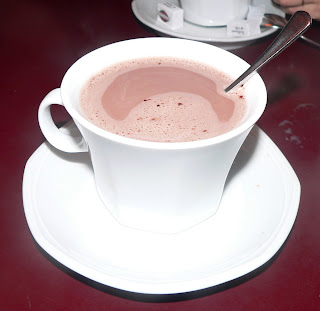
Joy hums. You don’t so much look for Joy, as listen for her. The one time Joy isn’t humming is when she is talking, and she loves to talk. Her conversations usually surround some form of culture; she might recommend a book she’s just finished reading, or review a night at the symphony or an afternoon spent at the museum. An avid “Dancing with the Stars” fan, she loves to rehash the latest episode while stirring hot chocolate mix into a cup of steaming hot water.

Lucie’s eyes are usually closed when I enter her room. I’m careful to bend close before I say her name quietly, while softly touching one tiny, bony shoulder. Despite her efforts to open them, her right eye never fully cooperates, prompting my perch on the left side of her bed.

“Miss Lucie? It’s Stacye…” I encourage her to wakefulness.

“Hey!” She exudes enthusiasm in a voice barely above a whisper.

“It’s Saturday, Miss Lucie, February twenty-first, almost spring-time! How are you doing today?” I slide one hip up onto the bed, feeling the egg-crate mattress beneath its thin cotton covering.

“Oh…I’m alright…” She answers every time.

I stand, and move to draw the drapes.

“You want these open, don’t you Miss Lucie? Look at that gorgeous sunshine!”

I return to the side of her bed.

“Are you eating?” At last check she weighed less than seventy pounds.

“These people don’t cook right.” She answers with a lop-sided sneer and averted eyes.

“It’s not what you’re used to, is it?”

“It sure ain’t!” Images from an earlier visit, remnants of camouflage-colored puree decorating thick, institutional stoneware, fill my head.

White noise, from the television she insists must play at all times, accompanies our words. Sometimes I carry the conversation. Raised by a father whose green thumb was more of a necessity than a hobby, Lucie loves to hear about my garden.

And, when she’s up to it, Lucie has stories to tell. Hours, spent at her bedside, have taught me much about life in pre-integration Atlanta, as she takes me along on the bus ride across town to “care for a white family”. Most interesting, though, are her ruminations on Lucie; Lucie the daughter, Lucie the independent woman, Lucie the single mother. The injured cadence of her voice urges me closer, as she shares her disappointment in the father of her only child who “…left, and never came back”.

Two framed photographs provide the only break in the institutional green of our surroundings. Lucie’s grandson smiles through an eight-by-ten rectangle of glass. And, just underneath, hangs a six-by-four photo of his infant son, also known as “the baby”.

“Did your grandson bring the baby to see you this week?”, I ask as I dab at the unbidden tear falling from an eye that won’t quite open.

“Nah…”, she answers. “He’s busy…”

“Well, I bet he’ll be here next week!” I rise to leave, readjusting the blankets displaced by my hip.

Bending, I kiss her shiny, cocoa-colored forehead.

“I’m going now, Miss Lucie. I’ll see you next week…”

“Alright…”

“I love you.”

“I love you, too.”

© Copyright 2007-2009 Stacye Carroll All Rights Reserved

“Worry Beads”


As a civil engineer working with a large real estate firm, my father was part of the boom that built Atlanta during the 1960’s. It was in this way we came to know the Kwechs, a family of Chicagoan transplants. They talked funny, slathered both sides of their sandwiches with butter instead of mayonnaise, and ate pickled fruit. They were also Catholic, which was my mother’s way of explaining Mrs. Kwech’s habit of pinning a handkerchief into her hair before entering a church.

As we sat down to a Thanksgiving dinner featuring butter molded into the shape of a lamb alongside pickled peaches, all five Kwechs made a mysterious hand-motion after “the blessing”. Fascinated, I studied the motion and practiced it; thinking it “neat”, until my mother reprimanded me. This was the first time I heard the word “sacrilegious”.

Of course, my mother’s horror only served to accentuate the exotic nature of this mysterious faith. Obviously, the Catholic Church was much more holy than the garden-variety, Southern Methodist church I’d been brought up in.

I am a Jack-of-all-churches, and master of none. I have studied most of the major religions, and many of the lesser known. Faith, as a practice, fascinates me. So it is, that almost forty years later, I understand that much of the mystery of the Catholic faith isn’t so much a matter of secrecy as it is ritual. Still, compared to Methodism, one of the least imaginative religions ever practiced, Catholicism piqued my interest.

It’s aura lies in its accoutrement; priests in fine robes with satin sashes and impressive head-gear, an assortment of ranked deities, confessionals, and, of course, the rosary.

The first rosary I ever saw was made of rose quartz. I remember thinking it beautiful. Respecting my mother’s admonition, I never considered I could own one until learning that Catholic’s don’t own the patent on the rosary. It seems that this, like so many Protestant traditions, is a practice borrowed from a much older religion.

Buddhists, too, worry rosaries, or malas, during prayer. Traditionally consisting of one hundred and eight beads, a mala is used to keep count while reciting a mantra in meditation. Elizabeth Gilbert elaborated on this tradition, beautifully, in her book “Eat, Pray, Love”. In the book, she points out the symbolism of the number three, inherent in the Buddhist mala. She refers to the number of beads, one hundred and eight, as the perfect number because, while being divisible by three, its individual numbers add up to nine, which, when perfectly divided, also amounts to three, a number of importance in many religions; as in Father, Son, and Holy Ghost.

After reading, and being inspired by, Ms. Gilbert’s book, I ordered and received a Tibetan mala. One hundred and eight, perfectly symmetrical, wooden beads line up along a piece of ordinary twine that, purportedly, has been blessed by one or more Tibetan monks. The beads came protected by a tiny satin, hand-embroidered purse, and they reside within the confines of my over-sized, designer hand-bag.

Today, after receiving several prayer requests from an assortment of friends, residing in a variety of locales across the globe, I retrieved the beads. They rode in my pant’s pocket for most of the day, and now, are secreted against my chest.

Oils, from my hands, lend a new-found gleam to their wooden faces, as my touch reminds me of their purpose, and I pray…

© Copyright 2007-2009 Stacye Carroll All Rights Reserved