Daddy’s Girl


My father fathered four females. 

I am the eldest.

“My name is Stacye, and I’m a Daddy’s Girl.”

Of course I am.  We all are.  We have a Daddy…we are girls.  And, like all good southern girls, we actually call him “Daddy”. 

Addressing him that way comes naturally.  Admitting to it conjures images of Orson Welles, syrup dripping from the corners of Joanne Woodward’s unlined mouth, and a discomfort that smells like warm gardenias.

By now, you have an image.  My blonde hair is long, as are my legs.  My eyes are large, and probably blue.  There’s a natural curve to my lips, which are carefully painted pink; never red.   And, you would be right.

Except, the image is that of my sister, my baby sister to be exact; the one who still throws her limbs on either side of his recliner as she sprawls across his lap, the one that bakes for him, calls him daily, and houses him when he leaves the crystal sands of his beloved beach for important family events, such as his birthday, Father’s Day, Thanksgiving, and Christmas.

But I was there in the early days…

On Saturdays, we logged hours in his two-toned El Camino, driving around town doing errands.  His “Honey-Do” list became our “Trip for Two” list, as we traversed suburban side-roads between the post office, hardware store, garden nursery, and occasionally, the local mechanic.

Mostly, we talked.

“Never forget who you are!”  I especially loved that one.  “You’re a Howell!”

He said as though it meant something.  He said it as though mere mention of our name was enough to garner the respect of anyone within hearing distance.  He said it so often that I believed it.

He told me stories of him and Joe Wiggins.  It was always “Joe Wiggins”, never just “Joe”.  Perhaps there was another Joe.  I don’t know, he never said.  But, he never mentioned his childhood friend without inserting his surname.

I remember the sun being particularly bright one Saturday afternoon.  We’d probably just dropped my car off…again.  The dilapidated shop occupied most of a block-long side road.  They specialized in foreign “jobs”, such as Hondas, Toyotas, Datsuns, and Cortinas.  They didn’t actually specialize in Cortinas.  No one did.  Because, no one east of the Atlantic drove one…except me. 

“Why don’t you divorce her?’  My right hand swept blonde wisps from my face.  The air conditioner in the El Camino had stopped working weeks ago.

“Because Howells don’t divorce.”  He said it as though it were true.  He said it as though he was raised by two loving parents instead of a crotchety grandmother who insisted he sweep their dirt floor each morning before mounting the newspaper-laden bicycle he later rode to school.

And I believed, because I didn’t know.

He taught me about cars.  He didn’t change his own oil.  He had “Eddie, The Mechanic” to do that.  But, he taught me to change mine.

He lay under the car, while I leaned across the engine.  We changed the oil, added water to the battery, and checked all the other fluids.  When we were done; large, continent-shaped swatches of my flannel shirt were missing.

“Battery acid.”, he said while ordering me inside to change my shirt with just a look.

But I kept it.  I kept the shirt.   I even wore it a few times.  Now, I’m sure it lies alongside my holey Peter Frampton t-shirt; the one I kept for almost twenty years before deciding that I really never would wear it again.

But I will…

Angels will sing, harps will play, and there I’ll be…Daddy’s Girl…wearing a holey flannel shirt over a faded Peter Frampton t-shirt.

“Do you feel like I do?”

Pompless Circumstance

Shane’s long-time baby-sitter, Christin, invited us to her graduation ceremony.  The invitation, and the opportunity it presented, seemed timely. 

Shane will start eighth grade in the fall or, as he puts it, he’ll be the “Big Dog”.  So many facets of Shane’s life serve to accentuate the fact that the upcoming school year will be a period of transition, a stepping stone if you will, from one phase of life into another.  As high school graduation should be the pinnacle of this next phase, attending the event seemed an opportunity to plant a seed, to secure a goal, to expose him to all the pomp and circumstance afforded scholastic achievement.

He balked only slightly when I insisted he wear dress shoes and the imagined pain of buttoning his button-down was assuaged by the mirror over my shoulder, as a slight jerk of his head almost produced the coveted swish of Justin Bieber hair.

“Hey, Mom!  I look kinda good!”  He’s a slightly pudgy thirteen-year-old.  “Kinda” IS good.

Christin had called earlier in the day.  Her words were punctuated by a distinctive “click”   as she released long golden curls from the clutches of a steaming curling iron.  Her usually swift cadence was enhanced by excitement as she shared ticket information and encouraged early arrival.

“You’llbesittinginbleachersIt’sgoingtobehotbutthey’resellingChick-fil-asothereisthat.”

We parked at the church next to the high school and walked a down-hill block to the stadium.  Shane’s baseball coach met us as we circled the football field.

“Luke’s up there somewhere.”, he shaded his eyes against the burning twilight, searching for his son.  “There!”, he pointed.

Shane asked the question with a lift of his eyebrows.  I answered with a blink and a nod, and he began a clumsy ascent towards his friend

We were early.  There were plenty of seats to choose from.  I headed for an empty metal bench in the center, and as I climbed towards my perch, overheard someone make reference to the fifty-yard-line.  It felt out of place

Easing onto a very warm aluminum bench, I was disappointed to realize that the stage had been set up facing the opposite side of the field.  They were, apparently, playing to the “home” crowd.  A handful of people scurried to and fro around the stage as though assigned a very important task, but no one actually seemed to do anything.  A golf cart sped past the bleachers several times.  The sun had dipped below the treetops, but left her heat behind.

A group of people wearing black caps and gowns approached the stage area.  It took me a minute or so to realize that they were teachers and not really old looking students.  Mentally, I chastised myself for the mistake.  It’s not as though I’d never attended a graduation before.  I’d seen those same caps and gowns at my own graduation. 

Of course, my graduation took place downtown, in the air-conditioned comfort of the Municipal Auditorium.  And the event was actually a culmination of events that had taken place over the preceding two weeks.  Parents feted their children with parties that felt a lot like bridal showers feel today.  An assortment of gifts flowed in from my parents friends, many of whom I’d never met.  Most sent money, but one relative sent a boxed set of Anais-Anais perfume.  I was so impressed!  It seemed so…continental!  I wonder if it’s still available…

Crimson colored caps and gowns were delivered to the school two weeks before graduation and taken to the music room for fittings.  We stood in line with our friends, waiting our turn while sharing our enthusiasm and an occasional joke at the expense of students whose heads measured extra-large.  Afterwards, a group of us went out to lunch and, later, to the mall.  It didn’t matter that we would be wearing calf-length gowns.  The occasion called for a new dress.  And shoes, of course.

Something about the prospect of walking down an aisle prompts profuse primping.  Not until I married would I again spend so much time in front of a mirror.  I emerged from the bedroom I shared with my sister to find my family waiting in the den.  My father wore a suit and tie, my sisters, their Easter shoes, and my mother, heels under a skirt that probably hadn’t seen the light of day more than once or twice since she’d owned it.  We all piled into Mom’s Vista Cruiser station wagon and headed downtown.

The auditorium was dark except for tiny lights imbedded in the aisle seats.  My family went inside while I followed a beckoning, black-shrouded teacher whose job it was to herd graduates backstage.

The noise we made as we assembled ourselves upon the risers behind the curtain seemed deafening.  I was sure our parents could hear.  The relative darkness only served to accentuate the heavy blanket of expectancy that fueled our collective state of giddiness.  Several robed teachers stood in front of the risers alternately moving students who had yet to master the alphabet and threatening rowdy boys by addressing them as “Mister”.

And the music began…daaaa, dadada, daaaa-da, daaaa, dadada, daaaaaah.  A nervous silence fell over my class.  Even the rowdy boys stood a little taller.

“Excuse me…”

I woke from my reverie to the face of a young father wearing cargo shorts with a baby dangling off one arm.  He looked pointedly at the bleacher beneath my feet.

“Oh!  I’m sorry!”  I turned towards the aisle, allowing him passage.  A young African-American man climbed the steps towards me.  He wore blue jeans under a t-shirt which exposed carefully cultivated biceps.  Very large basketball shoes bloomed beneath his pants.  Loosened laces allowed for a protruding tongue.  The toddler perched in the crook of his right arm made repeated attempts to dislodge his doo rag.

Behind him, a middle-aged woman in tank top and shorts, pushed a mop of unruly blonde curls from her face as she searched for a bench long enough to contain her similarly clad contingent.

I shifted on the bench that was becoming harder and more uncomfortable by the minute to see that two rows of black robes were filing in towards the stage. 

The man sitting next to me leaned in, “Why are some of the kids wearing black robes, while the others are wearing white?”  I felt so vindicated…

The presence of a tiny sea-foam-suited woman waving her arms, frantically, in front of a small group of students wielding instruments was the only indication that music was playing.  The air around me was filled with the cacophony of mixing voices, frequent laughter, and the occasional baby crying.  Suddenly the fifty-yard-line comment seemed less inappropriate.

This time I leaned in.  “Are these people just going to talk through the entire ceremony?  It’s bad enough we can’t see.  We aren’t going to be able to hear either?”

My position granted me a line of sight though which I could see Shane.  His eyes were focused as he sat immobile save for his thumbs, which danced rapidly over the controls of Luke’s Gameboy.

Four rows down, a slightly overweight, middle-aged man sat in a suit and tie.  His hands folded and unfolded a program as he surveyed the crowd.

Thanksglibbing


To my mind, Halloween has always represented the top of a slide; a long slide, the big metal kind that burns your legs in summer, but not so badly that you don’t mount the ladder a second, and even a third, time. And, it doesn’t go straight down. There are twists and turns, and bumps and dips. All in all, it’s a pretty raucous ride.

Thanksgiving used to represent one of the bumps, a high-point on the path towards the next bump of Christmas, on the way to the New Year’s sand pit that leaves tiny black flecks on the backs of your calves and the palms of your hands.

Nowadays, though, I would characterize Thanksgiving as more of a twist, a turn requiring careful navigation before resuming the descent.

My reticence about the holiday became clear to me a couple of years ago as I read posts on a social website to which I subscribed. There were several prompts along the line of “How Will You Spend Your Thanksgiving?”, and “Share Your Favorite Thanksgiving Memory”. As I scanned menus I wouldn’t choose from and ticked off strangers’ guest lists, complete with anecdotes, I began to feel sad. It became clear, relatively quickly, that my plan to post a virtual cornucopia of familial dysfunction would elicit a reaction similar to that experienced by a person unable to quash a particularly loud belch after finishing an elegant meal. Not that I have ever been in that exact situation, mind you. My embarrassing belch came disguised as a yawn, which I shielded prettily with one hand, in hopes that our English teacher wouldn’t mistake a night of late-night TV for impolite disinterest. The offending sound was as much a surprise to me as it was to the quarterback of our high school football team, who sat in the next row and two desks closer to the front of the room. His was the only face to turn in my direction.

“Excuse you!”, he bellowed through his laugh which soon became a chorus.

I responded with a weak smile, refusing to acquiesce to an overwhelming desire to escape the room. My intention here, though, is not to write about teenage angst.

My mother was a product of the times in which she lived. The decade of the sixties is widely associated with peace, love, and rock and roll. But due to a burgeoning space program, the sixties also ushered in canned vegetables, enveloped spice packs, and crystallized orange drink. Grocery stores remodeled to make room for the “Freezer Section”, and my mother was all over it.

She made an exception, though, at holiday time. Thanksgiving dinners were prepared fresh, with only the finest ingredients, and usually featured the same dishes year after year. One holiday she decided her Coke Salad was boring, and introduced instead a pale, orange concoction featuring apricots. Realizing our dinner wouldn’t include plump, juicy cherries confined by coke-flavored cottage cheese, I loudly bemoaned her decision. My sisters echoed my sentiment and the cherries were back in place the following year. What I didn’t realize until recently, though, is that while the center of our table might have been held by a large pine-cone, threaded with multi-colored strips of construction paper, my mother was truly our Thanksgiving centerpiece.

This year, Thanksgiving will find my sister, Candi, hosting her husband’s family at their beach-side condominium. It sounds like a lovely way to spend the holiday, but I wasn’t invited. After assisting with accommodations for the in-laws, my father called seeking reassurance that his three remaining daughters could provide a holiday at “home”. Two weeks later, he called again.

Several telephone calls later resulted in our “family dinner” being held in Cleveland, Georgia, a picturesque mountain town about an hour and a half outside of Atlanta. My sister, Holly, is excited to serve turkey she raised from a chick. I visited the unfortunate fowl a couple of weeks ago. At that point she hadn’t decided which of the several strikingly unattractive birds would make the sacrifice. That’s okay…I didn’t really want to know.

All three of my children have chosen to settle near the town of their birth, necessitating a seventy-five mile drive to my house for Thanksgiving. My daughter will work until four in the afternoon, pushing our dinner late into the evening. They will settle for a store-bought turkey, smoked the day before, and my impressions of the earlier celebration. They will bring friends. My house will be packed to over-flowing, and laughter will fill every corner of every room.

But, I’ll still miss the cherries…

© Copyright 2007-2009 Stacye Carroll All Rights Reserved

Huddled Masses


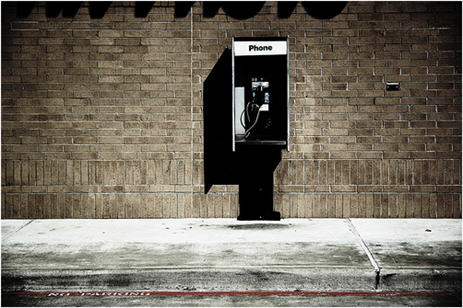
The telephone had yet to be connected in our apartment, prompting my roommate and I to stop at a local convenience store featuring a bright-blue payphone on an outside wall. I had been in Athens just a couple of days, and I knew my parents would worry.

“Dad!”, I exuded. “It is so cool here! They have these little tin houses that look just like boxes, and people live in them!”

“There is a reason you’ve never seen those before.” The tone of his voice invited no further query, and it wasn’t long before I uncovered the stigma attached to those living in what I came to learn were “mobile” homes. Both of my parents had always described apartment dwellers as “itinerants”. As I reasoned the significance of the usually rusted metal hitch sprouting from one side of each of the carefully aligned boxes, I could only imagine how the people residing inside might be described.

Prejudice, fear, and an emphasis on keeping up appearances had proved a remarkably effective shelter.

Shortly after I married, and before I discovered my husband’s addictions, we spent many Sunday afternoons driving around town before heading out into the countryside. Gasoline was cheap then, and we had money for little else. As we headed back into town after a long afternoon spent cruising down country lanes, he asked if I minded if he stopped at a friend’s house on the way home. Several hundred feet after turning off the main road, I saw another form of box-shaped building; row upon row of brick encased boxes with tiny yards featuring an occasional patch of green that passed for grass. Each box looked exactly the same, down to the rusted, ripped screen door that hung tongue-like from its frame.

Ricky steered his prized vintage Cougar into one of the short cement drives.

“I’ll be right back.” The car shook with the force it took to close the extra-long car door. I looked around as I waited, and wondered at the plainness of my surroundings. Except for the occasional hardwood, there was little in the way of greenery, as though nothing would grow in this environment. Crowds of young adults congregated on various corners seemingly oblivious to the squealing children darting between their legs. Many people walked along the streets, calling my attention to driveways inhabited only by rusted tricycles and aged basketball goals that appeared to have sprung from the cracked concrete beneath them.

My husband emerged followed by his friend, a tall, thin African-American man with an amiable face. Ricky grunted with the extra effort required to open the antique car door before introducing him.

“This is Boysie.” He waved his free hand in the direction of the taller man’s smile.

“How ya doin’?” Boysie’s smile grew wider as he spoke, bending at the middle in an effort to see inside our small car.

The two men conversed for several minutes before Ricky slid into the driver’s seat with a “See you, man.”, and the engine roared to life.

As we headed back the way we had come I wondered what my parents would think if they knew I had visited “The Projects”; and, at night! It never occurred to me to wonder what we were doing there. I had no frame of reference. Months would pass before I realized Boysie was my husband’s dealer.

Later, long after I had come to terms with, and rectified, the mistake I’d made in marrying a man I hardly knew, I went to work managing a midwifery practice that served mothers without insurance. Some of the women were Boysie’s neighbors, and many of those that didn’t live in a housing project were on a waiting list.

It was my job to screen patients for eligibility. Lack of insurance was just one requirement. Income and family size were also considered. Most of the women were already receiving government benefits that, at the time, grew with each successive birth. A woman who knew how to work the system might receive child support from more than one man, food stamps, Medicaid for herself and her children, WIC (another government supported nutritional program), and free or nearly free housing. It was no wonder that, very often, the clothes worn by the woman I was interviewing were much more stylish, and expensive, than mine. The benefits paid by our government to women who knew how to work the system gave a whole new meaning to “expendable income”. And who could blame them? In most cases, they had been raised in the same environment, just had their mothers before them. And, it was so easy…

Occasionally, I counseled a woman struggling to support her family on minimum wage. Ironically, the pittance she brought home as a reward for dirtying her hands doing a job most wouldn’t even consider, left her ineligible for assistance of any kind, and usually these women, too, joined the welfare rolls months before thier babies were born. Very soon, I came to think of this situation as “government induced poverty”.

During this time, the Olympic Games were held in Atlanta, and Athens was to host some of the competitions. Much was said about the state of public housing in the area, and the need to clean up before the world came to visit. I was heartened to think that some of our patients’ homes would be receiving much needed repairs, until I realized that the plan was to erect facades crafted of aluminum siding over the fronts of their homes. By the time the torch arrived, the ugly brick boxes had been transformed into quaintly crowded cottages. Flowers had been planted along the borders of newly laid sod. But inside, gaping holes marred many kitchen and bathroom floors in which rusted faucets dripped continuously. Unsightly window air-conditioning units had been removed, as had the rickety screen doors, leaving the inhabitants inside with no relief from ninety-degree heat. It seemed governments, too, were invested in keeping up appearances.

Last week, bulldozers razed the last remaining housing project in Atlanta. Upon hearing this, my first thought was of the residents. Had they been provided for? Did they have homes? Where did they go? It seemed like a heartless act perpetrated on a helpless population.

Upon reading an article in the local paper, I learned that, in 1936, Atlanta was the first city in the nation to erect public housing. I know a lot about my city. Somehow, this inauspicious fact had escaped me. The article went on to suggest that Atlanta is now the first city in the nation to abolish public housing. I continued to read, in hopes that a solution had been offered, and learned that displaced families will receive twenty-seven months of various types of assistance, with a goal towards self-sufficiency.

Further down the page the housing authority’s executive director was quoted as saying that the demolition “marks the end of an era where warehousing families in concentrated poverty will cease.”

Every now and then, we get it right.

© Copyright 2007-2009 Stacye Carroll All Rights Reserved

Traditions in Transition


My family’s Easter traditions became lost in the cry of gulls over pristine white sand. My sister travels to Destin to spend the holiday with my father who, understandably, welcomes the opportunity to visit without travel. Often, as finances allow, one or more of us join them. More often, we do not.

For years, my older children traveled the seventy-five miles between my house and theirs to participate in smaller scale celebrations. This year, my daughter is grateful to have the extra hours at work, and after putting in eighteen hour days for two consecutive weeks, my son is looking forward to an afternoon spent resting on a riverbank, watching the water ripple around his fishing line.

I assembled my final Easter basket last night and felt the finality. The look of wonder left Shane’s eyes years ago, but I’ve continued the ruse, for both our sakes. I admit to feeling just a little ridiculous as I fluffed plastic grass and poured jelly beans into plastic, egg-shaped baseballs. Next year I’ll limit myself to a nice card, and maybe a bag of chocolate-peanut butter eggs.

We’re not a particularly religious family. While my father could be called a religious scholar, given the hours he has spent reading various religious doctrines, only one of his four daughters attends church regularly. I’ve decided that this lack of structured piety is partly to blame for our lack of celebration.

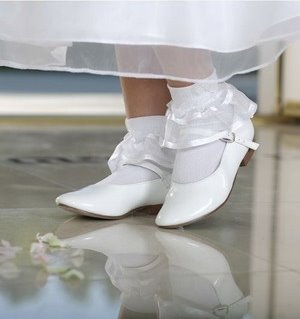
As a child, Easter meant a new dress and a fine white purse to match my shiny, new, white shoes which I would wear only to church. It meant traveling across town to share dinner with a family of friends from Chicago, who marked the occasion by molding butter into the shapes of lambs and crosses. Our Easter baskets were always grandiose things; large and round they were stuffed with chocolate, before being wrapped in pastel-colored cellophane, cinched with matching ribbon. Easter morning found four of them, arranged in a grand display upon the kitchen table. The trick was to slide your hand into the flap created by the cellophane in order to pilfer a peep before Mom and Dad woke up.

By the time my children were born, Easter dinner had become a strictly family affair. Easter egg hunts were added to the celebration, meaning my children usually had at least two opportunities to load their baskets. The hunt at my parent’s house was always conducted outside, while I occasionally chose to nestle my children’s loot against window sills, behind curtains, under a lamp, or between two books on a bookshelf. The children seemed to prefer the indoor hunts. I like to think they enjoyed the intimacy.

“What are we going to do today, Mom?” Shane’s question left me wanting. We settled on a trip to the park. He and his Dad will play pitch and catch, while I walk the dog around the track. It should be a good day for it. The weather is beautiful. Later, we’ll cook out.

But I can’t help wishing there was something more…

© Copyright 2007-2009 Stacye Carroll All Rights Reserved

Fashionistabunny

My father attended church with us only twice a year, Christmas and Easter. Mother went more regularly until we were older, at which point the car barely came to a full stop before she started shooing us out the door.

“Meet me right here when church is over!”, she shouted as she accelerated past the crosswalk.

There was always a line of people waiting to enter the sanctuary. Dark-suited, older, white males stood solemnly, just outside two sets of double doors, holding small stacks of church bulletins which I had came to think of as my ticket; Admit One. As my sisters and I waited our turn in line, I studied the ushers. They always put me more in mind of sentries guarding a castle than greeters for the “House of God”.

Standing in that line was a bit like walking downtown sidewalks surrounded by sparkling skyscrapers of varying heights. The air lay thick with a potpourri of scents spritzed from cut-glass atomizers, as I shuffled my feet inside black patent leather. Women, who had soldiered through the previous week in their uniform of polyester pants and rubber-soled, terry-cloth scuffs, now fanned their tails like so many peacocks in designer finery. I studied the mink stole draping the shoulders of the woman in front of me, appreciating the varying hues of brown, gold, and black while following the seams connecting the pelts with my eyes.

“Love the dress!” The furred woman spoke to another woman just to the right of us whose eyes sparkled above her rouged cheeks before looking down at her dress, as though she had forgotten what she was wearing.

“Oh, thank you!” Her hands went to her bare arms and I felt her self-consciousness. “What a gorgeous fur! Is it mink?”, she asked through strained painted lips.

“Yes, Gordon brought it back from his last trip to New York.” Red-tipped nails caressed both arms. “I wore it today since it might be my last opportunity before summer.”

“Gayle! Is that a new ring?” Another feminine voice swiveled my head to the left, just as the older woman next to me retrieved her hand from its spot under her husband’s arm.

“Yes! Robert gave it to me for Christmas.”, she said, flashing a smile at her benefactor, who answered with one of his own. She raised her hand towards her friend who turned it this way and that, in appreciation.

“Wow! Pretty snazzy, Robert. Gayle must have been a good girl!” Gayle lost her footing in laughter, bringing the tip of her pointed-toed pump firmly against my Mary Jane. I turned swiftly so as not to be caught staring. By the time I reached the sentries, the aisle separating the pews looked more like a catwalk.

If most Sundays produced a fashion show, Easter Sunday served as “Fashion Week”. No one was immune. Men bought new suits, and corsages for their ladies. Women scanned racks for weeks, in search of the perfect dress and dyed new pumps to match, before retrieving their jewelry from velvet beds inside safe deposit boxes.

Girls were taken shopping for Easter dresses. Most girls. My sisters and I were taken instead to “Cloth World”, where we were encouraged to choose from one of several fabrics from which my mother would fashion a suit. The fabrics were coordinated so that each girl would wear a solid and a print, and the style would vary, if only slightly.

My mother was an excellent seamstress, having culled the talent from her mother who made her living as a tailor in an exclusive men’s clothing store. She made most of our clothes and some of her own. One of my fondest memories involves a church fashion show, for which my mother created four identical white dresses; one for her, and one for each of us. Walking as ducks in a row, we took the stage together the afternoon of the show. I don’t remember who actually won, and it never was important. In my mind, my mother stole the show.

As a child, I never appreciated our carefully coordinated Easter suits. I felt dowdy and out of fashion. I watched other girls swish by in taffeta, and lace and wished the sewing machine had never been made available for purchase by the public. And, I resented my mother for not understanding.

Several years ago my grandmother died, leaving behind boxes and boxes of photographs my mother had sent her in celebration of our childhood. My youngest sister, who had been my grandmother’s primary caretaker, arranged a luncheon at which she invited us to open the boxes and take the pictures that meant the most to us. As we leafed through the photographs, there were countless images of my sisters and me, usually backed up against a wall and standing in descending order, wearing our mother’s handiwork. When I searched my mind today, for Easter memories, these pictures were the first thing that came to mind.

We miss so much when we are children, when our minds are not yet fully formed and ready to understand the importance of things. As I study the photographs now, I see more than meticulous construction and careful coordination. Forty-plus years later, I see time, and effort, and sacrifice, and love. And, in her sharing of the photographs, I interpret pride; pride in her children, yes, and something more. By sending these photographs to her mother she shared, and appreciated, her legacy.

I hope I said it then. I wish she could hear it now.

Thanks, Mom.

© Copyright 2007-2009 Stacye Carroll All Rights Reserved

Growing Things


He is thinner than the last time I saw him. His t-shirt flutters over his abdomen in greeting.

Shrimp dance about the pan as he shares the mundane.

“Went to Ace Hardware today!”

“Oh, yeah? What did you buy there?” I add a splash of Worcestershire.

“Oh, you know…those flowers you always had.”

I smile into the steam of sautéing shellfish.

“Honey, that doesn’t help me.”

“You know! The ones you always pinched the dead blooms off of…”

Another smile, as I moved the pan to a cooler surface.

“Ok…”

“I think Nanny had ‘em…Four-o-clocks? Were they Four-o-clocks?”

“Yes!” I turn to face him. “Four-o-clocks! You got Four-o-clocks? You know they spread. You will have lots of Four-o-clocks!” I smile at the image of my son in his garden. I never pinched Four-o-clocks. Four-o-clocks don’t require pinching. But he remembered. He remembered the pinching. The flower is of little consequence.

“I know…” I see the smile spreading underneath his hanging head. He did it for her.

“Heather picked ‘em. I told her they spread. She got those, and the others you always had…Begonias? Didn’t you always have Begonias?”

“Yes.”

“And, Bachelor Buttons. She got Bachelor Buttons!”

“Ok, the Bachelor Buttons are small. You need to plant them in front of the Four-o-clocks.”

“Ok…”

The conversation continued as I relished the memory. He never came out with me. He never accompanied me on my walks through the garden. He never commented. He never asked a question.

But, somehow, he knew. Somehow, he was there, as we grew together. And, when the memory surfaced he acted on it, creating new memories…his memories, and hers.

Mother’s potted plants lined our patio. I never went out with her. I never accompanied her as she watered each one. I never commented, or asked a question…but, somehow I knew…

© Copyright 2007-2009 Stacye Carroll All Rights Reserved

Weighing Waiting Women


Women learn, from a very early age, to be good waiters.

The first thing I remember waiting for was my birthday. As the oldest of four girls, it was the only day of the year when the spotlight would be for me, and only me. Children came to a party for me. People bought presents for me. Mother baked a cake for me. Birthdays were always worth waiting for.

And then, of course, there was Christmas. True anticipation usually began about a week after Thanksgiving, when large, brown cartons were extracted from the attic and strewn haphazardly about the living room. It was mother’s job to string the lights, which meant more waiting for my sisters and I as we perched on the edge of a couch rarely sat upon, waiting for her signal to breach the boxes. Completion of decoration led only to more waiting. Twinkling, multi-colored lights reflected in our eyes as we “watched” the tree while imagining what hidden treasures lay underneath.

In a house with four girls and one bathroom, there is always a wait.

Soon after my sixteenth birthday, my father presented me with a reasonable facsimile of a car, featuring two seats on four wheels, and very little else. I soon realized it was the seating that concerned him most, and the words “Wait for your sister!” became the bane of my existence.

My sister, Laura, had one speed. A snail once challenged Laura to a foot race. The snail won. Most weekday mornings found me biding my time in an idling car with a blaring radio, for what seemed like hours, as Laura completed her toilette. Weeks of begging, and pleading, and screaming, and warning fell on immutably deaf ears. Finally, I cracked. Bidding her adieu with a foundation-jarring slam of the back door, I jammed the gear shift into reverse. All I remember of my return home is the anger in my mother’s eyes. The rest has been mercifully carved from my memory, but whatever the punishment, it was worth it!

The summer after my senior year in high school was spent waiting by the telephone. I met John, weeks before, while on a trip to Washington, DC with a youth group. When he called, it was to say he would be in Atlanta the following week. My excitement was tempered by the knowledge that I was scheduled to be in Destin on a family vacation. To her credit, my mother allowed me to make the decision. I remember very little of that week spent on the beach, besides a feeling of longing.

College graduation began the wait for my big move. My best friend and I had planned this day for years. Numerous shopping trips for linens, and dishes, and what passed as artwork, made the waiting easier. The experience of living together wasn’t the euphoria we knew it would be, and I gained a valuable life lesson. With the assistance of a good attorney, it only cost $400.00 to get out of the lease.

The only thing more difficult than waiting for the results of a pregnancy test is waiting for his reaction. Pregnancy is the ultimate exercise in waiting. I skipped waiting to discover the gender of my children. A long-ago forbidden foray into my parents’ closet, just before Christmas, had taught me that surprises are to be relished.

Pregnancy came naturally to me, as affirmed by the midwife who announced I had “childbearing hips”. For thirty-six months of my life I was a walking miracle, and I never forgot it.

I loved the quaint expression of being “with child”, and all that came with it. Pregnancy, of course, meant shopping in exclusive shops; exclusive as in those selling maternity clothes, nursing bras, baby furniture, bibs, pacifiers, and the genius that is the One-sie. My children were of the generation first introduced to this remarkable example of adorable efficiency. Thanks to the invention of the One-sie, babies no longer required trussing in order to get to the diaper; just four simple snaps, and you were in!

Mothering is synonymous with waiting. Waiting room carpet patterns are memorized, and it isn’t long before a tote bag filled with the necessities of waiting, takes up permanent residence on the back seat of a mother’s car. Mothers wait for hours in check-out lines accompanied by the wailing of an over-tired child; hers or someone else’s. Her first child’s first day of school is torturous for a mother who imagines, all day, trails of tears running down her child’s face when in reality it is her face that is wet. She can’t wait for her baby to come home.

Mothers think of clever ways to pass the time spent in carpool lanes, and later, outside movie theaters and shopping malls. Mothers wait outside dressing rooms until, curious, they grasp the doorknob, prompting the rebuke, “Not yet!”. Mothers wait, sometimes anxiously, for school to start as summer wanes, along with her children’s patience with one another.

As our children grow, waiting mixes with worry. I sat white-knuckled, at the front window, for the full fifteen minutes it took my son to drive around the block for the first time, alone. That was almost ten years ago. Yesterday, when he didn’t arrive within fifteen minutes of our agreed upon time, my face appeared again, at that window.

Even today, I am hard pressed to say which was more shocking, my mother’s announcement of her diagnosis with cancer, or her concurrent use of the word “shit”, as in “Pretty heavy shit, huh?”. On the day of her surgery, the sunny environment of the waiting room, walled floor-to-ceiling by glass, competed with the emotions of the large group of friends and family it housed. Having recently returned to school, I spent most of the day with a textbook. I turned pages filled with words I only appeared to read, until the entry into the room of a small group of green-clad men wearing serious expressions. Their words left no doubt as to the arduous journey ahead, and I would begin my night-time sojourns in the ICU waiting room within weeks.

My father didn’t want my mother left “alone”. He and one or more of my sisters spent the day at the hospital, never missing one of the fifteen minute intervals during which my mother was allowed visitors. Visits were not allowed after nine at night, so my brother-in-law and I took turns sleeping in the waiting room. For many months, waiting became a way of life, as my mother slowly healed.

Commuting lends itself to reflection. Commuting in the rain requires more careful attention, until rainy streets become the norm, and reflections resurface. Such was the case on Wednesday, when, as I rolled to a stop under a murky, red beacon, I realized I have unknowingly adopted a constant state of wait.

Last year was a year of unwanted, if not unexpected, consequences. Reminders of what proved to be an achingly short spate of purest joy, plague me, in the form of physical reminders with psychological presence. The realization that I have been waiting for a different outcome brought an ironic smile to my lips, and a reminder. Inherent in waiting is hope. And, with hope, all things are possible.

© Copyright 2007-2009 Stacye Carroll All Rights Reserved

Are You Really Gonna Eat That?


“You’re actually going to eat that?”

Gingerly, careful not to touch it’s fiery lip, I slid the bowl of steaming cream-of-chicken soup out the microwave.

“Yeah!”, I answered. “It’s only got one-hundred-twenty calories.” I pushed the red and white can in her direction.

Slowly stirring to break up small clumps of chickeny goo, I looked up to see a look of utter distaste on Susan’s face.

“What?”

“I just never saw anyone eat it. I mean I use it in recipes and all, but I’ve never actually eaten it.”

I slowly walked the hot soup to my designated spot at the break table and joined another co-worker who was arranging chicken salad atop a concoction of apple chunks and red pepper strips.

“Apples and peppers?”, I asked, raising an eyebrow.

“Oh yes!”, she exclaimed. “I make my chicken salad the same way I make my potato salad. I dump in anything I can find in my refrigerator.”

I sat with that a while before turning the conversation back to the soup.

Sipping first, I offered, “I just remembered how I got started eating cream-of-chicken soup.”

Two interested faces turned my way.

“My mother used to give it to us when we were sick. She started with chicken noodle, and when that stayed down, we graduated to this.” I slurped another spoonful.

“And ginger ale!”, I said after swallowing.

“My mother gave us ginger ale.” Susan concurred, still casting a doubtful eye in the direction of my bowl.

“And not even good ginger ale, just regular ginger ale. It was one of my favorite things about being sick.” As I spoke, I flashed on the sickroom of my childhood.

Days spent home from school were spent in the bed, and Mom had a television, reserved for just this occasion. After my sisters had left for the bus stop, she pushed it in on the rolling cart it lived in. It was the only time we ever had the television all to ourselves. The door to the bedroom remained closed unless she opened it to bring in ginger ale, soup, aspirin, and/or Pepto-Bismol. I think about those days often, even thirty-plus years later. It was the only time I had Mom all to myself, and the time when she seemed the most caring.

“We had broth.”, I realized Susan was speaking.

What ensued was a discussion of forgotten culinary delights. The fish sticks that were a mainstay of many a baby-boomer’s Friday night, as Mom finished applying her lipstick, while Dad left to pick up the baby sitter. The SpaghettiOs, which Mom later insisted she had never served us at the picnic table while on vacation at the beach. But I can still remember how good they tasted paired with pan-fried luncheon loaf. And pimento cheese! Specifically toasted pimento cheese sandwiches and the pimento cheese toast Dad baked in the oven on Saturday mornings.

We came away with the realization that dietary habits have changed drastically over the past thirty years, and probably for the best. At the same time though, I wonder at the loss of simplicity and routine inherent in the foods of our childhood.

Our children may have a finer grade of food, but I wonder if it loses something in the translation. My children never experienced the camaraderie of Friday nights in front of the television, watching the same sit-coms for years on end, after finishing a plate of breaded, compressed fish parts. They won’t remember the anticipation of smelling the scent of rosewater that preceded Mrs. Jordan into the house, or the sense of awe when Mom finally emerged from the back of the house, having traded her uniform of polyester pull-ons for a skirt and heels.

A cherry armoire hides my son’s television from view, but it’s always there. When he stays home from school, he does so in the bed, watching the same television he always watches. And the door to his bedroom remains closed until I open it, bearing a glass of ginger ale, a cup of soup, or ibuprofen.

A couple of weeks ago, I took a day off to spend with my son. I called him in for lunch, and as he washed his hands, I filled his plate with greasy, brown fish sticks.

“Mom! We never eat this stuff!”, he exclaimed through a grin.

“Is it ok?”, I asked.

“Yeah!”, he exuded.

Yeah…

© Copyright 2007-2009 Stacye Carroll All Rights Reserved

Sudsy Serenity

As a kid, I hated washing the dishes. As I recall, the chore was assigned a week at a time, except for the weeks when my sister developed an odd case of eczema on her forearms. The doctor advised she keep those arms clean and dry, and I saw the hand-writing on the wall…

Dishwashers weren’t what they are now. There was no pot-scrubber feature, or handy disposal to get rid of all the “baked-on residue”. And, my mother was a real stickler about rinsing. Did I say rinsing? She called it rinsing, I called it washing. It wasn’t a simple matter of holding the dish under running water. My mother’s idea of rinsing involved steel-wool and plenty of elbow grease before sliding the dish between the guides. Even as I child, I thought this ritual cumbersome, inefficient, and a serious waste of time better spent riding my bicycle/Dodge Rambler, or talking on the telephone.

In high-school, my American History teacher directed us to write a personalized version of the Declaration of Independence. Before handing mine back, she had drawn a large, red “A” just above the title “My Declaration of Independence from Dishwashing”. Later that night, I offered the paper over my father’s full belly, just as my mother’s voice called from the adjoining room, “Stacye! Dishes!”.

My first home away from home was a charming, though antiquated, farmhouse on the outskirts of town. There was no dishwasher, which given my experience, only simplified the process. I washed, and God dried.

I moved, later, into several different homes with working dishwashers that I never used. I proved to be a very capable dishwasher, and as my children grew, I assigned the chore, a week at a time. They washed, and God dried, while I carried a basket of laundry outside to hang in the sun.

It wasn’t until my children were old enough to visit their friend’s homes that they began to question our routine.

“Mom, we have a dishwasher. Why don’t we use it?”

Stretching both arms out in front of me, I answered with a smile.

“Because I have a dishwasher, and now I have three more!” I finished by running one hand through my child’s disheveled hair, only slightly muffling the answering groan.

Ten years ago, I met and married a man who came with a built-in daughter and roommate, in addition to the usual appliances. The merging of our two families created a dish-dirtying machine that overwhelmed my shiny, chrome double sink. The age of mechanization began, and might have continued had it not been for financial doom and gloom.

Recent pay cuts, worthless retirement accounts, and media driven panic encouraged me to look at ways to reduce my expenses. I cancelled my mail-order DVD account, informed my son that dinner out would henceforth be viewed as a “treat”, and decided to delay buying the pair of noise-cancelling headphones I’d been eyeing. I arranged to have a clothesline strung between two immense, sturdy, southern pines, and declared the dishwasher off limits.

Monday, for the first time in over ten years, I washed our dishes by hand. It didn’t take long to wash a couple of plates, a few glasses, two coffee mugs, and several pieces of cutlery. It took even less time for me to realize why I had clung to this routine for so long.

Drinking glasses danced amidst soap suds, colliding with an occasional gentle clink, and causing me to notice that there was no other sound to interrupt my thoughts. The simple act of running a sinkful of dishwater had cleared the room of those fearful of being called upon to dry, leaving me free to consider our dinner conversation, to mull over my day, and to plan for the next.

Humming tunelessly, I dragged the sudsy dishcloth over the face of a plate, appreciating the sense of accomplishment and purpose inherent in so simple a task. I placed the steaming dish into the dish rack I’d kept in case of emergency, and left the drying to God.

© Copyright 2007-2009 Stacye Carroll All Rights Reserved