High, and Outside


Baseball is not my favorite sport. At best, I endure it. And if Major League baseball is boring, Little League offers up a level of ennui unparalleled by any other activity this side of watching paint dry.

It seems every game is plagued with huge lapses of time during which the most exciting play involves watching someone else’s son kick up a cloud of red dust, as he rolls around behind home plate searching for the ball that lays just millimeters from his left shoe. I specify “someone else’s son”, because from the first time we breached the diamond, I made one thing clear; Shane will not play catcher.

He has a catcher’s build. He is somewhat vertically challenged, at present, and, his lack of height compacts his generous frame in such a way as to produce drool in coaches looking for a big target behind home plate. So, every year I am asked the question, and every year, I give the same answer, “No, I like his head. I’d like to keep it around. But, thank you for asking.”
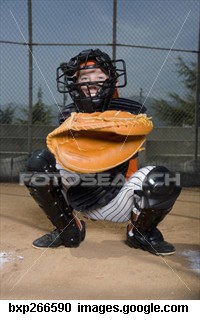
I realize this is an unreasonable fear. As a child, burdened with a build similar to my child’s, I played catcher for a time, until it became apparent that my skills were more suited to another position; left field, perhaps. In all the time that I played, and/or watched the game, I have never witnessed a decapitation. And yet, the fear persists.

My rigidity hasn’t hurt Shane’s baseball experience. He has played nearly every position on the field, making a name for himself particularly at third base; think Terry Pendleton or Bob Horner.

This year, Shane is sharing time between third base and the pitcher’s mound. He has pitched before, and has a mean change-up. The anxiety I used to feel as he mounted the mound has given over to relief, as I know for at least this inning; the other team’s at-bat won’t resemble an extended version of musical chairs.

He is batting, this year, with a new bat. Adding a couple of ounces to its weight has improved his hitting, as he tends to swing a little late. As he approaches the plate, I slide forward on metal bleachers, resting my chin in my hand. As his coach requested, Shane lets the first pitch go. He wails at the next one, failing to make contact.

“That’s ok, Shane! You can do it!”

Another pitch sails over the plate and misses his bat. Shane steps away from the plate, shaking his head. The bat dangles, loosely, from his right hand.

“That’s it, Shane! Good cut!”

The next pitch sends him backwards, as Shane employs dramatics to ensure the call.

“Ball One!”

The “ping” signals that he has made contact. The ball stays on the ground, careening, wildly, through two gray-clad pairs of infield legs. An outfielder snags the ball well after Shane has rounded first base.

Carson ambles towards the plate, and an unexpressed moan hangs in the air.

We met Carson last year, when he came out for basketball, and the surprise I felt upon first seeing his face, quickly changed to respect when looking into the faces of his parents. Carson was born with a defect that prevented his skull from fully forming, leaving his brain exposed. In the eleven years since birth, he has suffered seven surgeries leaving him with a Picasso-like visage. The unnatural set of his eyes presents vision challenges that might have dissuaded his parents from enrolling him in sports. But, they would not be deterred. Both parents insist that Carson make the most of what he has, and that he experience life in the same way as anyone else.

It took Carson most of one season to get the hang of basketball, but by tournament time, he was a contributor. This year Carson came out for baseball.

The coaches allow for extra time to train him. Many practices find Carson part of a trio that includes a coach and another, more seasoned, player. They work on throwing, and catching, and batting. After several weeks, Carson knows how to stand. His knees are bent, slightly splaying his legs to either side. The bat is up, in ready position, and his eyes are on the pitcher.

The ball sails over the plate, and Carson’s bat languidly forms a “C” before coming to rest, tip down, in the dirt. He hefts it again. Another ball, in much the same position, comes at him. Again, the bat lazily arcs to the ground.

This is hard to watch. Again, I slide to the end of my metal perch, bringing my hands to my face as I squint. Given the velocity of his swing, the ball wouldn’t travel very far, even if he did manage to hit it. Would he know what to do? Would the force of the hit jolt his slender frame backwards? Silently, I urge him to resist. A walk would put him on base.

Out of the corner of my eye, I sense another mother on the edge of her seat. Turning, I see Carson’s Mom resting her chin in her hands. And, I feel her.


© Copyright 2007-2009 Stacye Carroll All Rights Reserved

Gathering Scraps


She’d always meant to plant a cherry tree. The blooms, a true harbinger of spring, danced in her favorite shade of softest pink, from spindly branches in her neighbor’s yard. Emily sat in her office chair admiring the way the bluest sky separated the twisted branches, and highlighted the flowers.

“Thinking, again?” Troy’s hand slapped the door facing just before his feet came down with a thud against the hardwood floors.

Emily grimaced before spinning the chair in his direction.

“I’ve asked you not to do that.”, she said before turning again, this time in the direction of her desk.

Troy’s arms snaked around her neck as he clumsily placed a kiss on her cheek, displacing the earpiece of her glasses.

“I’m going to shoot hoops!”, he called, already halfway across the room before she successfully resettled her glasses.

“K…” The gaiety she forced into her voice left just a hint of bewilderment as she watched him lope away.

The backdoor slammed, as expected, and she raised her hands above the keyboard and considered the white screen in front of her. Images played inside her head where words should have been, as she replayed the scene in her office the day before.

She never realized desperation had a scent until the last applicant of the day entered timidly to stand before the interview committee she chaired.

“Welcome, Mr…” She had drawn out the title while scanning for the applicant’s name on the list her secretary had prepared. After several seconds, she realized she had expected the man to provide his name, and he hadn’t. Surreptitiously, she glanced at Tom, who sat next to her, for help.

“Wang. I believe this would be Mr. Wang.” Tom stood and offered his hand, sending his reflection streaming across the burnished wood of the table that separated them.

She didn’t know when the blush had begun to color his face, but the sweating had just begun. A single drop snaked down one side of Mr. Wang’s face just in front of his left ear.

She smiled her most welcoming smile.

“Have a seat, Mr. Wang, please.” And, as he slid into the chair opposite her, “We’re all here to learn a little more about you, so why don’t you start by telling us a little about yourself?”

As the man stumbled through words he had obviously attempted to memorize, she wondered when. Had he crammed mightily the night before to come up with an impressive speech, only to have his mouth betray him? Or had he simply interviewed so many times that the speech played like a badly prepared regurgitation? When he finished, she realized she’d heard very little of what he had said.

Tom glanced in her direction before pushing the paper in front of him forward and addressing Mr. Wang. He asked the usual questions ending by asking Mr. Wang to predict his future.

“Where do you see yourself in ten years, Mr. Wang?”

The man raised a hand to his chin to catch the drop of moisture that had finally traversed the planes of his tired face before answering.

“I thought I’d be at Bailey’s forever…”, he started. “I would hope I could be here for the rest of my life.” The last sentence was said through an uncomfortable wrenching of his face that never quite became the smile he had hoped for.

Emily felt his expression resonate somewhere deep inside, and a scream began to fill her head, “Noooo…”.

Now, as she sat at home, in front of her computer, the sound of rubber striking concrete punctuated the five words that played again and again inside her head over an image of hopeless desperation, “The Rest of My Life, The Rest of My Life, The Rest of My Life”.

Her fingers began to move along the keyboard, and she watched disinterestedly as words began to file onto the screen in front of her. It wasn’t what she’d meant to write, but that happened. Often, an idea occurred to her during the day, and she scribbled it on the nearest scrap of paper before she had a chance to forget. Sometimes, as she sat in front of the computer later that evening, the idea actually fleshed out and became something she was proud of. Other times, after several attempts, the story wouldn’t come, and she pulled the chain on the desk lamp with a sigh after giving up.

Her fingers flew, forming two paragraphs through their efforts. After placing the last period, she scrolled up and read before adding, “Sincerely, Emily Walker”.

The next time she approached the keyboard she wouldn’t be pursuing a hobby, she would be embarking on a new career, and the rest of her life.

© Copyright 2007-2009 Stacye Carroll All Rights Reserved

Older People


I try to avoid labels, all labels. But, I particularly dislike the label we apply to any human blessed with longevity. The term “Senior Citizen” is a misnomer on a number of levels. After all, an older person may not be “Senior” at all. He might be a junior. And what is the significance of “Citizen” here? Aren’t we all citizens? We don’t call babies “Newborn Citizens”. We wouldn’t refer to a forty-year-old as a “Midlife Citizen”. The mere idea sounds awkward and ludicrous.

I have heard the argument that the term “Senior Citizen” was borne out of respect for a person’s advanced age, but I’m not buying it. I believe the term to be market driven, much like the terms “Soccer Mom”, “Gen-Xer”, and “Baby-boomer”. Unfortunately, as the media makes use of these catch-phrases, the terms become part of our collective consciousness, morphing images born as marketing tools into stereotypes with inherently negative connotations.

I don’t like the word “elderly”, either. As soon as it reaches my ear, it becomes another word entirely, registering in my brain as “feeble”. Left with few options, due to my own semantic prejudices, I refer to those “of a certain age” as “older”.

I enjoy older people. I always have. As a young child, one of my best friends was our next-door neighbor, Earl Witcher. I wish I had a dollar for every time my parents told the story of my running, with arms out-stretched, from our driveway to his, shouting “Ale! Ale!”.

As a young mother, I was blessed to live next door to Ruby Kitchens, a hard-scrabble, deeply southern woman of indeterminate age, though her tight, pewter-colored perm suggested at least sixty. Ruby loved babies, which was lucky as I proved to be a prolific bearer. She loved to hold them, sing to them, and make faces at them. And, I enjoyed a rare empty lap as I watched her love them. For eight years we shared a driveway, and our markedly divergent lives, becoming dear friends. When the walls began to close in on my burgeoning family, visits were less frequent, but no less enjoyable. The children she helped me to raise are adults now, and Ruby has been gone for many years, yet I still think of her several times a week.

~~~

Joy is a spritely eighty-five, though if you ask her, she isn’t a day over eighty-three. Lucie turned eighty this year, passing the day in the hospital bed she has occupied since she was seventy-eight.

Joy came to work in our office three years ago, and within weeks had become one of my favorite things about weekdays. Last February, Lucie was the first hospice patient assigned to my care. I fell in love on sight.

Joy runs circles around most of the much younger employees in our office, coaxing productivity out of office equipment most of us have never learned to use, and doing it with a smile. Lucie is paralyzed, from the neck down, as the result of a stroke. She lays, a helpless, horribly contracted heap, in the center of her twin-sized world. She is completely dependent on others to meet her needs, and she doesn’t mind telling you what they are. I rarely visit without a small container of vanilla ice-cream.

Joy hums. You don’t so much look for Joy, as listen for her. The one time Joy isn’t humming is when she is talking, and she loves to talk. Her conversations usually surround some form of culture; she might recommend a book she’s just finished reading, or review a night at the symphony or an afternoon spent at the museum. An avid “Dancing with the Stars” fan, she loves to rehash the latest episode while stirring hot chocolate mix into a cup of steaming hot water.

Lucie’s eyes are usually closed when I enter her room. I’m careful to bend close before I say her name quietly, while softly touching one tiny, bony shoulder. Despite her efforts to open them, her right eye never fully cooperates, prompting my perch on the left side of her bed.

“Miss Lucie? It’s Stacye…” I encourage her to wakefulness.

“Hey!” She exudes enthusiasm in a voice barely above a whisper.

“It’s Saturday, Miss Lucie, February twenty-first, almost spring-time! How are you doing today?” I slide one hip up onto the bed, feeling the egg-crate mattress beneath its thin cotton covering.

“Oh…I’m alright…” She answers every time.

I stand, and move to draw the drapes.

“You want these open, don’t you Miss Lucie? Look at that gorgeous sunshine!”

I return to the side of her bed.

“Are you eating?” At last check she weighed less than seventy pounds.

“These people don’t cook right.” She answers with a lop-sided sneer and averted eyes.

“It’s not what you’re used to, is it?”

“It sure ain’t!” Images from an earlier visit, remnants of camouflage-colored puree decorating thick, institutional stoneware, fill my head.

White noise, from the television she insists must play at all times, accompanies our words. Sometimes I carry the conversation. Raised by a father whose green thumb was more of a necessity than a hobby, Lucie loves to hear about my garden.

And, when she’s up to it, Lucie has stories to tell. Hours, spent at her bedside, have taught me much about life in pre-integration Atlanta, as she takes me along on the bus ride across town to “care for a white family”. Most interesting, though, are her ruminations on Lucie; Lucie the daughter, Lucie the independent woman, Lucie the single mother. The injured cadence of her voice urges me closer, as she shares her disappointment in the father of her only child who “…left, and never came back”.

Two framed photographs provide the only break in the institutional green of our surroundings. Lucie’s grandson smiles through an eight-by-ten rectangle of glass. And, just underneath, hangs a six-by-four photo of his infant son, also known as “the baby”.

“Did your grandson bring the baby to see you this week?”, I ask as I dab at the unbidden tear falling from an eye that won’t quite open.

“Nah…”, she answers. “He’s busy…”

“Well, I bet he’ll be here next week!” I rise to leave, readjusting the blankets displaced by my hip.

Bending, I kiss her shiny, cocoa-colored forehead.

“I’m going now, Miss Lucie. I’ll see you next week…”

“Alright…”

“I love you.”

“I love you, too.”

© Copyright 2007-2009 Stacye Carroll All Rights Reserved

Through the Eyes of a Child


At eight years old, Lisa dwarfed the desk she leaned upon. Her eyes moved quickly, and side to side, as she read intently from the textbook in front of her.

“She doesn’t even know I’m here.”, Helen thought as she passed the child.

“Child”, the word repeated in her brain as she reminded herself that the person at the desk was, indeed, just a child.

“Then why do I feel so self-conscious?”, she continued the conversation with herself.

This child wasn’t just any child. This child was the boss’s child. Imagined snippets of Lisa’s privileged life played in the form of colorful magazine images inside Helen’s head, as she fed paper into the fax machine.

“What must she think of me, a grunt in her father’s office?”

“Look at the way she studies so intently! She hasn’t moved in minutes! Is this the result of parenting? Is this the effect of having a stay-at-home Mom?”

Helen stood in front of a historically moody fax machine, listening for the sounds of successful transmission, as an image of her own back presented in her head, and she wondered what the child thought of her bulky, discount-store sweater.

A piercing squeal signaled her success and Helen stole a glance at Lisa as she left the room. The child’s head still hung over the book, allowing a curtain of perfectly coiffed, shiny blonde hair to shield her face.

The conversation continued as she made her way back to her cubicle.

“She probably doesn’t see me that way at all. She probably didn’t speak because she’s shy, and I am an adult, and maybe she just doesn’t talk to adults.”

Realizing she needed another copy, Helen turned on her heel upon seeing the crowded bulletin board over her desk.

“This job is embarrassing. It takes no skill.” As she navigated the cubicle maze, the conversation began again. “That child studies that way so that she will never have to work in a place like this!”

Arriving at the antiquated copier, she raised the lid and mitered the paper on the glass.

“But she doesn’t really know what you do! For all she knows, your job is very difficult, requiring lots of skill and education!”

Helen lowered the lid and pressed the button. An image of her boss’s den filled her head as he sat upon an oversized, expensively upholstered ottoman in front of his studious blonde daughter. “We buy this education for you so that you never have to work for someone like me.”

Lights flashed as the mechanism traveled back and forth underneath the glass.
“This isn’t about her, you know. This is about you. That child has no idea what you do or why. But, you do.”

A flood of images filled Helen’s head as she retrieved both copy and original, beginning with that goofy graduation picture, complete with rakishly tilted, white mortar board. She saw an image of her first, hopelessly addicted, husband, and a succession of mindless jobs she worked at to support her children. She saw the jalopies she drove and the unimaginative boxes she’d lived in, and the puzzle began to come together.

She barely noticed the co-worker she side-swiped while rounding a corner of the maze. His “ ‘Scuse me…” brought her head up and she dashed off a smile that stuck as she realized she’d bought it.

Years of negligence and name-calling had left their mark. She saw herself as others experienced her, strong and aloof, yet, caring. Her smile deepened as she realized the permeability of her guise. Her perceived strength was nothing more than a perfected defense mechanism.

Unmasked by and eight-year-old, she filed the copy, and then the original.

© Copyright 2007-2009 Stacye Carroll All Rights Reserved

“California Dreamin'”


Dean called today from California….

Among other things, we discussed the weather. The “Mamas and Papas” played in my head as I listened, expecting him to conjure balmy, beach-breezes. Instead, I saw his fifty degrees, and raised him, with my seventy.

Every call from Dean brings with it, a memory of a sunny, southern, summer day….

I held the car door open for Charlie, The World’s Best Dog, as I surveyed my surroundings. Dean busied himself in his truck-bed, in search of some kind of tool, to the accompaniment of the sort of greeting only Zan is capable of giving.

“Well…” It is one of her favorite words, and usually spoken loudly. “…there she is!”

She approached, in her uniform of Levi’s and ribbed tank, arms outstretched. Even then, something told me to savor every one of those vanilla-scented hugs…

Hallie was coming home, after an out-of-town visit, and we were preparing her welcome. Coaxing soap-scum off a ceramic bathtub, Zan sang:
“I feel lucky, I feel lucky, yeah
No Professor Doom gonna stand in my way
Mmmmm, I feel lucky today.”

I joined in, and we sang. We laughed, and we sang, and we scrubbed, and we loved, as Charlie, The World’s Best Dog, curled up in a corner, and Dean busied himself outside.

Zan and I emerged from the cool darkness of the house to the sight of Dean, and a ladder. I don’t remember the incident. I can’t recall what raised her ire. But, I won’t forget the epitaph, “Ladder Bastard”. From Zan’s lips, to my memory, the words burn nearly twenty years later.

I remembered them today, as we spoke. I wondered if Dean was bothered by them, or if like me, he remembered them with fondness for a sunny, southern, summer day.

“I’ve got some new music for your site!”, Dean started as though we’d spoken just yesterday.

“Cool!”, was my response. “What is it?”

He answered, the conversation continued, and later, I looked up his suggestions. They are what I would expect from Dean, uniquely diverse, and I’m glad for the connection…

“>

Everything…


I left home at age twenty with a nursing degree I never really wanted and no sense of direction. This helps explain why, by the age of twenty-one, I was married and pregnant. Nine years later, my daily routine began with dropping all three of my children at school on my way to work in a midwifery clinic. This is where I met Zan.

Some may call it “luck”, or “fate”; others might invoke “kismet”. But I know that the universe provides, and throughout my life, I have been fortunate to have been blessed by people Zan would refer to as “guides”.

Zan is Native American, and she looks the part. Tall, and lithe, she wore her black hair long and flowing until it got in her way, at which point she clipped it, haphazardly, atop her head. She came to work as a midwife one year after I was hired as office manager, and fortunately, my world has never been the same.

At the time we met, my life was a mess. My marriage to an alcoholic, drug-addicted, philanderer was nearing an end. Listening to Zan’s dulcet-toned words of support and encouragement, I came to believe that I could raise my children in a healthy environment on my own. Later, it was through her suggestion that I found an Adult Children of Alcoholics’ meeting, where I realized it wasn’t just me; there were others like me who had taken what life had served up, and done the best they could with the little they had been given.

When she wasn’t occupied with turning my life right-side-up, Zan taught me about Native American culture, herbology, and bred in me a love for wolves. She introduced me to Bonnie Raitt, fried bread, and the art of healing massage. Most important though, as she taught me to love myself, she demonstrated how that love could, and should, be spread. Zan grew me up.

She returned to her beloved horse farm in Virginia about fifteen years ago, and it has probably been five since I’ve seen her, but if she called right now, we would pick up exactly where we left off. Zan would start by saying “Hello, Beautiful…”

Some may call it “midlife crisis”, or “menopause”; others might just call me “crazy”. But I know that, lately, I’ve gotten off track. The self-esteem I worked so hard to bring to fruition got trampled somewhere, and I forgot to notice. Lost, too, was my sense of direction. But I remembered today that the universe provides, and while I haven’t always gotten what I wanted, I am always provided with what I need.

I realized the presence of another “guide” who, through words of support and encouragement, demanded I be true to myself, while tenaciously prodding me to find my path. For the first time in a very long time, I not only know what I want, I believe I can have it. Simply put, I want everything….

“I want to learn what life is for
I don’t want much, I just want more
Ask what I want and I will sing
I want everything (everything)

I’d cure the cold and the traffic jam
If there were floods, I’d give a dam
I’d never sleep, I’d only sing
Let me do everything (everything)

I’d like to plan a city, play the cello
Play at Monte Carlo, play Othello
Move into the White House, paint it yellow
Speak Portuguese and Dutch
And if it’s not too much
I’d like to have the perfect twin
One who’d go out as I came in
I’ve got to grab the big brass ring
So I’ll have everything (everything)

I’m like a child who’s set free
At the fun fair
Every ride invites me
And it’s unfair
Saying that I only
Get my one share
Doesn’t seem just
I could live as I must
If they’d
Give me the time to turn a tide
Give me the truth if once I lied
Give me the man who’s gonna bring
More of everything
Then I’ll have everything
Everything”

© Copyright 2007-2009 Stacye Carroll All Rights Reserved

Game Face


I loved those Saturday afternoons. Dad was asleep by half-time, but magically, some kind of internal clock woke him in time to watch the final play. His snores leant a softness to the crowd noise and announcers’ banter.

Later, I married an avid University of Alabama football fan. He hung flags, wore his special game-day shirt, and God help you if you were misguided enough to ask him a question while the ball was in play. While watching with him, I met and fell in love with the Florida Gators.

I graduated from a school whose founder chose as its mascot the White Owl. I believe this to be the reason they were denied the right to field a football team. So, with my back to the wall, I punted, and adopted a team. For the last ten years, the only occasion upon which I’ve missed a televised Florida game, found me sitting in the stands, watching my son play.

When Shane was about four, a complete stranger approached us at a local “Chili’s” as we waited to hear the tell-tale sizzling, announcing the approach of our fajitas.

“Is this boy playing football?”

Managing to speak despite a mouth gone slack, I answered, “He’s only four!”

“Oh! Well, he’s a big boy; got offensive lineman written all over him! See ya’ in two years!”

I don’t know if he was there, but we were. Three nights a week, I hurried home from work to dress my first-grader for football practice. It had never occurred to me, during all those years of coaxing nylons up my own leg, that the experience would benefit my son. Spandex is so unforgiving….

Shane trotted gamely onto the field, as I scanned the row of peopled, nylon-covered, folding chairs, unaware that the spot I chose would, for the next several months, be designated as “my spot”. Fortunately, I chose well. Aluminum fencing, separating us from the boys, served as an adequate footrest, and my neighbor was an interesting man who, at 50, had just reenrolled in school. I found him to be somewhat aloof at first, until he explained he had no hearing in his right ear. From that point on, I leaned in to talk to him, and realized he hadn’t really been ignoring me, after all.

Six year-olds in football helmets look like Atom Ant. They just do. And there is nothing more entertaining than watching twenty-five Atom Ants run (mostly into each other), and kick, and catch. Shane learned a lot that year, and the experience inspired his father. Roger has coached Shane’s teams, in one capacity or another, every year since.

The first year with Roger at the helm was abysmal, or as we have come to call it, “a learning experience”. The team won only one game. Fortunately, it was the last one, and the fervor experienced in that triumph encouraged the parents to give him another chance.

Year two brought in new talent, and we won every game, including the county championship. Riding this wave, we beefed it up for the boys in year three. A parent/policeman arranged for her co-workers/motorcycle-club-members to escort us to the county championship. A show of bravado like this is so much more effective when you actually win the game. Instead, we suffered our first loss in two years, and the boys learned a very valuable lesson. We cleaned it up a bit, but the moral went generally like this; “Don’t let your mouth write a check your ass can’t cash.”

Shane has played football for five years now. Besides the obvious physical aspects of the game, he has benefited in many other ways. Youth sports offer a social “in”, as it introduces boys to others in their peer group they might not otherwise have met. Most importantly, though, youth sports build confidence. And, it’s not just about winning games. The confidence boosters live in the small things; a successful block at practice, the ability to run three laps around the field in one-hundred degree weather without stopping to vomit and/or cry, and being part of a group relying upon one another to complete a task. Add to this, the vision of Mom in the stands sporting the team colors, holding a sign with your name and jersey number on it, and the possibilities for positive self-esteem are endless.

Five years ago, at the age of thirteen, my nephew expressed an interest in football. He had excelled in baseball and soccer, and his parents had hoped he would continue. Football came out of left field. My sister, Laura, was especially skeptical, mostly due to the violent nature of the sport.

For the last four years, Andrew has held the starting safety position on his high-school football team, and his parents have never missed one game. Three years ago, as I sat in my pajamas, enjoying a rare Friday night at home alone, Laura called to say Andrew was playing at a local high-school just minutes from my house. I reluctantly drew on some jeans, pulled a fleece over my pajama-top, and arrived just as the third quarter began. It was my sister’s turn to don the colors, wave the pom-poms, and cheer. Her husband, too, felt his creativity enhanced by his son’s show of athletic prowess. The hats he designed for us to wear at the Championship game were comically supportive, and the cooler he lugged into the stands, packed with assorted hot beverages and warm spicy muffins. Andrew’s team ended the year as State Champions, and I have missed few games since.

Despite our living about forty minutes apart, I don’t see my sister very often. Her son’s football games provided us with an opportunity to share a passion, to laugh, and to connect. I came to relish our time.

I learned the basics of the game from watching it on television, and the nuances by watching my son and nephew play. I learned what splits are, the difference between free- and strong-safety, and how to guess a penalty call by noticing where the pretty, yellow bean-bag is thrown. It is a bean-bag, you know; a bean-bag wrapped in yellow cloth. The only flags in football are those flapping at the edges of the field.

I love American football, and my various experiences with it have left me well-versed. My son and I watch games together, and when he gushes after a particularly gutsy play, I get it. The guys at the office, misguided Georgia Bulldogs all, include me in their pre-game and post-game discussions, and through this experience I have perfected the art of “talking smack”. Ok, I pretty much had that one down already. I just aim it in a different direction now.

As they have for the last four years, my son’s team made it to the semi-finals. This year we lost, but there’s always next year. Shane made a name for himself as the best center in his age group, and his kicking coach has offered to take him to Kicking Camp at Appalachian State this summer.

The Gators won a national championship this year, and I have a tee shirt to prove it. I wear it to work on the occasional “Casual Friday” just to see those Bulldogs bare their impotent teeth.

And my Steelers won the Super Bowl! You’re thinking, “She’s from Atlanta and she’s supporting the Steelers?” Two words: Troy Polamalu.

I may know the game, but I’m still just a girl…

© Copyright 2007-2009 Stacye Carroll All Rights Reserved

Too Little, Too Late?


I went to work at the age of fifteen, mostly in an effort to ensure that my wardrobe reflected my tastes, and of course current trends, instead of what was on sale at Sears/Roebuck. As I flipped through the racks at Lerner’s, Gloria Steinem turned the world on its ear.
I remember wondering why she had chosen to thread the earpieces of her large, tinted, aviator glasses over her hair, instead of hiding them underneath, as the rest of us did. She had to be close to my mother’s age, but instead of going every six weeks to the beauty shop for a style and set, Gloria grew her hair long, allowing the strands to drape her painted face along the line of a stylish center part. She wore short skirts and knee-high boots instead of the polyester pull-on pants and knit tops my mother favored. And she spoke, in measured, succinct tones, of the oppression of women, and their unheralded strength and value. I had discovered a hero.

The birth of my first child ignited in me, a breed of love I have never experienced before, or since. When my daughter was six weeks old, I reentered the job market, as promised, and worked for two weeks in a local department store. Coming home to two miserable females convinced my husband that our financial obligations could be met by one salary. Nine months later, I was pregnant, again. The prohibitive cost of daycare for two babies made me a stay-at-home Mom, who contributed to the family finances by caring for three unrelated children during the day.

Following a pattern set by my mother, I developed an interest in soap operas, timing my morning chores around the television schedule. As theme music began to play over the final act, I reached for the telephone, beginning a daily marathon of conversation with another mother, that ended precisely one hour before the sound of rubber crunching gravel announced my husband’s arrival home. Dinner rolls browned as he showered, and if I timed it just right, they both emerged at the same time.

Gloria, and others like her, referred to me as a “couch potato”. Soap operas and well-timed dinners had brought with them my mother’s wardrobe, and as Gloria stylishly stomped across the stage to shake Mike Douglas’ hand, I looked down at my widening, polyester draped hips. She flipped her hair back, and I self-consciously fingered the clip that tamed my un-coiffed mane. She spoke words that used to come from my lips, before my vocabulary consisted of the single syllables of my children’s picture books. And, with those words, she urged me to own my life, to shake off oppression, to look my husband in the eye and demand my right to make my mark.

Within weeks, I was dropping my youngest son at a local church daycare before the sun’s warmth had dried the dew from the grass we used to play in. My two older children were in school, and my presence, when the school bus pulled up in front of our house every afternoon, assured me that I was living “the life”, “having it all”. And, I’ve never looked back. My path has followed the course Gloria promised. I’ve risen in the ranks, I’ve padded my pocketbook, and I’ve got the big-screen TV, late-model automobile and designer handbags to prove it.

Last week, as I urged my shiny, red car down rain-slick streets in an effort to be home in time for my son’s basketball game, the radio dial came to rest on one of hundreds of satellite enhanced offerings. A young woman bemoaned the travails of working-motherhood; the pressed schedules, the unreasonable demands, feelings of inadequacy. The measured tones of a well-known, conservative talk show host filled my car, and Gloria urged my well-manicured index finger towards the dial, but before I could reach, I heard.

“Did you ever think that the reason you don’t enjoy being a stay-at-home Mom is because YOU don’t appreciate your own worth; YOU don’t think what you do is valuable? Did you ever think you may have been sold a bill of goods?”

My eyes strayed, again, to the clock in my dash; thirty minutes to game-time. I thought of my daughter, draped in polyester, passing her days in manufactured housing twenty-five minutes from the closest grocery store, standing at the bus-stop with an umbrella in one hand, and a dog’s leash in the other.

Her lack of drive has always bothered me. The decision to enroll her in classes for the gifted was not an easy one. I worried about the pressure, and possible ostracism from those who were tracked for mediocrity. I placed her, and she excelled until an older boy from the “wrong side of the tracks” bounced his seemingly permanently affixed cigarette in her direction.

Despite every intervention offered in every psycho-babble book I’d ever read, and a few I came up with on my own, she was lost to me, until an inevitable stint in state prison interrupted their courtship, as my nemesis traded his Camels for a neon-orange pant-suit.

His departure from her life took with it nearly thirty pounds. Fit and lithe, she marketed herself, again. Eric fancied himself a guitarist the likes of Jimmy Page. His black, leather jacket was expensive. His vocabulary included words like “please”, and “thank you”. His eyes sparkled over a Greek menu he was more than willing to try, and I was sold.

Six months later, when my daughter called with the news of her pregnancy I asked her in measured tones, “Are you prepared to raise this child alone?”.

“But I won’t, Mama”, was her answer.

And she hasn’t. Christopher, her husband, is a kind, calm, wise, loving father who went to work, everyday, at five-thirty in the morning. When he came home, around four, he liked to play video games until supper was ready, which he followed with a shower, and bed. Two weeks ago, the air conditioning plant in which he worked succumbed, as have so many, to financial crisis. On the day she got the news, my daughter called to tell me she would be going full-time at her former weekend job.

As I sat in my car, with eyes darting between dashboard clock and traffic light, I finally appreciated her sacrifice. I arrived home amidst a flurry of game-time preparations, and as my son went in search of yet another missing sock, withdrew my check book from my bag. Wrapping the check in a scribbled note, I handed the envelope to my over-anxious basketball star directing him to drop it in the box while I locked up.

Two days later, just as I had expected, the telephone rang and I answered to the sound of my daughter’s appreciative voice.

“You didn’t have to do that.”

“I know I didn’t. You didn’t ask for it. But I wanted you to have it, and I want you to know why.” I plopped into my office chair, rolling to the spot offering the best view through the bank of windows that comprise the opposite wall.

“You and I don’t always see eye to eye. I know I’ve pushed you to do more, be more. Today, I realized that what you have been doing is very important, and while forces outside of your control have dictated that you change your priorities, I hope that change will be temporary. That money is between me and you. I expect you to use it to meet needs left unmet by your income. But, I also expect you to support Christopher by encouraging him to get out there and find another job, so that one day soon, you can go back to being…just a Mommy. This is my way of letting you know, I get it.”

She was silent for a few moments before saying simply, and quietly, “Thank you, Mom.”

© Copyright 2007-2009 Stacye Carroll All Rights Reserved

Oh, My Darlin’…


“You wait!” A familiar sneer leant my mother’s words an equally familiar tone of acridity. “You wait! You’ll wish you had this time back! Time moves faster the older you get. Why, at my age, a year goes by in a blink of an eye.”

As a kid, who had probably just bemoaned a yawning three week wait until Christmas, her admonition had no more effect than her frequent wishes for my future.

“I hope you have children, and I hope they cause you just as much trouble as you’ve caused me.”

As it turned out, she was right, on both counts.

I have heard the month of January described as meaningless after the hustle and bustle of a holiday season that now seems to span several months. There is, of course, an introspective aspect to January, coming as it does, after weeks of economic, gastronomic, and even alcoholic depravity.

New Year’s Day dawns on millions of hung-over, antacid-swilling Americans, who greet the day holding a television remote control. Football-filled hours pass in a semi-upright position, interrupted only by the odors of foods said to be infused with magic powers on this day, and this day only. More often than not, it is while we are pushing collard greens around the perimeter of our plate, that someone floats the topic of New Year’s resolutions. As we anticipate finally being able to access a beer without encountering a well-maintained eyebrow raised by the “time police”, we attempt to discern a recognizable image in the smattering of cornbread crumbs stuck in gravy remnants before answering.

And, no matter the answer, we finally manage to pull from the refuse that is our dinner plate, one thing is sure; by January thirty-first we will have forgotten it. This is the stuff of January.

Recently, though, I’ve discovered other reasons to mark January.

January is the month of the Clementine. In case you are not familiar with this delectable nugget of sugary citrus, a Clementine is cousin to the tangerine. A friend tried, for years, to sell me on their merits, but to my discerning eye they appeared nothing more than a miniature tangerine at twice the price. I couldn’t imagine anything about them being worth double the money…until my son tasted them.

Usually imported from Spain and neighboring regions, these tiny, orange morsels are sold almost exclusively in crates. This feature originally, prohibited me from buying them. This year, after tasting one provided by my friend, I decided to chance unloading a crate of citrus on a family usually partial to meatier fruits such as apples, pears, and melons. Within days, my son was urging me to return to the store for another crate, and when I tasted one, I understood why.

That was three crates ago, and on Saturday, I carefully placed one of the last three available into my grocery cart. Clementine season is winding down. We’re treating this crate as though it will be our last, because it just might be.

This weekend, I discovered another reason to mark the passing of January. My Christmas cacti, inaccurately named as they begin blooming just after Thanksgiving, are waning. I have, over the years, collected a virtual grove of cacti by taking advantage of post-holiday plant sales. At present I nurture eight, in varying shades. This year, for the first time, all of them bloomed.

My grandmother raised Christmas cacti, and I loved one of them, especially. It was at least two feet in diameter, and bloomed in a lovely, deep, shade of pink. Visits to her house were warm, due in part to her attention to the thermostat, but also because of our shared interests. She knew I loved plants, and she loved to share. Every time I visited, she pinched off shoots of any plant I admired, urging me to root them. And, I did.

Today, my largest Christmas cactus, started as an offshoot of the one I so admired, measures over two feet in diameter. She is old. There are unattractive striations upon her leaves, and yet she blooms, gloriously, year after year. When others tease, putting out buds that never come to full fruition before the foliage shrivels; she blooms, and blooms, and blooms. I fertilize her, in warmer months. I water her, judiciously at first, until the buds begin to squeeze from her succulent fronds, whereupon I strengthen her by plying her with liquid. And she responds to my ministrations, year after year, after year.

Withered blooms fell into my watering can yesterday. The show is nearly over. As I looked around the sunroom, I enjoyed, possibly for the last time, each and every bloom; bright pink, salmon red, and white, with just a trace of pink lining each petal.

And I marked January, wondering where the time had gone.

© Copyright 2007-2009 Stacye Carroll All Rights Reserved

Biscuits


I never mastered the art of biscuits.

Though she didn’t do it very often, my mother made excellent biscuits. She called them Angel biscuits. Feeding a family of my own, I googled the recipe, and tried it. My children, whose exposure to sports was limited to the southern mainstays of football and baseball, exhibited an unexpected knowledge of hockey in describing an appropriate use for these biscuits.

My father enjoyed bread with dinner but, more often than not, his yen was satisfied by two slices of “Colonial” white bread riding one side of his generously filled plate. The rest of us ate breadless, and the blessing does not go unrecognized.

Holidays were marked by “dinner rolls”, usually purchased from Rich’s bake-shop. I remember them as small, delectable, little fluffs of bread. I probably could have eaten my weight in them, but the napkin lining the bread basket was carefully secured after the first offering, and my father’s hand was the only one allowed a second chance.

To my mind, the pièce de résistance of the roll kingdom measured a mere finger-width, and was only offered as an accessory to a bucket of Kentucky Fried Chicken. One of these, cradling a dollop of gravy, and I forgot all about the chicken. Long ago, these rolls went the way of Rich’s bake-shop, replaced, of course, by biscuits.

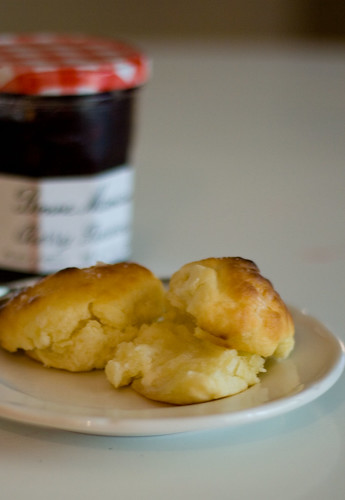
Occasionally, and usually at breakfast, my mother rapped open a can of biscuits. My father seemed satisfied no matter what form of fiber sat upon his plate. I, however, found canned biscuits an unsatisfactory fabrication of the real thing. No amount of grape jelly transformed this pig’s ear into a satin purse.

My former husband was raised in the tiny town of Jefferson, Georgia, by a mother who knew her way around a southern kitchen. And while he never complained about the dinners I fashioned from the tins and boxes of my youth, he moved canned green beans from one side of his mouth to the other, as he told stories of bigger, greener beans, slow-cooked on the back of a stove for hours, and biscuits, used to sop up the “pot liquor”.

He was there when I attempted to recreate my mother’s angelic recipe, graciously refusing to lend his voice to the discussion of ice-hockey, choosing instead to described biscuits the way he’d come to know them; large squares, cut from a single slab of dough. It became my mission to uncover this long-held culinary secret.

Viola Carroll was a formidable woman. Striated skin, hanging from space once occupied by her tricep, spoke of former girth. She was tall, a good six inches taller than I, and vocal. If she thought it, she said it; and, this knowledge, alone, was enough to put me on my best behavior. I dressed, before we left, in my most becoming casual outfit, in an effort to quell her tongue. Viola expected a woman to be “dressed”.

Our arrival was always met graciously, as Viola went for her purse. Viola always needed something from the grocery store. She gamely folded her generous frame into the bucket-seat of my aged Toyota wearing a look of anticipation heretofore only seen on a canine head hung from a car window.

As we bounced between traffic lights, Viola steadied herself upon a black, vinyl handbag boasting a faux-gold snap.

“I like yowah little cah, but this heah road sho is bumpy!”

Even now, the memory of those words brings a smile to my face.

Our foray of the local discount grocery store complete, Viola demonstrated, for me, the artistry of southern biscuits. They were, indeed, carved from a single slab of dough which she manipulated between country-sized hands, for several minutes, before slamming the mass onto an unsuspecting jelly-roll pan. A large, well-worn, butcher’s knife quickly separated the colorless blob into generous squares before her hands bounced the sides into shape. The result was toasted to a golden hue on top, leaving the middle ethereally transparent. As the fibrous mass melted upon my tongue, I knew nothing I could conjure would recreate that kind of bliss.

Fortunately, for me, there was “Bisquick”; a couple of cups of powder, poured from a gaily-colored box, mixed with water, and voilà, biscuits! Following, Viola’s example, I slammed tablespoon-sized blobs onto an unsuspecting jelly-roll pan.

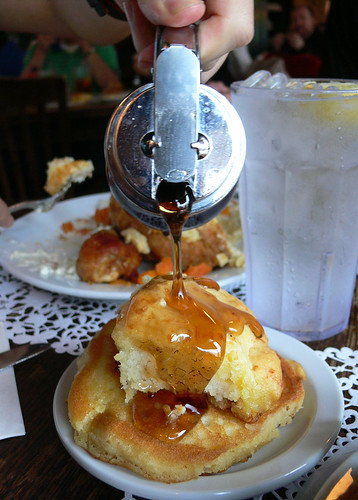
Today, on the rare occasion I venture to place biscuits on my southern dinner table, I must first remove them from a frozen, plastic bag. I understand the result is every bit as satisfying as my mother’s Angels, and Viola’s squares, especially when dunked in yellow syrup.

© Copyright 2007-2009 Stacye Carroll All Rights Reserved