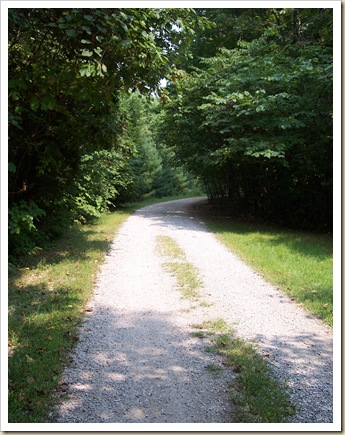
He wasn’t there, where I’d left him.
He wasn’t waiting in the spot where he’d waited for the better part of a year,
and I knew it before I got there,
and I smiled.
Be well, my love….
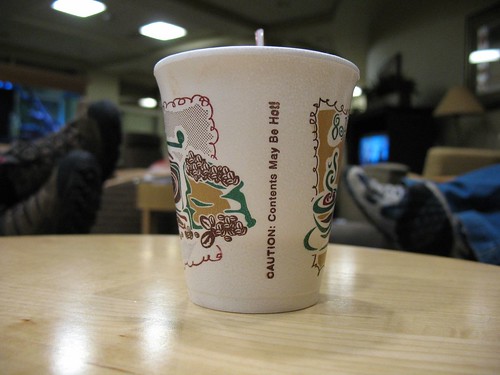
“I’m a table sitter, just like my Mother.”
Knowing she wouldn’t be joining me allowed me the freedom to stretch out on her well-worn sofa.
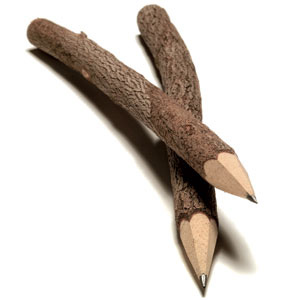
Hallie eased herself into her usual spot next to a blinded window. A heavy sigh accompanied the release of her weight onto a vinyl captain’s chair, and the years washed away in my anticipation of her next move. Both hands went to her head, grasping at gossamer wisps which had rudely escaped the band she’d swept them into that morning. Another sigh and her hands went to the tabletop. Her lips pursed as her hands moved about the table, straightening a pencil against the edge of a writing tablet, carefully lining up book spines along their mitered corners, and touching each of three small stacks of paper.
As she took assurance in the precision of her surroundings I remembered rows of pencils, sorted by color and length, lying alongside a notebook in the laboratory where she worked. On quiet days, and sometimes just during a lull, I took particular delight in flicking one end of the pencil closest to me and watching the others careen like pick-up-sticks. She feigned disgust, but I understood the satisfaction she took in realigning her environment.
As she sighed, and sorted, and sorted, and sighed, I searched her face for change. Other than a slight gravitational pull around the corners of her mouth, there was none. Despite her claim of green, her eyes had always been of indeterminate color. They snapped just as they always had, behind eyeglasses whose shape demanded the word “spectacles”. The freckles that had always danced across her cream-colored skin were just where I’d left them, and her small, colorless mouth pursed between spurts of speech enriched with invectives.
 “Remind me to give you a blow job later!”
It was the fall of 1992, the year the Braves won the pennant. Both of us had followed the Braves throughout the season. We knew stats. We referred to the players in such a way as to suggest we might have had them over to dinner the night before, and each of us had our favorites. John Smoltz was mine. We both agreed he bore an eerie resemblance to my wayward husband, who Hallie described as “poetic looking”. Hallie appreciated the talents of the wiry Otis Nixon and the second baseman, who she referred to as “Little Lemke”.
Sometime over the course of the Championship series, we had begun to watch the games together, by telephone; she ensconced inside her cozy duplex less than ten miles away from my little farmhouse, filled by the sounds of soundly sleeping children. The call usually came sometime after the seventh-inning-stretch.
It was the bottom of the ninth, and the Pirates were up two to zip. In an era free of steroid controversy, we thought nothing peculiar about the guns on Ron Gant, as he took the plate with the bases loaded. He sacrificed, making the score two to one. Brian Hunter popped up, leaving us with scant hope as a little-known pinch-hitter, named Francisco Cabrera, loped towards the plate. He singled, scoring David Justice, and an oft-traded, unlikely hero named Sid Bream. As Sid slid into home, securing the pennant, Hallie shouted her reminder into the receiver. I remember collapsing with laughter, and would recall little else about that game, or the ensuing World Series.
“I thought you were bringing Shane!”
Hallie stood on the steps leading to her front door.
“This can’t be Shane! Shane’s just a little guy! Who is this tall boy you brought with you?”
Color seeped into Shane’s cheeks as he shut the car door and walked, sheepishly, in the direction of my friend.
“Hi, Aunt Hallie.”, he said into his chest.
He walked, obligatorily, into her waiting arms and hugged her back. There was less than two inches difference in their height.
Gathering the few things I needed before leaving in search of a hotel room, I left the car and replaced Shane’s body with mine. My arms embraced her shoulders as hers encircled my waist. Time had carved precious inches from her already diminutive stature.
“Come in, honey.” She always calls me “honey”. “Be careful with that door. I need to fix the latch.”
Our love for each other spans twenty years, one birth, two marriages, two divorces, and the deaths of two children, both our mothers, and her beloved Aunt Flo. As I study her face for change, I realize mine is the one that is different. I am where she was when I left her to start over, again. Her changing was done. Mine had just begun. I shifted against the soft fabric of the sofa I rested upon, uncomfortable with the knowledge.
“I see you’ve changed your hair.” She made no effort to hide the disdain in her voice. “You’re wearing it like everyone else; like you haven’t combed it in days.” Ill health forced another sigh. “I don’t know why you want to do that. You have such nice hair. I liked it when you flipped it back.”
The fingers of her left hand weaved themselves into my hair.
“Oh, it’s very soft. It doesn’t look soft. It looks hard, but it’s very soft…just like it always was.”
And, it is…just like it always was.
“You’re my touchstone…”

The sun coaxed color into your ever-pale face,
sprinkling darker spots along the bridge of your nose,
that only brought your observer closer,
in an effort to see if you were real.
Your eyes,
always light, drew refection from your skin,
until their green matched the hue of the surf
as it rushed in between our feet on white sand.
The wind blew.
And your hair danced;
long, blonde diaphaneity.
Part Siren,
part Mermaid,
my Sister,
on the beach.
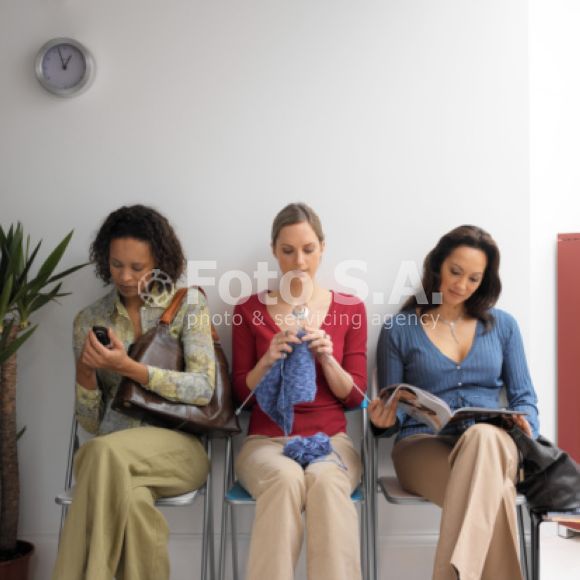
Women learn, from a very early age, to be good waiters.
The first thing I remember waiting for was my birthday. As the oldest of four girls, it was the only day of the year when the spotlight would be for me, and only me. Children came to a party for me. People bought presents for me. Mother baked a cake for me. Birthdays were always worth waiting for.
And then, of course, there was Christmas. True anticipation usually began about a week after Thanksgiving, when large, brown cartons were extracted from the attic and strewn haphazardly about the living room. It was mother’s job to string the lights, which meant more waiting for my sisters and I as we perched on the edge of a couch rarely sat upon, waiting for her signal to breach the boxes. Completion of decoration led only to more waiting. Twinkling, multi-colored lights reflected in our eyes as we “watched” the tree while imagining what hidden treasures lay underneath.
In a house with four girls and one bathroom, there is always a wait.
Soon after my sixteenth birthday, my father presented me with a reasonable facsimile of a car, featuring two seats on four wheels, and very little else. I soon realized it was the seating that concerned him most, and the words “Wait for your sister!” became the bane of my existence.

My sister, Laura, had one speed. A snail once challenged Laura to a foot race. The snail won. Most weekday mornings found me biding my time in an idling car with a blaring radio, for what seemed like hours, as Laura completed her toilette. Weeks of begging, and pleading, and screaming, and warning fell on immutably deaf ears. Finally, I cracked. Bidding her adieu with a foundation-jarring slam of the back door, I jammed the gear shift into reverse. All I remember of my return home is the anger in my mother’s eyes. The rest has been mercifully carved from my memory, but whatever the punishment, it was worth it!
The summer after my senior year in high school was spent waiting by the telephone. I met John, weeks before, while on a trip to Washington, DC with a youth group. When he called, it was to say he would be in Atlanta the following week. My excitement was tempered by the knowledge that I was scheduled to be in Destin on a family vacation. To her credit, my mother allowed me to make the decision. I remember very little of that week spent on the beach, besides a feeling of longing.
College graduation began the wait for my big move. My best friend and I had planned this day for years. Numerous shopping trips for linens, and dishes, and what passed as artwork, made the waiting easier. The experience of living together wasn’t the euphoria we knew it would be, and I gained a valuable life lesson. With the assistance of a good attorney, it only cost $400.00 to get out of the lease.

The only thing more difficult than waiting for the results of a pregnancy test is waiting for his reaction. Pregnancy is the ultimate exercise in waiting. I skipped waiting to discover the gender of my children. A long-ago forbidden foray into my parents’ closet, just before Christmas, had taught me that surprises are to be relished.
Pregnancy came naturally to me, as affirmed by the midwife who announced I had “childbearing hips”. For thirty-six months of my life I was a walking miracle, and I never forgot it.
I loved the quaint expression of being “with child”, and all that came with it. Pregnancy, of course, meant shopping in exclusive shops; exclusive as in those selling maternity clothes, nursing bras, baby furniture, bibs, pacifiers, and the genius that is the One-sie. My children were of the generation first introduced to this remarkable example of adorable efficiency. Thanks to the invention of the One-sie, babies no longer required trussing in order to get to the diaper; just four simple snaps, and you were in!
Mothering is synonymous with waiting. Waiting room carpet patterns are memorized, and it isn’t long before a tote bag filled with the necessities of waiting, takes up permanent residence on the back seat of a mother’s car. Mothers wait for hours in check-out lines accompanied by the wailing of an over-tired child; hers or someone else’s. Her first child’s first day of school is torturous for a mother who imagines, all day, trails of tears running down her child’s face when in reality it is her face that is wet. She can’t wait for her baby to come home.

Mothers think of clever ways to pass the time spent in carpool lanes, and later, outside movie theaters and shopping malls. Mothers wait outside dressing rooms until, curious, they grasp the doorknob, prompting the rebuke, “Not yet!”. Mothers wait, sometimes anxiously, for school to start as summer wanes, along with her children’s patience with one another.
As our children grow, waiting mixes with worry. I sat white-knuckled, at the front window, for the full fifteen minutes it took my son to drive around the block for the first time, alone. That was almost ten years ago. Yesterday, when he didn’t arrive within fifteen minutes of our agreed upon time, my face appeared again, at that window.
Even today, I am hard pressed to say which was more shocking, my mother’s announcement of her diagnosis with cancer, or her concurrent use of the word “shit”, as in “Pretty heavy shit, huh?”. On the day of her surgery, the sunny environment of the waiting room, walled floor-to-ceiling by glass, competed with the emotions of the large group of friends and family it housed. Having recently returned to school, I spent most of the day with a textbook. I turned pages filled with words I only appeared to read, until the entry into the room of a small group of green-clad men wearing serious expressions. Their words left no doubt as to the arduous journey ahead, and I would begin my night-time sojourns in the ICU waiting room within weeks.

My father didn’t want my mother left “alone”. He and one or more of my sisters spent the day at the hospital, never missing one of the fifteen minute intervals during which my mother was allowed visitors. Visits were not allowed after nine at night, so my brother-in-law and I took turns sleeping in the waiting room. For many months, waiting became a way of life, as my mother slowly healed.
Commuting lends itself to reflection. Commuting in the rain requires more careful attention, until rainy streets become the norm, and reflections resurface. Such was the case on Wednesday, when, as I rolled to a stop under a murky, red beacon, I realized I have unknowingly adopted a constant state of wait.
Last year was a year of unwanted, if not unexpected, consequences. Reminders of what proved to be an achingly short spate of purest joy, plague me, in the form of physical reminders with psychological presence. The realization that I have been waiting for a different outcome brought an ironic smile to my lips, and a reminder. Inherent in waiting is hope. And, with hope, all things are possible.

Shane wants a Facebook page.
He began plying me several months ago, just after the school year started. As a sixth-grader, he is now “running with the big boys”.
“Everyone has one, Mom.”, he said with a note of exasperation only attainable between the ages of ten and twenty-one or twenty-two.
“I’m not responsible for “everyone”, Shane. I’m only responsible for you.” This answer has never been particularly effective. I’m not sure why I continue to use it.
“What? You think I’m a baby? You’re treating me like a baby. I’m not a baby, Mom.” The inflection placed upon the last word effectively vanquished every other word he’d uttered. Somehow, he’d stretched a three letter word into two syllables.
“Who among your friends has a Facebook page, Shane?” When all else fails, back them into a corner.
“Valerie.”
“Valerie?” I pretended to stifle a laugh. “Valerie? The same Valerie you described to me as “an only child who gets whatever she wants” Valerie?”
“Well, other people have one, too!” He failed to turn his head before I saw the blush crawl up his cheeks.
Reasoning that there might be safeguards for children on Facebook, I attempted to open a page for my son a couple of weeks later, only to be stopped dead in my tracks upon entering his birth date.
“I’m sorry, Shane. You have to be thirteen to have a Facebook page.” I said in hopes that my monotone would camouflage my lack of sincerity.
“Well then, how do all my friends have one?”, he asked with a defensive tone that assured me he believed they actually did.
Our discussion opened with an appeal to his morality and ended with, “Why did you have to put my real birthday? Couldn’t you just make me thirteen?” There was a cursory mention of MySpace that I quashed without argument.

This morning as I wrapped the flaps of “the world’s softest bathrobe” around my legs before placing them atop the desk, Shane stumbled into my office.
“Morning, Glory!” I say it every Saturday morning in hopes that he will remember, long after I am gone.
“Mornin’”, he mumbled his answer while scratching his abdomen underneath his robe.
“Sleep well?”
“Yeah…I want a blog.”
My carefully arranged feet flew from the desk as I whirled in my chair to face him.
“A blog?”
“Yeah. I want a blog.”
This evening we sat down together, and created his blog. We agonized over the name for at least twenty minutes.
“Do you do this a lot?”, he asked.
“What?”, I answered, as my head lay in my arm on the desk.
“Think like this.”
“Yes. Yes, I do, actually.”
A short time later, we finally arrived at a name we both liked. He chose a template, and I set the privacy settings. When we were done, I gave him the chair.
“Ok, write!”, I said, leaving the room.
Thirty minutes later, he found me.
“I’m done. Check it out. I need your opinion, Super Star.” The moniker drew dust on it’s delivery.
His words were powerful, his feelings palpable. My editorial eye immediately honed in on a couple of awkwardly crafted sentences that upon rereading only added to the poignancy of his statement.
“It’s good, Shane. It’s really good.”
And, his little man’s chest swelled.

I try to avoid labels, all labels. But, I particularly dislike the label we apply to any human blessed with longevity. The term “Senior Citizen” is a misnomer on a number of levels. After all, an older person may not be “Senior” at all. He might be a junior. And what is the significance of “Citizen” here? Aren’t we all citizens? We don’t call babies “Newborn Citizens”. We wouldn’t refer to a forty-year-old as a “Midlife Citizen”. The mere idea sounds awkward and ludicrous.
I have heard the argument that the term “Senior Citizen” was borne out of respect for a person’s advanced age, but I’m not buying it. I believe the term to be market driven, much like the terms “Soccer Mom”, “Gen-Xer”, and “Baby-boomer”. Unfortunately, as the media makes use of these catch-phrases, the terms become part of our collective consciousness, morphing images born as marketing tools into stereotypes with inherently negative connotations.
I don’t like the word “elderly”, either. As soon as it reaches my ear, it becomes another word entirely, registering in my brain as “feeble”. Left with few options, due to my own semantic prejudices, I refer to those “of a certain age” as “older”.
I enjoy older people. I always have. As a young child, one of my best friends was our next-door neighbor, Earl Witcher. I wish I had a dollar for every time my parents told the story of my running, with arms out-stretched, from our driveway to his, shouting “Ale! Ale!”.

As a young mother, I was blessed to live next door to Ruby Kitchens, a hard-scrabble, deeply southern woman of indeterminate age, though her tight, pewter-colored perm suggested at least sixty. Ruby loved babies, which was lucky as I proved to be a prolific bearer. She loved to hold them, sing to them, and make faces at them. And, I enjoyed a rare empty lap as I watched her love them. For eight years we shared a driveway, and our markedly divergent lives, becoming dear friends. When the walls began to close in on my burgeoning family, visits were less frequent, but no less enjoyable. The children she helped me to raise are adults now, and Ruby has been gone for many years, yet I still think of her several times a week.
~~~
Joy is a spritely eighty-five, though if you ask her, she isn’t a day over eighty-three. Lucie turned eighty this year, passing the day in the hospital bed she has occupied since she was seventy-eight.
Joy came to work in our office three years ago, and within weeks had become one of my favorite things about weekdays. Last February, Lucie was the first hospice patient assigned to my care. I fell in love on sight.
Joy runs circles around most of the much younger employees in our office, coaxing productivity out of office equipment most of us have never learned to use, and doing it with a smile. Lucie is paralyzed, from the neck down, as the result of a stroke. She lays, a helpless, horribly contracted heap, in the center of her twin-sized world. She is completely dependent on others to meet her needs, and she doesn’t mind telling you what they are. I rarely visit without a small container of vanilla ice-cream.

Joy hums. You don’t so much look for Joy, as listen for her. The one time Joy isn’t humming is when she is talking, and she loves to talk. Her conversations usually surround some form of culture; she might recommend a book she’s just finished reading, or review a night at the symphony or an afternoon spent at the museum. An avid “Dancing with the Stars” fan, she loves to rehash the latest episode while stirring hot chocolate mix into a cup of steaming hot water.
Lucie’s eyes are usually closed when I enter her room. I’m careful to bend close before I say her name quietly, while softly touching one tiny, bony shoulder. Despite her efforts to open them, her right eye never fully cooperates, prompting my perch on the left side of her bed.
“Miss Lucie? It’s Stacye…” I encourage her to wakefulness.
“Hey!” She exudes enthusiasm in a voice barely above a whisper.
“It’s Saturday, Miss Lucie, February twenty-first, almost spring-time! How are you doing today?” I slide one hip up onto the bed, feeling the egg-crate mattress beneath its thin cotton covering.
“Oh…I’m alright…” She answers every time.
I stand, and move to draw the drapes.
“You want these open, don’t you Miss Lucie? Look at that gorgeous sunshine!”
I return to the side of her bed.
“Are you eating?” At last check she weighed less than seventy pounds.
“These people don’t cook right.” She answers with a lop-sided sneer and averted eyes.
“It’s not what you’re used to, is it?”
“It sure ain’t!” Images from an earlier visit, remnants of camouflage-colored puree decorating thick, institutional stoneware, fill my head.

White noise, from the television she insists must play at all times, accompanies our words. Sometimes I carry the conversation. Raised by a father whose green thumb was more of a necessity than a hobby, Lucie loves to hear about my garden.
And, when she’s up to it, Lucie has stories to tell. Hours, spent at her bedside, have taught me much about life in pre-integration Atlanta, as she takes me along on the bus ride across town to “care for a white family”. Most interesting, though, are her ruminations on Lucie; Lucie the daughter, Lucie the independent woman, Lucie the single mother. The injured cadence of her voice urges me closer, as she shares her disappointment in the father of her only child who “…left, and never came back”.
Two framed photographs provide the only break in the institutional green of our surroundings. Lucie’s grandson smiles through an eight-by-ten rectangle of glass. And, just underneath, hangs a six-by-four photo of his infant son, also known as “the baby”.
“Did your grandson bring the baby to see you this week?”, I ask as I dab at the unbidden tear falling from an eye that won’t quite open.
“Nah…”, she answers. “He’s busy…”
“Well, I bet he’ll be here next week!” I rise to leave, readjusting the blankets displaced by my hip.
Bending, I kiss her shiny, cocoa-colored forehead.
“I’m going now, Miss Lucie. I’ll see you next week…”
“Alright…”
“I love you.”
“I love you, too.”

He runs his fingers through my son’s hair.
“Did the printout help you? Can you recognize a trapezoid?”
And, that’s all I need to know…

As a child, love meant racing to be the first to greet Dad as he pushed through the screen door.
As a teenager, I shared confidences with girlfriends, building a love that protected our vulnerably emerging selves.
As a young adult, it was all about the chase; romance, flowers, stolen embraces, and the fever pitch of emotion that tied the rhythm of my heart to the sound of a voice.
Mother-love is unlike any other; constant, sweeter, deeper, purer, and ever-growing.
One of the gifts of this time in my life is the ability to integrate all these different kinds of love, and to see how they build, one upon the other. And, with this cache of love stored away as reference, I now see love in places I had never considered looking before.
Love is a progression. I remember the first time I really heard the following lines, the way they moved me, and the promise in them. They were read by my ninth-grade Sunday school teacher, and many years later, served as my marriage vows.

“1 Corinthians 13:1-13
“If I speak in the tongues of men and angels,
but have not love,
I have become sounding brass or a tinkling symbol.
And if I have prophecy and know all mysteries and all knowledge,
and if I have all faith so as to remove mountains,
but have not love, I am nothing.
And if I dole out all my goods, and
if I deliver my body that I may boast
but have not love, nothing I am profited.
Love is long suffering,
love is kind,
it is not jealous,
love does not boast,
it is not inflated.
It is not discourteous,
it is not selfish,
it is not irritable,
it does not enumerate the evil.
It does not rejoice over the wrong, but rejoices in the truth
It covers all things,
it has faith for all things,
it hopes in all things,
it endures in all things.
Love never falls in ruins;
but whether prophecies, they will be abolished; or
tongues, they will cease; or
knowledge, it will be superseded.
For we know in part and we prophecy in part.
But when the perfect comes, the imperfect will be superseded.
When I was an infant,
I spoke as an infant,
I reckoned as an infant;
when I became [an adult],
I abolished the things of the infant.
For now we see through a mirror in an enigma, but then face to face. Now I know in part, but then I shall know as also I was fully known.
But now remains
faith, hope, love,
these three;
but the greatest of these is love.”
Later, I discovered the writings of the ancient poet, Rumi.

This is Love
“Love is reckless; not reason.
Reason seeks a profit.
Love comes on strong,
consuming herself, unabashed.
Yet, in the midst of suffering,
Love proceeds like a millstone,
hard surfaced and straightforward.
Having died of self-interest,
she risks everything and asks for nothing.
Love gambles away every gift God bestows.
Without cause God gave us Being;
without cause, give it back again.”
A steady mist fell as I drove into work this morning. The light changed, and as I rolled to a stop, I noticed a flurry of activity to my right. A young, heavy-set, African-American man, clothed in ill-fitting blue jeans and Arizona Cardinals football jersey, filled the wet sidewalk. Drawing my attention was the huge bouquet of heart-shaped balloons impeding his progress. Blinking silver and red, they danced and bounced above his smiling face. As he wrestled with the large, red bow serving as his hand-hold, I thought, “Now THAT is love.”


I left home at age twenty with a nursing degree I never really wanted and no sense of direction. This helps explain why, by the age of twenty-one, I was married and pregnant. Nine years later, my daily routine began with dropping all three of my children at school on my way to work in a midwifery clinic. This is where I met Zan.
Some may call it “luck”, or “fate”; others might invoke “kismet”. But I know that the universe provides, and throughout my life, I have been fortunate to have been blessed by people Zan would refer to as “guides”.
Zan is Native American, and she looks the part. Tall, and lithe, she wore her black hair long and flowing until it got in her way, at which point she clipped it, haphazardly, atop her head. She came to work as a midwife one year after I was hired as office manager, and fortunately, my world has never been the same.
At the time we met, my life was a mess. My marriage to an alcoholic, drug-addicted, philanderer was nearing an end. Listening to Zan’s dulcet-toned words of support and encouragement, I came to believe that I could raise my children in a healthy environment on my own. Later, it was through her suggestion that I found an Adult Children of Alcoholics’ meeting, where I realized it wasn’t just me; there were others like me who had taken what life had served up, and done the best they could with the little they had been given.
When she wasn’t occupied with turning my life right-side-up, Zan taught me about Native American culture, herbology, and bred in me a love for wolves. She introduced me to Bonnie Raitt, fried bread, and the art of healing massage. Most important though, as she taught me to love myself, she demonstrated how that love could, and should, be spread. Zan grew me up.
She returned to her beloved horse farm in Virginia about fifteen years ago, and it has probably been five since I’ve seen her, but if she called right now, we would pick up exactly where we left off. Zan would start by saying “Hello, Beautiful…”

Some may call it “midlife crisis”, or “menopause”; others might just call me “crazy”. But I know that, lately, I’ve gotten off track. The self-esteem I worked so hard to bring to fruition got trampled somewhere, and I forgot to notice. Lost, too, was my sense of direction. But I remembered today that the universe provides, and while I haven’t always gotten what I wanted, I am always provided with what I need.
I realized the presence of another “guide” who, through words of support and encouragement, demanded I be true to myself, while tenaciously prodding me to find my path. For the first time in a very long time, I not only know what I want, I believe I can have it. Simply put, I want everything….
“I want to learn what life is for
I don’t want much, I just want more
Ask what I want and I will sing
I want everything (everything)
I’d cure the cold and the traffic jam
If there were floods, I’d give a dam
I’d never sleep, I’d only sing
Let me do everything (everything)
I’d like to plan a city, play the cello
Play at Monte Carlo, play Othello
Move into the White House, paint it yellow
Speak Portuguese and Dutch
And if it’s not too much
I’d like to have the perfect twin
One who’d go out as I came in
I’ve got to grab the big brass ring
So I’ll have everything (everything)
I’m like a child who’s set free
At the fun fair
Every ride invites me
And it’s unfair
Saying that I only
Get my one share
Doesn’t seem just
I could live as I must
If they’d
Give me the time to turn a tide
Give me the truth if once I lied
Give me the man who’s gonna bring
More of everything
Then I’ll have everything
Everything”

I went to work at the age of fifteen, mostly in an effort to ensure that my wardrobe reflected my tastes, and of course current trends, instead of what was on sale at Sears/Roebuck. As I flipped through the racks at Lerner’s, Gloria Steinem turned the world on its ear.
I remember wondering why she had chosen to thread the earpieces of her large, tinted, aviator glasses over her hair, instead of hiding them underneath, as the rest of us did. She had to be close to my mother’s age, but instead of going every six weeks to the beauty shop for a style and set, Gloria grew her hair long, allowing the strands to drape her painted face along the line of a stylish center part. She wore short skirts and knee-high boots instead of the polyester pull-on pants and knit tops my mother favored. And she spoke, in measured, succinct tones, of the oppression of women, and their unheralded strength and value. I had discovered a hero.

The birth of my first child ignited in me, a breed of love I have never experienced before, or since. When my daughter was six weeks old, I reentered the job market, as promised, and worked for two weeks in a local department store. Coming home to two miserable females convinced my husband that our financial obligations could be met by one salary. Nine months later, I was pregnant, again. The prohibitive cost of daycare for two babies made me a stay-at-home Mom, who contributed to the family finances by caring for three unrelated children during the day.
Following a pattern set by my mother, I developed an interest in soap operas, timing my morning chores around the television schedule. As theme music began to play over the final act, I reached for the telephone, beginning a daily marathon of conversation with another mother, that ended precisely one hour before the sound of rubber crunching gravel announced my husband’s arrival home. Dinner rolls browned as he showered, and if I timed it just right, they both emerged at the same time.
Gloria, and others like her, referred to me as a “couch potato”. Soap operas and well-timed dinners had brought with them my mother’s wardrobe, and as Gloria stylishly stomped across the stage to shake Mike Douglas’ hand, I looked down at my widening, polyester draped hips. She flipped her hair back, and I self-consciously fingered the clip that tamed my un-coiffed mane. She spoke words that used to come from my lips, before my vocabulary consisted of the single syllables of my children’s picture books. And, with those words, she urged me to own my life, to shake off oppression, to look my husband in the eye and demand my right to make my mark.
Within weeks, I was dropping my youngest son at a local church daycare before the sun’s warmth had dried the dew from the grass we used to play in. My two older children were in school, and my presence, when the school bus pulled up in front of our house every afternoon, assured me that I was living “the life”, “having it all”. And, I’ve never looked back. My path has followed the course Gloria promised. I’ve risen in the ranks, I’ve padded my pocketbook, and I’ve got the big-screen TV, late-model automobile and designer handbags to prove it.

Last week, as I urged my shiny, red car down rain-slick streets in an effort to be home in time for my son’s basketball game, the radio dial came to rest on one of hundreds of satellite enhanced offerings. A young woman bemoaned the travails of working-motherhood; the pressed schedules, the unreasonable demands, feelings of inadequacy. The measured tones of a well-known, conservative talk show host filled my car, and Gloria urged my well-manicured index finger towards the dial, but before I could reach, I heard.
“Did you ever think that the reason you don’t enjoy being a stay-at-home Mom is because YOU don’t appreciate your own worth; YOU don’t think what you do is valuable? Did you ever think you may have been sold a bill of goods?”
My eyes strayed, again, to the clock in my dash; thirty minutes to game-time. I thought of my daughter, draped in polyester, passing her days in manufactured housing twenty-five minutes from the closest grocery store, standing at the bus-stop with an umbrella in one hand, and a dog’s leash in the other.
Her lack of drive has always bothered me. The decision to enroll her in classes for the gifted was not an easy one. I worried about the pressure, and possible ostracism from those who were tracked for mediocrity. I placed her, and she excelled until an older boy from the “wrong side of the tracks” bounced his seemingly permanently affixed cigarette in her direction.

Despite every intervention offered in every psycho-babble book I’d ever read, and a few I came up with on my own, she was lost to me, until an inevitable stint in state prison interrupted their courtship, as my nemesis traded his Camels for a neon-orange pant-suit.
His departure from her life took with it nearly thirty pounds. Fit and lithe, she marketed herself, again. Eric fancied himself a guitarist the likes of Jimmy Page. His black, leather jacket was expensive. His vocabulary included words like “please”, and “thank you”. His eyes sparkled over a Greek menu he was more than willing to try, and I was sold.
Six months later, when my daughter called with the news of her pregnancy I asked her in measured tones, “Are you prepared to raise this child alone?”.
“But I won’t, Mama”, was her answer.
And she hasn’t. Christopher, her husband, is a kind, calm, wise, loving father who went to work, everyday, at five-thirty in the morning. When he came home, around four, he liked to play video games until supper was ready, which he followed with a shower, and bed. Two weeks ago, the air conditioning plant in which he worked succumbed, as have so many, to financial crisis. On the day she got the news, my daughter called to tell me she would be going full-time at her former weekend job.
As I sat in my car, with eyes darting between dashboard clock and traffic light, I finally appreciated her sacrifice. I arrived home amidst a flurry of game-time preparations, and as my son went in search of yet another missing sock, withdrew my check book from my bag. Wrapping the check in a scribbled note, I handed the envelope to my over-anxious basketball star directing him to drop it in the box while I locked up.
Two days later, just as I had expected, the telephone rang and I answered to the sound of my daughter’s appreciative voice.
“You didn’t have to do that.”
“I know I didn’t. You didn’t ask for it. But I wanted you to have it, and I want you to know why.” I plopped into my office chair, rolling to the spot offering the best view through the bank of windows that comprise the opposite wall.
“You and I don’t always see eye to eye. I know I’ve pushed you to do more, be more. Today, I realized that what you have been doing is very important, and while forces outside of your control have dictated that you change your priorities, I hope that change will be temporary. That money is between me and you. I expect you to use it to meet needs left unmet by your income. But, I also expect you to support Christopher by encouraging him to get out there and find another job, so that one day soon, you can go back to being…just a Mommy. This is my way of letting you know, I get it.”
She was silent for a few moments before saying simply, and quietly, “Thank you, Mom.”
Inspiration for Domestication
Noun doyenne: The senior or eldest female member of a group, especially one who is most or highly respected. A woman who is highly experienced and knowledgeable in a particular field, subject, or line of work; expert Synonym: grande dame
"Sex, Drugs and Rock and Roll from a 75 year old woman --- with some stories, life experiences and wisdom thrown in."
Life • Art • Technology
 Are We There Yet?